Join us

ContentUpdates from The Open Source Security Foundation (OpenSSF) is a...
Link
@kala shared a link, 4 months ago
FAUN.dev()

AI's Dial-Up Era

AI's reshaping jobs - but not evenly. Some industries will feel the squeeze faster than others. It all comes down to a race: productivity vs. demand. History's playbook? Think textiles, steel, autos. Automation boosted output. Jobs stuck around - as long as demand kept growing. Once markets topped o.. read more  

AI's Dial-Up Era
Link
@devopslinks shared a link, 4 months ago
FAUN.dev()

Why I Like Using Docker Compose in Production

A decade in, and this dev still rides with Docker Compose for production. Why? It just works. Clean deployments, solid uptime, same setup everywhere. No yak-shaving. It shines when you pair it with Git hooks for hands-off, zero-downtime deploys. No need to drag in Kubernetes unless you’re actually w.. read more  

Why I Like Using Docker Compose in Production
Link
@devopslinks shared a link, 4 months ago
FAUN.dev()

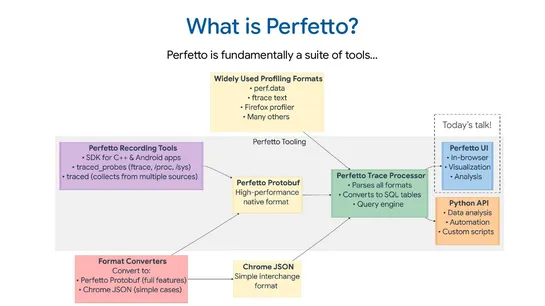
Perfetto: Swiss Army Knife for Linux Client Tracing

Perfetto now pulls in mixed trace data -perfsamples, scheduler events, app-level instrumentation - and lines it all up on a single timeline. One view, no silos. It readstrace-cmd’s text format now, with smoother flame graphs, sharper bottom-up views, and SQL-powered filtering baked right into the UI.. read more  

Perfetto: Swiss Army Knife for Linux Client Tracing
Link
@devopslinks shared a link, 4 months ago
FAUN.dev()

VMware Cloud Foundation – what’s actually going on?

Broadcom underwent significant changes post-VMware acquisition, with emphasis on subscription-based pricing and portfolio simplification. Prashant Shenoy claims VCF lowered prices by 50%, challenging industry norms about AI workloads on bare metal versus virtualized environments. Integration pointed.. read more  

News FAUN.dev() Team
@kaptain shared an update, 4 months ago
FAUN.dev()

Kubernetes Gateway API 1.4.0 Makes Network Routing More Declarative and Reliable

Istio Kubernetes

Kubernetes releases Gateway API 1.4.0, enhancing service networking with new features like secure TLS connections and improved configuration options.

Gateway API Logo
News FAUN.dev() Team
@kaptain shared an update, 4 months ago
FAUN.dev()

Grafana Pushes the Limits of Metrics Performance with Mimir 3.0

Prometheus Grafana Mimir

Grafana Mimir 3.0 debuts with a new query engine and architecture, boosting performance, reliability, and cost efficiency.

Grafana Pushes the Limits of Metrics Performance with Mimir 3.0
Link
@anjali shared a link, 4 months ago
Customer Marketing Manager, Last9

OpenTelemetry Metrics in Quarkus Explained

Understand how to enable, export, and extend OpenTelemetry metrics in your Quarkus application with practical examples.

otel_metrics_quarkus
News FAUN.dev() Team
@varbear shared an update, 4 months ago
FAUN.dev()

Redis Fixes Critical Vulnerability - Update Your Instances Now

Redis

Redis addresses a critical remote code execution vulnerability, CVE-2025-49844, by releasing fixed versions and recommending best practices to protect instances.

Redis Fixes Critical Vulnerability - Update Your Instances Now
News FAUN.dev() Team
@devopslinks shared an update, 4 months ago
FAUN.dev()

Pulumi’s Neo Now Fixes Infra Policy Violations - Not Just Flags Them

Pulumi

AI-powered remediation rolls out across Pulumi Cloud, bringing automated fixes, approval workflows, and cross-cloud compliance without requiring full migration to Pulumi IaC.

Pulumi’s Neo Now Fixes Infra Policy Violations - Not Just Flags Them
News FAUN.dev() Team
@devopslinks shared an update, 4 months ago
FAUN.dev()

AWS Unveils Fastnet Cable to Boost Transatlantic Cloud Connectivity

Amazon Web Services

AWS introduces Fastnet, a high-capacity transatlantic subsea cable, to enhance network resilience and support growing cloud and AI demands, operational by 2028.

AWS Unveils Fastnet Cable to Boost Transatlantic Cloud Connectivity
The Open Source Security Foundation (OpenSSF) is an industry-backed foundation focused on strengthening the security of the global open source software ecosystem. It brings together major technology companies, cloud providers, open source communities, and security experts to address systemic security challenges that affect how software is built, distributed, and consumed.

OpenSSF was launched in 2021 and operates under the Linux Foundation, combining efforts from earlier initiatives such as the Core Infrastructure Initiative (CII) and industry-led supply chain security programs. Its mission is to make open source software more trustworthy, resilient, and secure by default, without placing unrealistic burdens on maintainers.

The foundation works across several key areas:

- Supply chain security: Developing frameworks, best practices, and tools to secure the software lifecycle from source to deployment. This includes stewardship of projects like sigstore and leadership on SLSA (Supply-chain Levels for Software Artifacts).

- Security tooling: Supporting and incubating open source tools that help developers detect, prevent, and remediate vulnerabilities at scale.

- Vulnerability management: Improving how vulnerabilities are discovered, disclosed, scored, and fixed across open source projects.

- Education and best practices: Publishing guidance, training, and maturity models such as the OpenSSF Best Practices Badge Program, which helps projects assess and improve their security posture.

- Metrics and research: Advancing data-driven approaches to understanding open source security risks and ecosystem health.

OpenSSF operates through working groups and special interest groups (SIGs) that focus on specific problem areas like securing builds, improving dependency management, or automating provenance generation. This structure allows practitioners to collaborate on concrete, actionable solutions rather than high-level policy alone.

By aligning maintainers, enterprises, and security teams, OpenSSF plays a central role in reducing large-scale risks such as dependency confusion, compromised build systems, and malicious package injection. Its work underpins many modern DevSecOps and cloud-native security practices and is increasingly referenced by governments and enterprises as a baseline for secure software development.