Join us

ContentUpdates from The Open Source Security Foundation (OpenSSF) is a...
News FAUN.dev() Team
@varbear shared an update, 4 months ago
FAUN.dev()

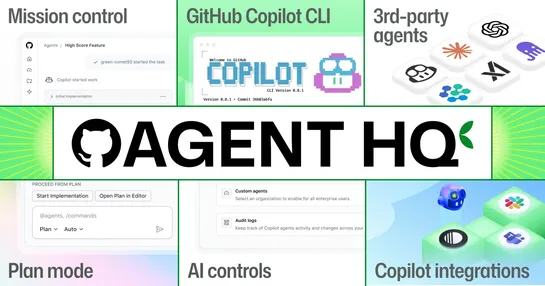
GitHub Unveils Agent HQ: A Unified Platform for Managing AI Agents

GitHub Copilot

GitHub’s new Agent HQ unifies AI tools from OpenAI, Anthropic, and Google directly within GitHub. It offers centralized management for AI agents through mission control, custom agent setup, code quality tracking, and enterprise governance - all designed to streamline AI-driven development while keeping control and visibility in one place.
GitHub Unveils Agent HQ: A Unified Platform for Managing AI Agents
News FAUN.dev() Team
@devopslinks shared an update, 4 months ago
FAUN.dev()

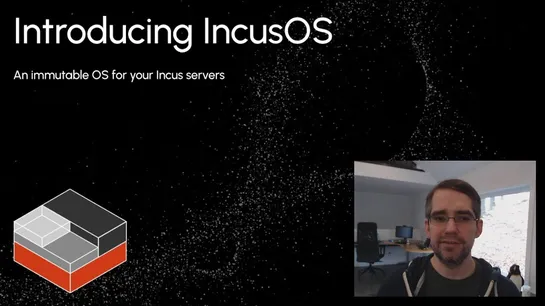
IncusOS Launches: A Secure, API-Driven Linux for Servers and VMs

IncusOS

IncusOS, an immutable operating system for running Incus, debuts with atomic updates and boot security, based on a minimal Debian 13, managed via the Incus API.

IncusOS Launches: A Secure, API-Driven Linux for Servers and VMs
Story
@laura_garcia shared a post, 4 months ago
Software Developer, RELIANOID

The Next Paradigm in High Availability System Design

🌟 We’re proud to share the latest article from our CEO, whose vision and deep technical insight continue to drive innovation at RELIANOID. In her new article — “From Single Processors to the Post-Quantum Era and Autonomous Resilience: The Next Paradigm in High Availability System Design” — she expl..

laura garcia medium article
News FAUN.dev() Team
@kala shared an update, 4 months ago
FAUN.dev()

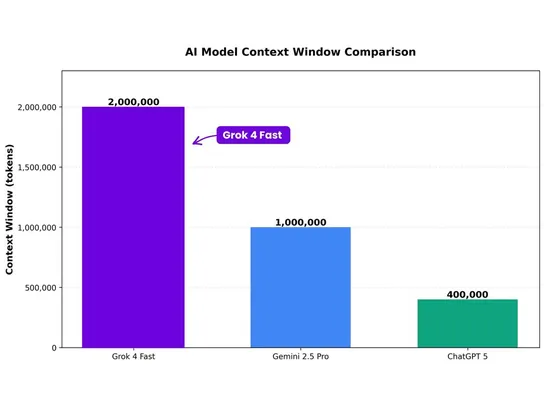
Elon Musk's Grok 4 AI Gets Major Boost with 2M Token Context

Grok 4, a multimodal AI model, significantly enhances reasoning and non-reasoning task accuracy with a 2 million token context window, offering versatile applications and cost-effective API pricing.

Elon Musk's Grok 4 AI Gets Major Boost with 2M Token Context
News FAUN.dev() Team
@kaptain shared an update, 4 months ago
FAUN.dev()

ZEDEDA Launches Edge Kubernetes App Flows: AI-Ready, Zero-Trust, and Built for Harsh Edge Reality

#K3s  #gitops  #ZEDEDA  #Edge  #kuberne... 

ZEDEDA just released Edge Kubernetes App Flows, a full-stack, AI-friendly edge solution that simplifies deploying and managing Kubernetes apps at scale - even across thousands of edge clusters.

ZEDEDA Launches Edge Kubernetes App Flows: AI-Ready, Zero-Trust, and Built for Harsh Edge Reality
News FAUN.dev() Team
@kaptain shared an update, 4 months ago
FAUN.dev()

Kubernetes + Postgres = Finally Sane? CloudNativePG and pgEdge Think So

Helm pgEdge

pgEdge integrates CloudNativePG to streamline Postgres deployment on Kubernetes with new container images and an updated Helm chart.

Story
@laura_garcia shared a post, 4 months, 1 week ago
Software Developer, RELIANOID

Azure MFA Enforcement Has Arrived – Are You Ready?

As of October 1, 2025, Microsoft now requires all Azure tenants to use multifactor authentication (MFA) before performing any resource management actions. - The message is clear: MFA is no longer optional—it’s essential everywhere. At RELIANOID, we make MFA enforcement possible not only for Azure bu..

Story
@laura_garcia shared a post, 4 months, 1 week ago
Software Developer, RELIANOID

🚀 Why this matters more than ever: Strengthening cybersecurity in space isn’t just a milestone — it’s essential.

The European Space Agency (ESA) recently inaugurated its new Cybersecurity Operations Center (C-SOC) to defend satellites, mission control systems, and digital assets from escalating cyber threats. 🌍 As the reliance on space technology continues to grow, initiatives like this — together with global ..

ESA_Cybersecurity Operations Center
Link
@anjali shared a link, 4 months, 1 week ago
Customer Marketing Manager, Last9

How Prometheus Exporters Work With OpenTelemetry

Learn how Prometheus exporters expose OTLP metrics in Prometheus format, making it easier to scrape OpenTelemetry data.

prometheus_exporter
Link
@anjali shared a link, 4 months, 1 week ago
Customer Marketing Manager, Last9

What Are AI Guardrails

Learn the core concepts of AI guardrails and how they create safer, more reliable, and well-structured AI systems in production.

grafana_tempo
The Open Source Security Foundation (OpenSSF) is an industry-backed foundation focused on strengthening the security of the global open source software ecosystem. It brings together major technology companies, cloud providers, open source communities, and security experts to address systemic security challenges that affect how software is built, distributed, and consumed.

OpenSSF was launched in 2021 and operates under the Linux Foundation, combining efforts from earlier initiatives such as the Core Infrastructure Initiative (CII) and industry-led supply chain security programs. Its mission is to make open source software more trustworthy, resilient, and secure by default, without placing unrealistic burdens on maintainers.

The foundation works across several key areas:

- Supply chain security: Developing frameworks, best practices, and tools to secure the software lifecycle from source to deployment. This includes stewardship of projects like sigstore and leadership on SLSA (Supply-chain Levels for Software Artifacts).

- Security tooling: Supporting and incubating open source tools that help developers detect, prevent, and remediate vulnerabilities at scale.

- Vulnerability management: Improving how vulnerabilities are discovered, disclosed, scored, and fixed across open source projects.

- Education and best practices: Publishing guidance, training, and maturity models such as the OpenSSF Best Practices Badge Program, which helps projects assess and improve their security posture.

- Metrics and research: Advancing data-driven approaches to understanding open source security risks and ecosystem health.

OpenSSF operates through working groups and special interest groups (SIGs) that focus on specific problem areas like securing builds, improving dependency management, or automating provenance generation. This structure allows practitioners to collaborate on concrete, actionable solutions rather than high-level policy alone.

By aligning maintainers, enterprises, and security teams, OpenSSF plays a central role in reducing large-scale risks such as dependency confusion, compromised build systems, and malicious package injection. Its work underpins many modern DevSecOps and cloud-native security practices and is increasingly referenced by governments and enterprises as a baseline for secure software development.