Join us

ContentUpdates from The Open Source Security Foundation (OpenSSF) is a...
News FAUN.dev() Team
@devopslinks shared an update, 3 months, 2 weeks ago
FAUN.dev()

Grafana 12.3 Lands With New Learning Tools, Better Logs, and a Critical Security Fix

Grafana

Grafana 12.3 enhances user experience with interactive learning, improved logs visualization, and a critical security fix, alongside new features like dashboard image export and expanded data source support.

Grafana 12.3 Lands With New Learning Tools, Better Logs, and a Critical Security Fix
News FAUN.dev() Team
@kala shared an update, 3 months, 2 weeks ago
FAUN.dev()

Google Unveils Antigravity: An Agentic IDE Built for Autonomous Coding

Google Antigravity

Google introduces Antigravity, an AI-driven platform enhancing IDEs with autonomous coding capabilities, now in public preview.

Google Unveils Antigravity: An Agentic IDE Built for Autonomous Coding
News FAUN.dev() Team
@kala shared an update, 3 months, 2 weeks ago
FAUN.dev()

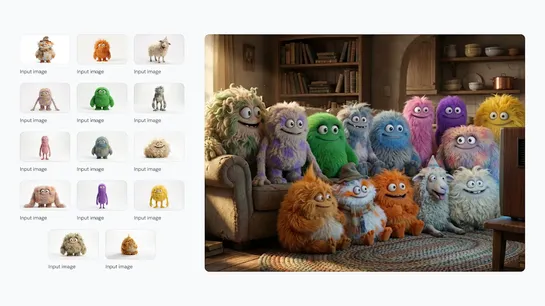
Finally: AI Image Generation That Handles Text Correctly - Meet Nano Banana Pro

Nano Banana Pro

Google DeepMind introduces Nano Banana Pro, an advanced image generation and editing model, enhancing creative capabilities and available globally in the Gemini app.

Finally: AI Image Generation That Handles Text Correctly - Meet Nano Banana Pro
News FAUN.dev() Team
@kala shared an update, 3 months, 2 weeks ago
FAUN.dev()

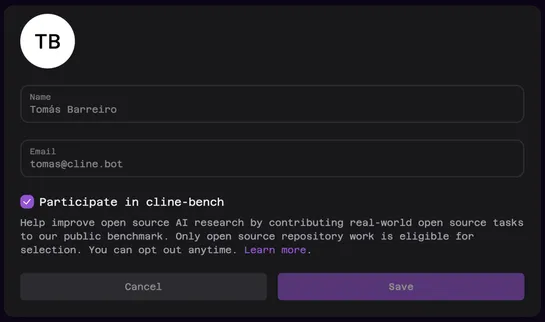
Real Repos, Real Tasks, Real Stakes: Cline-Bench Drops With $1M for Open Source

Cline-bench launches to offer realistic AI coding benchmarks, pledging $1M to support open source maintainers and enhance research with real-world challenges.

Real Repos, Real Tasks, Real Stakes: Cline-Bench Drops With $1M for Open Source
Story
@laura_garcia shared a post, 3 months, 3 weeks ago
Software Developer, RELIANOID

📢 RELIANOID is heading to Frankfurt!

We're excited to attend Next IT Security – C-Suites Edition: Redefining Cyber Resilience in DACH, taking place on November 27th, 2025. “The time is always right to do what is right.” – Martin Luther King Jr. This exclusive summit brings together top CISOs, CTOs, and cybersecurity leaders from across..

next IT security frankfurt relianoid
Link
@anjali shared a link, 3 months, 3 weeks ago
Customer Marketing Manager, Last9

Top 7 Observability Platforms That Auto-Discover Services

Auto-discovery tools now detect services as they appear and build dashboards instantly. Here are seven platforms that do it well.

grafana_tempo
Link
@cadet15789 shared a link, 3 months, 3 weeks ago
IT

Cut Your Docker Build Time in Half: 6 Essential Optimization Techniques

Pro tips to write dockerfiles. Cut your build timing of your images by half.

Dockerfiles
Story
@laura_garcia shared a post, 3 months, 3 weeks ago
Software Developer, RELIANOID

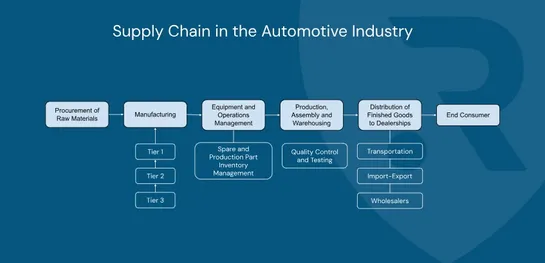
The JLR Cyber Incident: A Warning Shot for the Automotive Industry

The major cyberattack that halted Jaguar Land Rover’s production for almost six weeks has exposed a hard truth: modern automotive manufacturing is deeply vulnerable to digital disruption. From frozen assembly lines to supplier chaos and regional economic fallout, the incident showed how quickly a si..

Supply-Chain-in-the-Automotive-Industry_RELIANOID
Link
@anjali shared a link, 3 months, 3 weeks ago
Customer Marketing Manager, Last9

What is AWS Fargate for Amazon ECS?

Understand how AWS Fargate runs your ECS containers without servers—just define CPU, memory, and networking, and AWS handles the compute.

aws_fargate
Story
@shurup shared a post, 3 months, 3 weeks ago
@palark

Helm v4 new features and changes

Helm

Helm v4 has been released a week ago. Its highlights are: - Server-Side Apply instead of 3-Way Merge - WASM plugins - Using kstatus for resource tracking - Content-based chart caching This articleprovides a detailed overview of why these changes were made in Helm v4 and what they bring for Helm user..

The Open Source Security Foundation (OpenSSF) is an industry-backed foundation focused on strengthening the security of the global open source software ecosystem. It brings together major technology companies, cloud providers, open source communities, and security experts to address systemic security challenges that affect how software is built, distributed, and consumed.

OpenSSF was launched in 2021 and operates under the Linux Foundation, combining efforts from earlier initiatives such as the Core Infrastructure Initiative (CII) and industry-led supply chain security programs. Its mission is to make open source software more trustworthy, resilient, and secure by default, without placing unrealistic burdens on maintainers.

The foundation works across several key areas:

- Supply chain security: Developing frameworks, best practices, and tools to secure the software lifecycle from source to deployment. This includes stewardship of projects like sigstore and leadership on SLSA (Supply-chain Levels for Software Artifacts).

- Security tooling: Supporting and incubating open source tools that help developers detect, prevent, and remediate vulnerabilities at scale.

- Vulnerability management: Improving how vulnerabilities are discovered, disclosed, scored, and fixed across open source projects.

- Education and best practices: Publishing guidance, training, and maturity models such as the OpenSSF Best Practices Badge Program, which helps projects assess and improve their security posture.

- Metrics and research: Advancing data-driven approaches to understanding open source security risks and ecosystem health.

OpenSSF operates through working groups and special interest groups (SIGs) that focus on specific problem areas like securing builds, improving dependency management, or automating provenance generation. This structure allows practitioners to collaborate on concrete, actionable solutions rather than high-level policy alone.

By aligning maintainers, enterprises, and security teams, OpenSSF plays a central role in reducing large-scale risks such as dependency confusion, compromised build systems, and malicious package injection. Its work underpins many modern DevSecOps and cloud-native security practices and is increasingly referenced by governments and enterprises as a baseline for secure software development.