Join us

ContentUpdates from The Open Source Security Foundation (OpenSSF) is a...
Story
@shurup shared a post, 3 months, 3 weeks ago
@palark

Helm v4 new features and changes

#Helm  #Nelm  #kuberne... 
Helm

Helm v4 has been released a week ago. Its highlights are: - Server-Side Apply instead of 3-Way Merge - WASM plugins - Using kstatus for resource tracking - Content-based chart caching This articleprovides a detailed overview of why these changes were made in Helm v4 and what they bring for Helm user..

Story
@laura_garcia shared a post, 3 months, 3 weeks ago
Software Developer, RELIANOID

✈️ Ensuring Efficiency and Security in Airport Operations

Today we highlight our main diagram “Airport Software Systems”, showcasing how integrated airport management platforms —from AODB to landside & airside operations, billing, and information systems— work together to ensure efficient and secure airport operations. We also explain how load balancing en..

Airport Software Systems
Link
@anjali shared a link, 3 months, 3 weeks ago
Customer Marketing Manager, Last9

OTel Updates: Complex Attributes Now Supported Across All Signals

OTLP 1.9.0 adds support for maps, arrays, and byte arrays across all OTel signals. Here's when to use complex attributes and when to stick with flat.

otel_metrics_quarkus
Story
@laura_garcia shared a post, 3 months, 3 weeks ago
Software Developer, RELIANOID

SOC 2 Compliance

📢 At RELIANOID, we follow SOC 2 Trust Service Criteria to ensure Security, Availability, Confidentiality, Processing Integrity, and Privacy across our load balancing solutions — whether on-prem, cloud, or hybrid. Our controls align with the needs of highly regulated environments such as finance, hea..

Link
@varbear shared a link, 3 months, 3 weeks ago
FAUN.dev()

Chinese Hackers Use Anthropic's AI to Launch Automated Cyber Espionage Campaign

Chinese state-backed threat actorsorchestrated automated cyber attacks using AI technology developed byAnthropicin a highly refinedespionage campaignin mid-September 2025. The attackers leveraged AI to execute 80-90% of tactical operations independently at physically impossible request rates, markin.. read more  

Chinese Hackers Use Anthropic's AI to Launch Automated Cyber Espionage Campaign
Link
@varbear shared a link, 3 months, 3 weeks ago
FAUN.dev()

10 MCP Servers to Optimize Developer Workflows

TheModel Context Protocol (MCP)wires AI agents into real-world dev workflows, think pushing to GitHub, deploying APIs, tweaking Docker, all straight from the code editor. MCP servers like GitHub MCP, Apidog MCP, and Supabase MCP plug into popular tools and infra. They let LLMs update code, ship APIs.. read more  

10 MCP Servers to Optimize Developer Workflows
Link
@varbear shared a link, 3 months, 3 weeks ago
FAUN.dev()

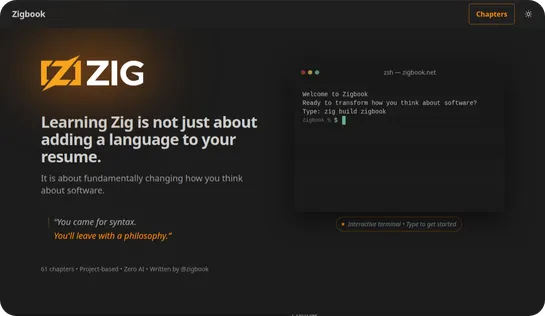
Zigbook – Learn the Zig Programming Language

Learning Zig is not just about adding a language to your resume. It is about fundamentally changing how you think about software. The book promise: “You came for syntax. You'll leave with a philosophy.”!.. read more  

Zigbook – Learn the Zig Programming Language
Link
@varbear shared a link, 3 months, 3 weeks ago
FAUN.dev()

How to Improve Your Programming Skills by Building Games

Building games forces devs to get good atevent-driven code,modular design,real-time tuning, andcreative debugging, fast. It sharpens instincts aroundECS patterns, math-backed logic, and hands-on UX thinking... read more  

How to Improve Your Programming Skills by Building Games
Link
@varbear shared a link, 3 months, 3 weeks ago
FAUN.dev()

Introducing Code Wiki: Accelerating your code understanding

Google just droppedCode Wikiin public preview. It builds live, structured docs straight from your codebase - and stays synced as things change. Docs evolve with your repo. Automatically. A Gemini-powered chat agent sits at the center, armed with full-repo context, clickable code links, and diagrams .. read more  

Introducing Code Wiki: Accelerating your code understanding
Link
@varbear shared a link, 3 months, 3 weeks ago
FAUN.dev()

What’s new in Flutter 3.38

Flutter 3.38 drops with Dart 3.10’s newdot shorthand- on by default. Less boilerplate, more signal. Android getspredictive back gestures, the web getsstateful hot reload, and Windows devs finally getmulti-monitor support. Overlay controls are tighter. Previews play nicer with your IDE. Under the hoo.. read more  

What’s new in Flutter 3.38
The Open Source Security Foundation (OpenSSF) is an industry-backed foundation focused on strengthening the security of the global open source software ecosystem. It brings together major technology companies, cloud providers, open source communities, and security experts to address systemic security challenges that affect how software is built, distributed, and consumed.

OpenSSF was launched in 2021 and operates under the Linux Foundation, combining efforts from earlier initiatives such as the Core Infrastructure Initiative (CII) and industry-led supply chain security programs. Its mission is to make open source software more trustworthy, resilient, and secure by default, without placing unrealistic burdens on maintainers.

The foundation works across several key areas:

- Supply chain security: Developing frameworks, best practices, and tools to secure the software lifecycle from source to deployment. This includes stewardship of projects like sigstore and leadership on SLSA (Supply-chain Levels for Software Artifacts).

- Security tooling: Supporting and incubating open source tools that help developers detect, prevent, and remediate vulnerabilities at scale.

- Vulnerability management: Improving how vulnerabilities are discovered, disclosed, scored, and fixed across open source projects.

- Education and best practices: Publishing guidance, training, and maturity models such as the OpenSSF Best Practices Badge Program, which helps projects assess and improve their security posture.

- Metrics and research: Advancing data-driven approaches to understanding open source security risks and ecosystem health.

OpenSSF operates through working groups and special interest groups (SIGs) that focus on specific problem areas like securing builds, improving dependency management, or automating provenance generation. This structure allows practitioners to collaborate on concrete, actionable solutions rather than high-level policy alone.

By aligning maintainers, enterprises, and security teams, OpenSSF plays a central role in reducing large-scale risks such as dependency confusion, compromised build systems, and malicious package injection. Its work underpins many modern DevSecOps and cloud-native security practices and is increasingly referenced by governments and enterprises as a baseline for secure software development.