Join us

ContentUpdates from The Open Source Security Foundation (OpenSSF) is a...
Story
@laura_garcia shared a post, 5 months, 2 weeks ago
Software Developer, RELIANOID

🚀 RELIANOID is heading to it-sa Expo&Congress 2025!

📍 Nuremberg, Germany | October 7–9, 2025 🔒 Europe’s largest IT security event with 900+ exhibitors, expert talks & global networking. We’ll be there to showcase how RELIANOID helps businesses stay ahead of evolving cyber threats. 👉 See you in Nuremberg! Send us a DM to make an appointment. #itSa2025..

itsa nuremberg
Link
@faun shared a link, 5 months, 2 weeks ago
FAUN.dev()

Users Only Care About 20% of Your Application

Modern apps burst with features most people never touch. Users stick to their favorite 20%. The rest? Frustration, bloat, ignored edge cases. Tools like **VS Code**, **Slack**, and **Notion** nail it by staying lean at the core and letting users stack what they need. Extensions, plug-ins, integrati.. read more  

Link
@faun shared a link, 5 months, 2 weeks ago
FAUN.dev()

Uncommon Uses of Common Python Standard Library Functions

A fresh guide gives old Python friends a second look—turns out, tools like **itertools.groupby**, **zip**, **bisect**, and **heapq** aren’t just standard; they’re slick solutions to real problems. Think run-length encoding, matrix transposes, or fast, sorted inserts without bringing in another depen.. read more  

Link
@faun shared a link, 5 months, 2 weeks ago
FAUN.dev()

Authentication Explained: When to Use Basic, Bearer, OAuth2, JWT & SSO

Modern apps don’t just check passwords—they rely on **API tokens**, **OAuth**, and **Single Sign-On (SSO)** to know who’s knocking before they open the door... read more  

Link
@faun shared a link, 5 months, 2 weeks ago
FAUN.dev()

Building a Resilient Data Platform with Write-Ahead Log at Netflix

Netflix faced challenges like data loss, system entropy, updates across partitions, and reliable retries. To address these, they built a generic Write-Ahead Log (WAL) system serving a variety of use cases like delayed queues, generic cross-region replication, and multi-partition mutations. WAL abstr.. read more  

Link
@faun shared a link, 5 months, 2 weeks ago
FAUN.dev()

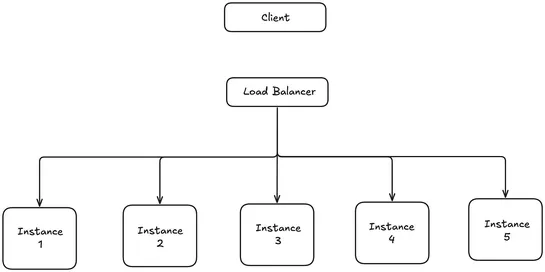
Writing Load Balancer From Scratch In 250 Line of Code

A developer rolled out a fully working **Go load balancer** with a clean **Round Robin** setup—and hooks for dropping in smarter strategies like **Least Connection** or **IP Hash**. Backend servers live in a custom server pool. Swapping balancing logic? Just plug into the interface... read more  

Writing Load Balancer From Scratch In 250 Line of Code
Link
@faun shared a link, 5 months, 2 weeks ago
FAUN.dev()

Organize your Slack channels by “How Often”, not “What” - Aggressively Paraphrasing Me

One dev rewired their Slack setup by **engagement frequency**—not subject. Channels got sorted into tiers like “Read Now” and “Read Hourly,” cutting through noise and saving brainpower. It riffs off the **Eisenhower Matrix**, letting priorities shift with projects, not burn people out... read more  

Link
@faun shared a link, 5 months, 2 weeks ago
FAUN.dev()

Privacy for subdomains: the solution

A two-container setup using **acme.sh** gets Let's Encrypt certs running on a Synology NAS—thanks, Docker. No built-in Certbot support? No problem. Cloudflare DNS API token handles auth. Scheduled tasks handle renewal... read more  

Privacy for subdomains: the solution
Link
@faun shared a link, 5 months, 2 weeks ago
FAUN.dev()

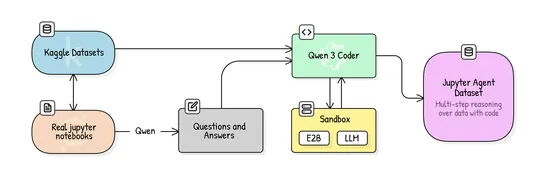
Jupyter Agents: training LLMs to reason with notebooks

Hugging Face dropped an open pipeline and dataset for training small models—think **Qwen3-4B**—into sharp **Jupyter-native data science agents**. They pulled curated Kaggle notebooks, whipped up synthetic QA pairs, added lightweight **scaffolding**, and went full fine-tune. Net result? A **36% jump .. read more  

Jupyter Agents: training LLMs to reason with notebooks
Link
@faun shared a link, 5 months, 2 weeks ago
FAUN.dev()

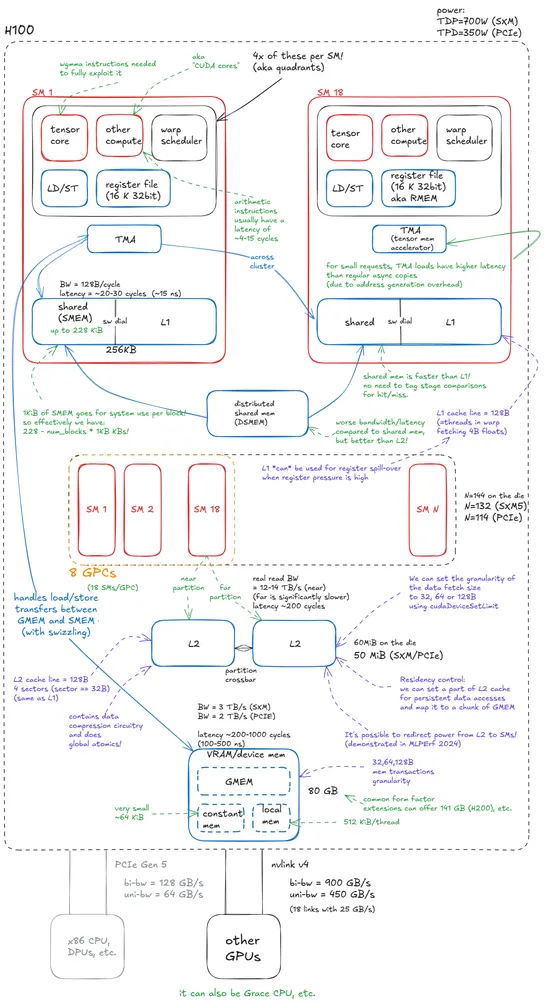
Inside NVIDIA GPUs: Anatomy of high performance matmul kernels

NVIDIA Hopper packs serious architectural tricks. At the core: **Tensor Memory Accelerator (TMA)**, **tensor cores**, and **swizzling**—the trio behind async, cache-friendly matmul kernels that flirt with peak throughput. But folks aren't stopping at cuBLAS. They're stacking new tactics: **warp-gro.. read more  

Inside NVIDIA GPUs: Anatomy of high performance matmul kernels
The Open Source Security Foundation (OpenSSF) is an industry-backed foundation focused on strengthening the security of the global open source software ecosystem. It brings together major technology companies, cloud providers, open source communities, and security experts to address systemic security challenges that affect how software is built, distributed, and consumed.

OpenSSF was launched in 2021 and operates under the Linux Foundation, combining efforts from earlier initiatives such as the Core Infrastructure Initiative (CII) and industry-led supply chain security programs. Its mission is to make open source software more trustworthy, resilient, and secure by default, without placing unrealistic burdens on maintainers.

The foundation works across several key areas:

- Supply chain security: Developing frameworks, best practices, and tools to secure the software lifecycle from source to deployment. This includes stewardship of projects like sigstore and leadership on SLSA (Supply-chain Levels for Software Artifacts).

- Security tooling: Supporting and incubating open source tools that help developers detect, prevent, and remediate vulnerabilities at scale.

- Vulnerability management: Improving how vulnerabilities are discovered, disclosed, scored, and fixed across open source projects.

- Education and best practices: Publishing guidance, training, and maturity models such as the OpenSSF Best Practices Badge Program, which helps projects assess and improve their security posture.

- Metrics and research: Advancing data-driven approaches to understanding open source security risks and ecosystem health.

OpenSSF operates through working groups and special interest groups (SIGs) that focus on specific problem areas like securing builds, improving dependency management, or automating provenance generation. This structure allows practitioners to collaborate on concrete, actionable solutions rather than high-level policy alone.

By aligning maintainers, enterprises, and security teams, OpenSSF plays a central role in reducing large-scale risks such as dependency confusion, compromised build systems, and malicious package injection. Its work underpins many modern DevSecOps and cloud-native security practices and is increasingly referenced by governments and enterprises as a baseline for secure software development.