Join us

ContentUpdates from The Open Source Security Foundation (OpenSSF) is a...
Link
@faun shared a link, 5 months, 2 weeks ago
FAUN.dev()

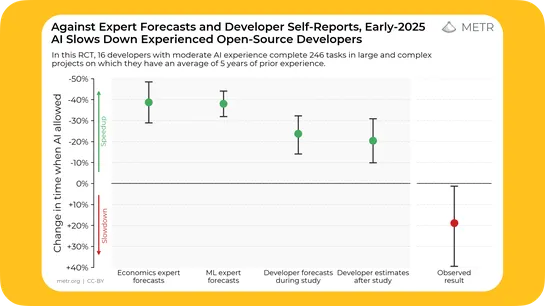
The productivity paradox of AI coding assistants

A July 2025 METR trial dropped a twist: seasoned devs using Cursor with Claude 3.5/3.7 moved **19% slower** - while thinking they were **20% faster**. Chalk it up to AI-induced confidence inflation. Faros AI tracked over **10,000 developers**. More AI didn’t mean more done. It meant more juggling, .. read more  
The productivity paradox of AI coding assistants
Link
@faun shared a link, 5 months, 2 weeks ago
FAUN.dev()

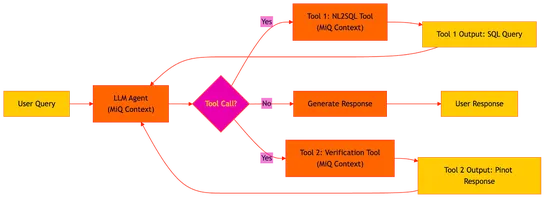
Building a Natural Language Interface for Apache Pinot with LLM Agents

MiQ plugged **Google’s Agent Development Kit** into their stack to spin up **LLM agents** that turn plain English into clean, validated SQL. These agents speak directly to **Apache Pinot**, firing off real-time queries without the usual parsing pain. Behind the scenes, it’s a slick handoff: NL2SQL .. read more  

Building a Natural Language Interface for Apache Pinot with LLM Agents
Link
@faun shared a link, 5 months, 2 weeks ago
FAUN.dev()

Implementing Vector Search from Scratch: A Step-by-Step Tutorial

Search is a fundamental problem in computing, and vector search aims to match meanings rather than exact words. By converting queries and documents into numerical vectors and calculating similarity, vector search retrieves contextually relevant results. In this tutorial, a vector search system is bu.. read more  

Link
@faun shared a link, 5 months, 2 weeks ago
FAUN.dev()

5 Free AI Courses from Hugging Face

Hugging Face just rolled out a sharp set of free AI courses. Real topics, real tools—think **AI agents, LLMs, diffusion models, deep RL**, and more. It’s hands-on from the jump, packed with frameworks like LangGraph, Diffusers, and Stable Baselines3. You don’t just read about models—you build ‘em i.. read more  

Link
@faun shared a link, 5 months, 2 weeks ago
FAUN.dev()

Becoming a Research Engineer at a Big LLM Lab - 18 Months of Strategic Career Development

To land a big career role like Mistral, mix efficient **tactical** moves (like LeetCode practice) with **strategic** ups, like building a powerful portfolio and a solid network. Balance is key; aim to impress and prepare well without overlooking the power of strategy in shaping a successful career... read more  

Link
@faun shared a link, 5 months, 2 weeks ago
FAUN.dev()

Shai-Hulud npm Supply Chain Attack

Malicious npm packages just leveled up: this one dropped a self-spreading worm that hijacks repos and leaks secrets the moment it lands. It abuses `postinstall` scripts to run TruffleHog and swipe tokens straight from your codebase. Then it uses GitHub Actions to exfiltrate the loot and auto-publis.. read more  

Shai-Hulud npm Supply Chain Attack
Link
@faun shared a link, 5 months, 2 weeks ago
FAUN.dev()

Demystifying Log Retention in Azure

Azure logs come in three flavors: **Activity Logs**, **Diagnostic Logs**, and **Log Analytics**. Each with its own rules for retention and billing. The catch? Those differences aren’t quirks—they’re baked in... read more  

Link
@faun shared a link, 5 months, 2 weeks ago
FAUN.dev()

Observability for the Invisible: Tracing Message Drops in Kafka Pipelines

When an event drops silently in a distributed system, it is not a bug, it is an architectural blind spot. Detect, debug, and prevent message loss in Kafka-based streaming pipelines using tools like OpenTelemetry, Fluent Bit, Jaeger, and dead-letter queues. Make sure observability gaps in event strea.. read more  

Link
@faun shared a link, 5 months, 2 weeks ago
FAUN.dev()

Top 30 Argo CD Anti-Patterns to Avoid When Adopting Gitops

A teardown of Argo CD anti-patterns calls out 28 common misfires—stuff like skipping Git for Application CRDs or stuffing Helm/Kustomize config right into Argo CD manifests. Yikes. It pushes for a cleaner setup: use **ApplicationSets** instead of rolling your own YAML, turn on **auto-sync/self-heal.. read more  

Link
@faun shared a link, 5 months, 2 weeks ago
FAUN.dev()

Introducing DigitalOcean Organizations, a new and comprehensive account layer

DigitalOcean just dropped **Organizations**—a real upgrade for anyone juggling multiple Teams. Think one top-level account to rule them all: centralized user control, one invoice to track, and org-wide settings for taxes, credits, and permissions... read more  

Introducing DigitalOcean Organizations, a new and comprehensive account layer
The Open Source Security Foundation (OpenSSF) is an industry-backed foundation focused on strengthening the security of the global open source software ecosystem. It brings together major technology companies, cloud providers, open source communities, and security experts to address systemic security challenges that affect how software is built, distributed, and consumed.

OpenSSF was launched in 2021 and operates under the Linux Foundation, combining efforts from earlier initiatives such as the Core Infrastructure Initiative (CII) and industry-led supply chain security programs. Its mission is to make open source software more trustworthy, resilient, and secure by default, without placing unrealistic burdens on maintainers.

The foundation works across several key areas:

- Supply chain security: Developing frameworks, best practices, and tools to secure the software lifecycle from source to deployment. This includes stewardship of projects like sigstore and leadership on SLSA (Supply-chain Levels for Software Artifacts).

- Security tooling: Supporting and incubating open source tools that help developers detect, prevent, and remediate vulnerabilities at scale.

- Vulnerability management: Improving how vulnerabilities are discovered, disclosed, scored, and fixed across open source projects.

- Education and best practices: Publishing guidance, training, and maturity models such as the OpenSSF Best Practices Badge Program, which helps projects assess and improve their security posture.

- Metrics and research: Advancing data-driven approaches to understanding open source security risks and ecosystem health.

OpenSSF operates through working groups and special interest groups (SIGs) that focus on specific problem areas like securing builds, improving dependency management, or automating provenance generation. This structure allows practitioners to collaborate on concrete, actionable solutions rather than high-level policy alone.

By aligning maintainers, enterprises, and security teams, OpenSSF plays a central role in reducing large-scale risks such as dependency confusion, compromised build systems, and malicious package injection. Its work underpins many modern DevSecOps and cloud-native security practices and is increasingly referenced by governments and enterprises as a baseline for secure software development.