Join us

ContentUpdates from The Open Source Security Foundation (OpenSSF) is a...
Link
@anjali shared a link, 5 months, 1 week ago
Customer Marketing Manager, Last9

How OpenTelemetry Auto-Instrumentation Works

OpenTelemetry auto-instrumentation uses runtime hooks and agents to collect telemetry without code changes—covering most modern stacks.

otel_auto_instrumentation
Link
@anjali shared a link, 5 months, 1 week ago
Customer Marketing Manager, Last9

How to Scale Prometheus APM for Modern Applications

Learn how to scale Prometheus APM for growing systems with practical strategies to keep queries fast and monitoring efficient.

node
Link Xygeni Team
@mashka shared a link, 5 months, 1 week ago
Paid Acquisition and Growth Marketing, xygeni

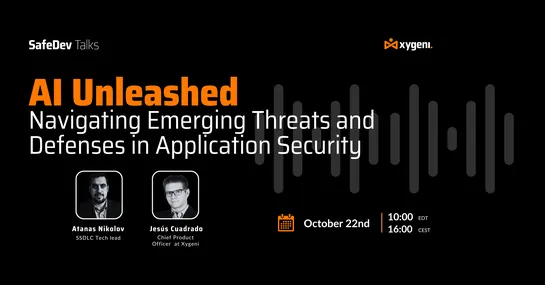
Join our Upcomping Online Podcast Episode on AI Unleashed: Navigating Emerging Threats and Defenses in AppSec

AI is transforming Application Security, powering both new attacks and smarter defenses.
Join us to explore how AI-driven threats, such as polymorphic malware, prompt injections, and model tampering, are reshaping Application Security (AppSec) and how to defend against them.

📅 Date: October 22nd
⏰ Time: 16:00 (CEST) / 10:00 (EDT)
🎙 Speakers:

Atanas Nikolov — DevSecOps Expert @ RNDC Bulgaria

Jesús Cuadrado — CPO @ Xygeni

🔗 Register here to join live → https://www.linkedin.com/events/aiunleashed-navigatingemergingt7382047771396104192/

Why Attend:
💠 Learn the latest AI-powered AppSec threats
💠 Discover practical AI-driven defense techniques
💠 Strengthen your AppSec strategy for the AI era

Join us!
SafeDev Talk - AI Unleashed Navigating Threats & Defenses (1)
 Activity
 Activity
Story
@laura_garcia shared a post, 5 months, 1 week ago
Software Developer, RELIANOID

Security and compliance are not optional—they’re the backbone of trust.

At RELIANOID, our operations and load balancing platform are fully aligned with the ISO/IEC 27001:2022 framework, ensuring that every policy, control, and process we implement supports the same rigorous standards as certified environments. From governance and risk management to encryption, access co..

iso27001 image ssnn
News FAUN.dev() Team
@devopslinks shared an update, 5 months, 1 week ago
FAUN.dev()

Microsoft Launches Azure Kubernetes Service Automatic for Developers

Keda

Microsoft announces Azure Kubernetes Service Automatic, a fully-managed Kubernetes offering that reduces operational overhead and integrates security and reliability features by default.

News FAUN.dev() Team
@devopslinks shared an update, 5 months, 1 week ago
FAUN.dev()

GitHub Introduces Post-Quantum Secure SSH Key Exchange Algorithm

GitHub enabled a post-quantum secure SSH key exchange algorithm on September 17, 2025, to protect against future quantum decryption threats.

News FAUN.dev() Team
@kala shared an update, 5 months, 1 week ago
FAUN.dev()

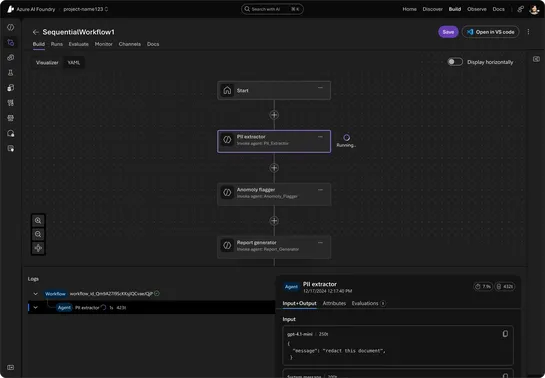
Microsoft Launches Open-Source Agent Framework for AI Development

Microsoft unveils the open-source Agent Framework to streamline AI agent development, integrating Semantic Kernel and AutoGen for enhanced accessibility and stability.
Microsoft Agent Framework
The Open Source Security Foundation (OpenSSF) is an industry-backed foundation focused on strengthening the security of the global open source software ecosystem. It brings together major technology companies, cloud providers, open source communities, and security experts to address systemic security challenges that affect how software is built, distributed, and consumed.

OpenSSF was launched in 2021 and operates under the Linux Foundation, combining efforts from earlier initiatives such as the Core Infrastructure Initiative (CII) and industry-led supply chain security programs. Its mission is to make open source software more trustworthy, resilient, and secure by default, without placing unrealistic burdens on maintainers.

The foundation works across several key areas:

- Supply chain security: Developing frameworks, best practices, and tools to secure the software lifecycle from source to deployment. This includes stewardship of projects like sigstore and leadership on SLSA (Supply-chain Levels for Software Artifacts).

- Security tooling: Supporting and incubating open source tools that help developers detect, prevent, and remediate vulnerabilities at scale.

- Vulnerability management: Improving how vulnerabilities are discovered, disclosed, scored, and fixed across open source projects.

- Education and best practices: Publishing guidance, training, and maturity models such as the OpenSSF Best Practices Badge Program, which helps projects assess and improve their security posture.

- Metrics and research: Advancing data-driven approaches to understanding open source security risks and ecosystem health.

OpenSSF operates through working groups and special interest groups (SIGs) that focus on specific problem areas like securing builds, improving dependency management, or automating provenance generation. This structure allows practitioners to collaborate on concrete, actionable solutions rather than high-level policy alone.

By aligning maintainers, enterprises, and security teams, OpenSSF plays a central role in reducing large-scale risks such as dependency confusion, compromised build systems, and malicious package injection. Its work underpins many modern DevSecOps and cloud-native security practices and is increasingly referenced by governments and enterprises as a baseline for secure software development.