Join us

ContentUpdates from The Open Source Security Foundation (OpenSSF) is a...
Link
@varbear shared a link, 3 months, 3 weeks ago
FAUN.dev()

Practical coding with AI Assistance

Developers using AI agents like Cursor are hitting a wall: vague, messy blob-code. Especially in frameworks likeLangChain, where sketchy training data can produce long-winded or broken output. The problem? AI generates "just vibes" instead of structure. The fix: go in with a plan. Aspec-driven, cont.. read more  
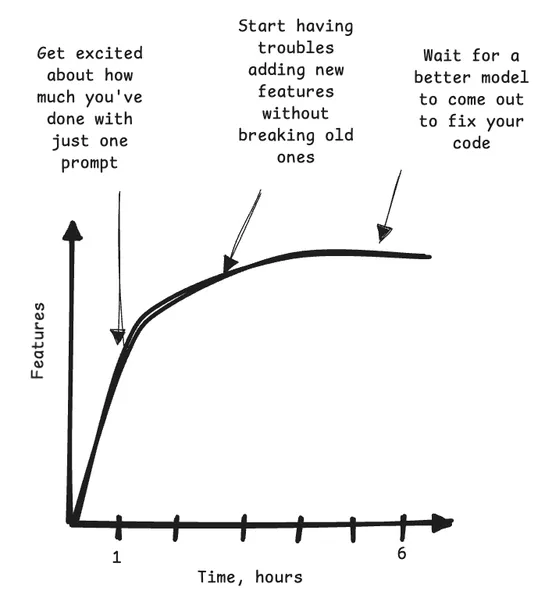
Practical coding with AI Assistance
Link
@varbear shared a link, 3 months, 3 weeks ago
FAUN.dev()

I Analyzed 2,500 YouTube Videos to Understand Why RedLetterMedia Are Internet Darlings

A data analyst pulled subtitles and metadata from ~2,500 YouTube videos, rigged upyt-dlpwith proxy routing and scripts to automate the haul. The goal? Stack RedLetterMedia (RLM) against algorithm-first mega-channels like MrBeast and MKBHD. By slicing through heatmaps, subtitles, and metadata, the an.. read more  

I Analyzed 2,500 YouTube Videos to Understand Why RedLetterMedia Are Internet Darlings
Link
@kaptain shared a link, 3 months, 3 weeks ago
FAUN.dev()

AWS Backup now supports Amazon EKS

AWS Backup just added support forAmazon EKS. Now you can back up cluster state and persistent volumes, no agents, no third-party hacks. It handles scheduling, retention, and immutability out of the box. Restore full clusters or drill down to specific components, even across Regions and accounts... read more  

Link
@kaptain shared a link, 3 months, 3 weeks ago
FAUN.dev()

ConfigHub: Why Your Internal Developer Platform Needs It

See why GitOps often feels like a sprawl of configs, discover how to manage Configuration as Data for your Kubernetes platform, and learn how ConfigHub can help... read more  

Link
@kaptain shared a link, 3 months, 3 weeks ago
FAUN.dev()

Amazon Elastic Kubernetes Service gets independent affirmation of its zero operator access design

Amazon EKS just went full Fort Knox. It now runs on azero operator accessmodel - meaning even AWS can’t peek inside your Kubernetes control or data plane. The setup leans on theNitro System’s confidential compute,guarded APIs, andmulti-party approval pipelines. NCC Group also kicked the tires and ga.. read more  

Link
@kaptain shared a link, 3 months, 3 weeks ago
FAUN.dev()

KServe becomes a CNCF incubating project

KServe is upgrading.The CNCF pulled it into incubation, backing it astheKubernetes-native way to serve both generative and predictive AI. Translation: it’s not a side project anymore - it’s core infra. Version 0.15 steps up with tighter integrations across the stack:vLLM,Envoy Gateway,llm-d,Knative,.. read more  

KServe becomes a CNCF incubating project
Link
@kaptain shared a link, 3 months, 3 weeks ago
FAUN.dev()

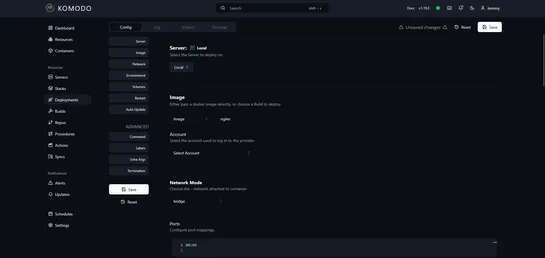
Using Komodo to Run Docker Commands from a Web Interface

Komodo drops a slick browser-based UI for wrangling Docker - containers, images, networks, and Compose stacks - through a real-time visual dashboard. Think native Docker meets one-click redeploys, host curation via agents, and reusable container configs that don’t make you hate YAML... read more  

Using Komodo to Run Docker Commands from a Web Interface
Link
@kaptain shared a link, 3 months, 3 weeks ago
FAUN.dev()

Streamline Complex AI Inference on Kubernetes with NVIDIA Grove

NVIDIA releasedGrove, a Kubernetes API baked intoDynamo, to wrangle the chaos of modern AI inference. It pulls apart your big, messy model into clean, discrete chunks - prefill, decode, routing - and runs them like a single, orchestrated act. The trick?Custom hierarchical resources. They let Grove h.. read more  

Link
@kaptain shared a link, 3 months, 3 weeks ago
FAUN.dev()

Prepare for the Kubernetes Administrator Certification and Pass

A tight 2-hour YouTube course built for theCKA examgrind. It's all real-world tasks: cluster setup, upgrades, troubleshooting. No fluff, just shell commands and Kubernetes in action. It walks through the gritty bits:etcdbackup and restore, node affinity, tolerations, and how to set upIngresslike som.. read more  

Prepare for the Kubernetes Administrator Certification and Pass
Link
@kala shared a link, 3 months, 3 weeks ago
FAUN.dev()

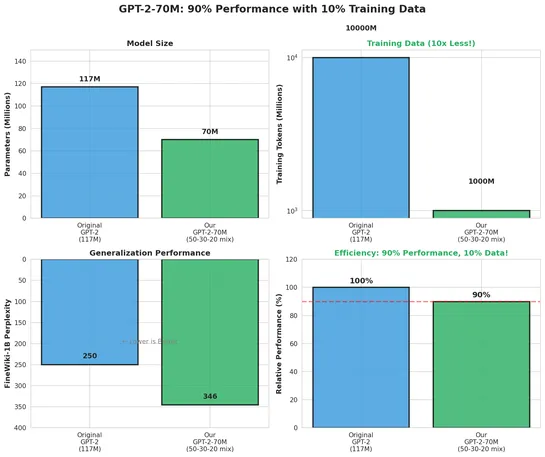
The 1 Billion Token Challenge: Finding the Perfect Pre-training Mix

Researchers squeezed GPT-2-class performance out of a model trained on just1 billion tokens- 10× less data - by dialing in a sharp dataset mix:50% finePDFs, 30% DCLM-baseline, 20% FineWeb-Edu. Static mixing beat curriculum strategies. No catastrophic forgetting. No overfitting. And it hit90%+of GPT-.. read more  

The 1 Billion Token Challenge: Finding the Perfect Pre-training Mix
The Open Source Security Foundation (OpenSSF) is an industry-backed foundation focused on strengthening the security of the global open source software ecosystem. It brings together major technology companies, cloud providers, open source communities, and security experts to address systemic security challenges that affect how software is built, distributed, and consumed.

OpenSSF was launched in 2021 and operates under the Linux Foundation, combining efforts from earlier initiatives such as the Core Infrastructure Initiative (CII) and industry-led supply chain security programs. Its mission is to make open source software more trustworthy, resilient, and secure by default, without placing unrealistic burdens on maintainers.

The foundation works across several key areas:

- Supply chain security: Developing frameworks, best practices, and tools to secure the software lifecycle from source to deployment. This includes stewardship of projects like sigstore and leadership on SLSA (Supply-chain Levels for Software Artifacts).

- Security tooling: Supporting and incubating open source tools that help developers detect, prevent, and remediate vulnerabilities at scale.

- Vulnerability management: Improving how vulnerabilities are discovered, disclosed, scored, and fixed across open source projects.

- Education and best practices: Publishing guidance, training, and maturity models such as the OpenSSF Best Practices Badge Program, which helps projects assess and improve their security posture.

- Metrics and research: Advancing data-driven approaches to understanding open source security risks and ecosystem health.

OpenSSF operates through working groups and special interest groups (SIGs) that focus on specific problem areas like securing builds, improving dependency management, or automating provenance generation. This structure allows practitioners to collaborate on concrete, actionable solutions rather than high-level policy alone.

By aligning maintainers, enterprises, and security teams, OpenSSF plays a central role in reducing large-scale risks such as dependency confusion, compromised build systems, and malicious package injection. Its work underpins many modern DevSecOps and cloud-native security practices and is increasingly referenced by governments and enterprises as a baseline for secure software development.