Join us

ContentUpdates and recent posts about Flask..
Link
@faun shared a link, 11 months, 1 week ago
FAUN.dev()

Asynchrony is not Concurrency

Asynchronyisn't a twin toConcurrencyin Zig. It juggles async tasks without leaning on multi-threading, letting sync and async mingle harmoniously. Concurrency craves overlap, but Zig's savvy. When resources get stingy, it smartly reverts tasks to synchronous, dodging drama like deadlocks or sudden c.. read more  

Asynchrony is not Concurrency
Link
@faun shared a link, 11 months, 1 week ago
FAUN.dev()

10 Unspoken NestJS Secrets for Production at Scale

UnlockNestJSspeed by steering clear of full module preloads. This trick slashes cold start drags, cutting first request delays by up to10 seconds... read more  

Link
@faun shared a link, 11 months, 1 week ago
FAUN.dev()

“A Programmer Who Reads Is Worth Two”: Tech Books for Summer 2025

Crafting an LLM from the ground up? Dive intoSebastian Raschka’s guide. It tackles everything: data wrangling to toeing the ethical line. Seasoned ML pros will nod in approval. Craving a sharp take on AI’s charming deceptions?Narayanan & Kapoor's"AI Snake Oil" spills the beans on marketing myths wit.. read more  

“A Programmer Who Reads Is Worth Two”: Tech Books for Summer 2025
Link
@faun shared a link, 11 months, 1 week ago
FAUN.dev()

How to catch GitHub Actions workflow injections before attackers do

GitHub Actions injections areone of the most common vulnerabilities in projects. Use CodeQL to scan workflows and protect against these risks effectively... read more  

Link
@faun shared a link, 11 months, 1 week ago
FAUN.dev()

Exhausted man defeats AI model in world coding championship

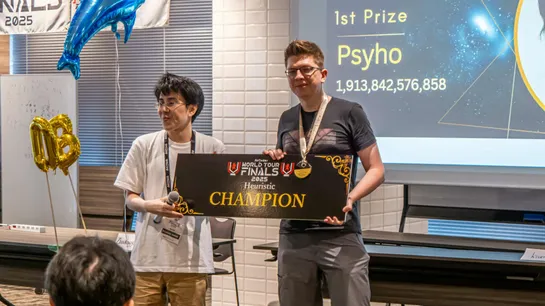
A weary-eyed Polish coder,Przemysław Dębiak, bested an OpenAI model in a grueling 10-hour face-off, reminiscent ofJohn Henry’sepic duel against the steam-powered behemoth... read more  

Exhausted man defeats AI model in world coding championship
Link
@faun shared a link, 11 months, 1 week ago
FAUN.dev()

Understand CPU Branch Instructions Better

Branch prediction matters. Why? About a quarter of instructions are branches, and modern CPUs nail an accuracyabove 90%. Yet, those often-pesky branches can choke CPUs, stalling instruction flow. So, take a wrench to yourif-else logic. Trim indirect branches whenever you can—your CPU will thank you... read more  

Link
@faun shared a link, 11 months, 1 week ago
FAUN.dev()

Containers: Everything You Need To Know

cgroupsand namespaces anchor Linux containers, isolating resources and processes like gatekeepers with a mission. On macOS and Windows, these containers ride in VMs withWSL2orLinuxKit, putting on their "welcome to the virtual world" hats. EnterrunC, executing OCI-built images with isolation flair, w.. read more  

Containers: Everything You Need To Know
Link
@faun shared a link, 11 months, 1 week ago
FAUN.dev()

Crawling a billion web pages in just over 24 hours

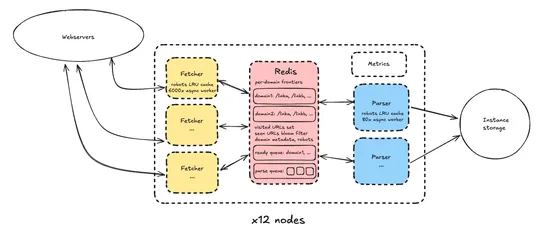
Imagine tearing through1 billion pages in a single dayon a shoestring budget. This crawler pulled it off with12 nodes and some savvy async maneuvering. But here's the kicker: it wasn’t the fetching that choked the CPU. Nope, it was the parsing. Today’s web behemoths, bloated with JavaScript and othe.. read more  

Crawling a billion web pages in just over 24 hours
Link
@faun shared a link, 11 months, 1 week ago
FAUN.dev()

Parsing 1 Billion Rows in Bun/Typescript Under 10 Seconds

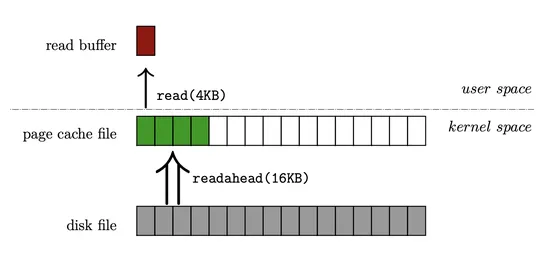
Buntries to swallow files over 4GB and promptly chokes. The culprit? ItsBuffercaps out at 4GB. The fix? Slice files into chunks under 4GB but keep the buffer lean, no more than 128KB, to keep things zippy. Pull out the big guns—workers. This move fires up all CPU cores, slashing processing time from.. read more  

Parsing 1 Billion Rows in Bun/Typescript Under 10 Seconds
Link
@faun shared a link, 11 months, 1 week ago
FAUN.dev()

Lessons from scaling PostgreSQL queues to 100K events

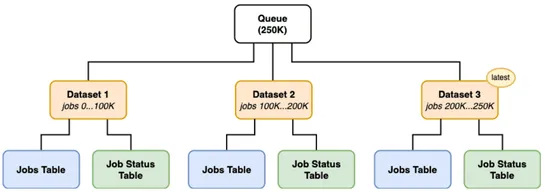
PostgreSQLjuggles 100,000 events per second. Just needs some index wizardry and query twerking. The problem? Table bloat and Write Amplification. Gross. Enter the mightyCOPY—it bulldozes through bulk data, politely ignoring the usualInsertdrag. And those recursiveCTEs? They pull off loose index scan.. read more  

Lessons from scaling PostgreSQL queues to 100K events
Flask is an open-source web framework written in Python and created by Armin Ronacher in 2010. It is known as a microframework, not because it is weak or incomplete, but because it provides only the essential building blocks for developing web applications. Its core focuses on handling HTTP requests, defining routes, and rendering templates, while leaving decisions about databases, authentication, form handling, and other components to the developer. This minimalistic design makes Flask lightweight, flexible, and easy to learn, but also powerful enough to support complex systems when extended with the right tools.

At the heart of Flask are two libraries: Werkzeug, which is a WSGI utility library that handles the low-level details of communication between web servers and applications, and Jinja2, a templating engine that allows developers to write dynamic HTML pages with embedded Python logic. By combining these two, Flask provides a clean and pythonic way to create web applications without imposing strict architectural patterns.

One of the defining characteristics of Flask is its explicitness. Unlike larger frameworks such as Django, Flask does not try to hide complexity behind layers of abstraction or dictate how a project should be structured. Instead, it gives developers complete control over how they organize their code and which tools they integrate. This explicit nature makes applications easier to reason about and gives teams the freedom to design solutions that match their exact needs. At the same time, Flask benefits from a vast ecosystem of extensions contributed by the community. These extensions cover areas such as database integration through SQLAlchemy, user session and authentication management, form validation with CSRF protection, and database migration handling. This modular approach means a developer can start with a very simple application and gradually add only the pieces they require, avoiding the overhead of unused components.

Flask is also widely appreciated for its simplicity and approachability. Many developers write their first web application in Flask because the learning curve is gentle, the documentation is clear, and the framework itself avoids unnecessary complexity. It is particularly well suited for building prototypes, REST APIs, microservices, or small to medium-sized web applications. At the same time, production-grade deployments are supported by running Flask applications on WSGI servers such as Gunicorn or uWSGI, since the development server included with Flask is intended only for testing and debugging.

The strengths of Flask lie in its minimalism, flexibility, and extensibility. It gives developers the freedom to assemble their application architecture, choose their own libraries, and maintain tight control over how things work under the hood. This is attractive to experienced engineers who dislike being boxed in by heavy frameworks. However, the same freedom can become a limitation. Flask does not include features like an ORM, admin interface, or built-in authentication system, which means teams working on very large applications must take on more responsibility for enforcing patterns and maintaining consistency. In situations where a project requires an opinionated, all-in-one solution, Django or another full-stack framework may be a better fit.

In practice, Flask has grown far beyond its initial positioning as a lightweight tool. It has been used by startups for rapid prototypes and by large companies for production systems. Its design philosophy—keep the core simple, make extensions easy, and let developers decide—continues to attract both beginners and professionals. This balance between simplicity and power has made Flask one of the most enduring and widely used Python web frameworks.