Join us

ContentUpdates and recent posts about Flask..
Link
@faun shared a link, 11 months, 1 week ago
FAUN.dev()

Parsing 1 Billion Rows in Bun/Typescript Under 10 Seconds

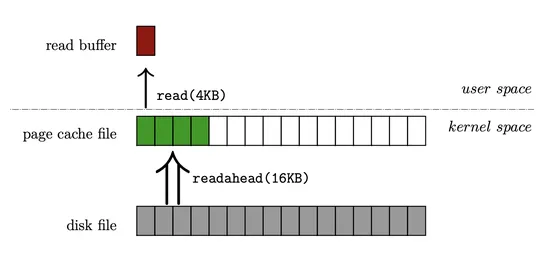
Buntries to swallow files over 4GB and promptly chokes. The culprit? ItsBuffercaps out at 4GB. The fix? Slice files into chunks under 4GB but keep the buffer lean, no more than 128KB, to keep things zippy. Pull out the big guns—workers. This move fires up all CPU cores, slashing processing time from.. read more  
Parsing 1 Billion Rows in Bun/Typescript Under 10 Seconds
Link
@faun shared a link, 11 months, 1 week ago
FAUN.dev()

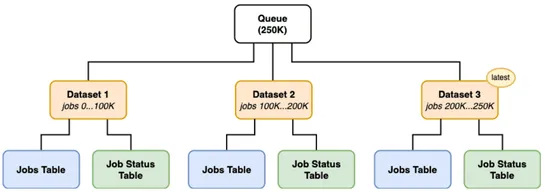
Lessons from scaling PostgreSQL queues to 100K events

PostgreSQLjuggles 100,000 events per second. Just needs some index wizardry and query twerking. The problem? Table bloat and Write Amplification. Gross. Enter the mightyCOPY—it bulldozes through bulk data, politely ignoring the usualInsertdrag. And those recursiveCTEs? They pull off loose index scan.. read more  

Lessons from scaling PostgreSQL queues to 100K events
Link
@faun shared a link, 11 months, 1 week ago
FAUN.dev()

How Go 1.24's Swiss Tables saved us hundreds of gigabytes

Uncovered a memory regression inGo 1.24. Pored over memory patterns in countless pods like a detective with too much caffeine. Pinpointed sneaky allocation blunders... read more  

Link
@faun shared a link, 11 months, 1 week ago
FAUN.dev()

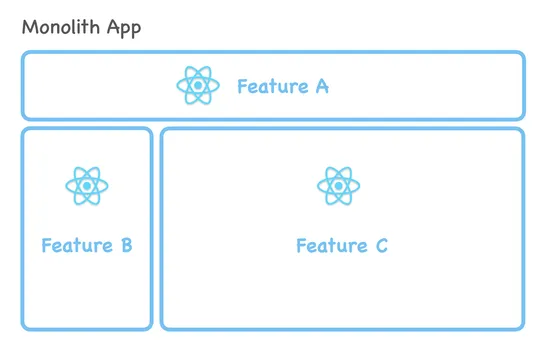
The Micro-Frontend Architecture Handbook

iframes: Secure and isolated, but clunky as dial-up. Best for legacy cleanup missions.Web Components: Native and framework-agnostic, perfect for reusable UI with Shadow DOM flair.single-spa: Juggles multiple SPAs with the finesse of a circus, though it gets chatty.Module Federation: Real-time module.. read more  

The Micro-Frontend Architecture Handbook
Link
@faun shared a link, 11 months, 1 week ago
FAUN.dev()

Death by a thousand slops

By 2025,AI slopwill infect20%of curl's security submissions. Meanwhile, a mere5%reveal actual threats. Cutting the$90,000bounty might fend off the slopsters, but it'll scare away the real wizards, too... read more  

Death by a thousand slops
Link
@faun shared a link, 11 months, 1 week ago
FAUN.dev()

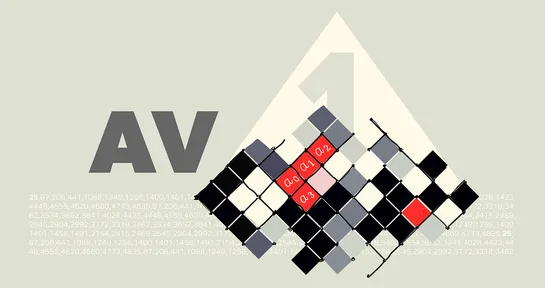
AV1 @ Scale: Film Grain Synthesis, The Awakening

AV1 Film Grain Synthesis (FGS)tricks the eye by imitating film grain after compression. Cuts bitrates like a ninja and keeps the artistry alive. Models grasp grain's pattern and punch, ensuring sharp visuals on bandwidth-challenged gadgets. Grainy magic, delivered neatly!.. read more  

AV1 @ Scale: Film Grain Synthesis, The Awakening
Link
@faun shared a link, 11 months, 1 week ago
FAUN.dev()

Scalability is not performance

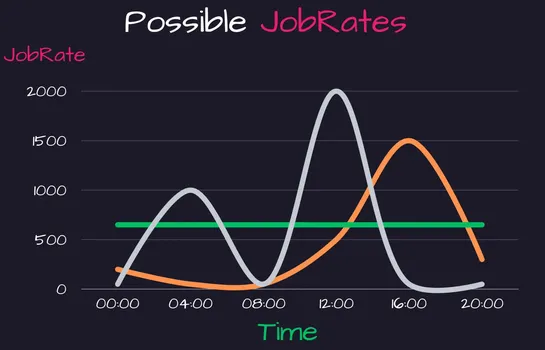
Boostingscalabilityin distributed systems isn't just a mad dash for speed. It's about morphing resources to tackle shifting demand. Nail scalability, and you balance infrastructure costs with job handling efficiency, all while juggling resource utilization at a sweet spot around 0.5. Crave a drama-f.. read more  

Scalability is not performance
Link
@faun shared a link, 11 months, 1 week ago
FAUN.dev()

OpenAI deputizes ChatGPT to serve as an agent

OpenAI's ChatGPTnow flexes its muscles as an agent. It juggles complex tasks, dives into spreadsheets, and pokes at APIs. But hey, watch your back—new levels of power mean fresh data security headaches. While it shrugs off most prompt injection attacks, the bot's got strict manners. It always asks b.. read more  

OpenAI deputizes ChatGPT to serve as an agent
Link
@faun shared a link, 11 months, 1 week ago
FAUN.dev()

Rethinking CLI interfaces for AI

LLMs fumble with CLI tools because they lack context. Tweaking APIs and tools for LLM savvy could cut mistakes and boost context efficiency.Smarter interfaces might keep them from getting stuck in infinite loops or bungling directories, slashing tool calls and making automation crisp and tidy... read more  

Rethinking CLI interfaces for AI
Link
@faun shared a link, 11 months, 1 week ago
FAUN.dev()

AWS goes full speed ahead on the AI agent train

AWS Bedrock AgentCorepromises AI agent deployment at ungodly scales. But hang onto your hats: by 2027, up to 40% of these endeavors might implode without a squeak of success... read more  

AWS goes full speed ahead on the AI agent train
Flask is an open-source web framework written in Python and created by Armin Ronacher in 2010. It is known as a microframework, not because it is weak or incomplete, but because it provides only the essential building blocks for developing web applications. Its core focuses on handling HTTP requests, defining routes, and rendering templates, while leaving decisions about databases, authentication, form handling, and other components to the developer. This minimalistic design makes Flask lightweight, flexible, and easy to learn, but also powerful enough to support complex systems when extended with the right tools.

At the heart of Flask are two libraries: Werkzeug, which is a WSGI utility library that handles the low-level details of communication between web servers and applications, and Jinja2, a templating engine that allows developers to write dynamic HTML pages with embedded Python logic. By combining these two, Flask provides a clean and pythonic way to create web applications without imposing strict architectural patterns.

One of the defining characteristics of Flask is its explicitness. Unlike larger frameworks such as Django, Flask does not try to hide complexity behind layers of abstraction or dictate how a project should be structured. Instead, it gives developers complete control over how they organize their code and which tools they integrate. This explicit nature makes applications easier to reason about and gives teams the freedom to design solutions that match their exact needs. At the same time, Flask benefits from a vast ecosystem of extensions contributed by the community. These extensions cover areas such as database integration through SQLAlchemy, user session and authentication management, form validation with CSRF protection, and database migration handling. This modular approach means a developer can start with a very simple application and gradually add only the pieces they require, avoiding the overhead of unused components.

Flask is also widely appreciated for its simplicity and approachability. Many developers write their first web application in Flask because the learning curve is gentle, the documentation is clear, and the framework itself avoids unnecessary complexity. It is particularly well suited for building prototypes, REST APIs, microservices, or small to medium-sized web applications. At the same time, production-grade deployments are supported by running Flask applications on WSGI servers such as Gunicorn or uWSGI, since the development server included with Flask is intended only for testing and debugging.

The strengths of Flask lie in its minimalism, flexibility, and extensibility. It gives developers the freedom to assemble their application architecture, choose their own libraries, and maintain tight control over how things work under the hood. This is attractive to experienced engineers who dislike being boxed in by heavy frameworks. However, the same freedom can become a limitation. Flask does not include features like an ORM, admin interface, or built-in authentication system, which means teams working on very large applications must take on more responsibility for enforcing patterns and maintaining consistency. In situations where a project requires an opinionated, all-in-one solution, Django or another full-stack framework may be a better fit.

In practice, Flask has grown far beyond its initial positioning as a lightweight tool. It has been used by startups for rapid prototypes and by large companies for production systems. Its design philosophy—keep the core simple, make extensions easy, and let developers decide—continues to attract both beginners and professionals. This balance between simplicity and power has made Flask one of the most enduring and widely used Python web frameworks.