Join us

ContentUpdates and recent posts about Flask..
Link
@faun shared a link, 10 months, 4 weeks ago
FAUN.dev()

Seeing like an LLM

LLMs function as next-token predictors. With scant user context, they hallucinate—spinning fresh backstories. As these models morph into autonomous agents, context engineering—feeding facts, memory, tools, guardrails—halts rogue behavior. Trend to watch:A jump in context engineering. It pins LLMs t.. read more  
Seeing like an LLM
Link
@faun shared a link, 10 months, 4 weeks ago
FAUN.dev()

Intel CEO Letter to Employees

Intel scraps itsGermanyandPoland foundries, shifting assembly fromCosta RicatoVietnamandMalaysia. It slows Ohio fab construction while ramping upIntel 18A/18A‑Pand planningIntel 14Aaround key customers. SMT returns. Focus shifts to Panther Lake, Nova Lake, and Granite Rapids.AI strategy pivots towar.. read more  

Intel CEO Letter to Employees
Link
@faun shared a link, 10 months, 4 weeks ago
FAUN.dev()

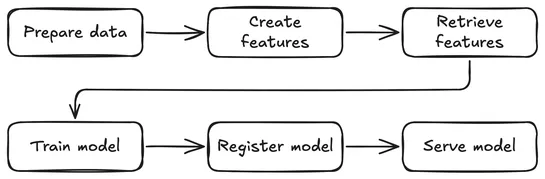
From Raw Data to Model Serving: A Blueprint for the AI/ML Lifecycle with

Post maps out aKubeflow Pipelinesworkflow onSpark,Feast, andKServe. It tackles fraud detection end-to-end: data prep, feature store, live inference. It turns infra into code, ensures feature parity in train and serve, and registers ONNX models in theKubeflow Model Registry... read more  

From Raw Data to Model Serving: A Blueprint for the AI/ML Lifecycle with
Link
@faun shared a link, 10 months, 4 weeks ago
FAUN.dev()

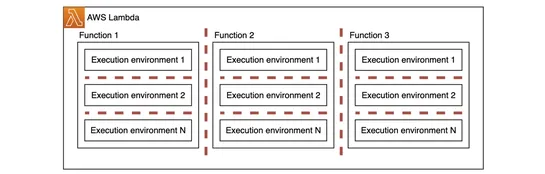
How Zapier runs isolated tasks on AWS Lambda and upgrades functions at scale

Zapier snaps each customer Zap into its ownAWS Lambda, cradled inside leanFirecracker microVMs. It wrangles 100k+ functions under anEKScontrol plane and inventory DB. When runtimes retire, Zapier swings into action: a set ofTerraform modulespaired with a customLambda canary tool. Traffic trickles in.. read more  

How Zapier runs isolated tasks on AWS Lambda and upgrades functions at scale
Link
@faun shared a link, 10 months, 4 weeks ago
FAUN.dev()

What Is IDOR? Finding and Preventing Insecure Direct Object References in AWS APIs

Attackers swap predictable IDs. They slip intoAWS APIs,Lambda functions, internal tools. Fuzzers likeffufflag sneaky HTTP 200s.Burp Intruderbubbles up 404 probes.CloudWatchlogs trace every call. Random UUIDs seal ID gaps... read more  

What Is IDOR? Finding and Preventing Insecure Direct Object References in AWS APIs
Link
@faun shared a link, 10 months, 4 weeks ago
FAUN.dev()

How GitHub engineers tackle platform problems

Product engineersare like builders ofGundam models, construcing the final product, whileplatform engineerssupply the tools needed to build these kits. Understanding theGundam analogyhelps differentiate engineering roles at GitHub... read more  

Link
@faun shared a link, 10 months, 4 weeks ago
FAUN.dev()

The Cybersecurity Blind Spot in DevOps Pipelines

DevOps pipelines serve as superhighways for cybercriminals to target with credential leaks, supply chain infiltration, misconfigurations, and dependency vulnerabilities. Security must evolve with development to combat these sophisticated attacks... read more  

Link
@faun shared a link, 10 months, 4 weeks ago
FAUN.dev()

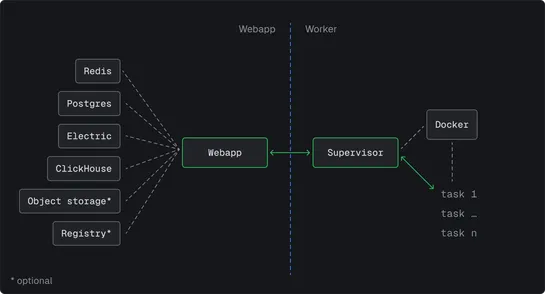
Self-hosting Trigger.dev v4 using Docker

Trigger.dev v4 sharpens self-hosting. It pins everything toDocker Compose. It bakesregistryandobject storagein. It chops YAML bloat. Env-var docs unify configs. Resource caps lock down security. Scaling? Spin up more worker containers... read more  

Self-hosting Trigger.dev v4 using Docker
Link
@faun shared a link, 10 months, 4 weeks ago
FAUN.dev()

kubriX: Your Out-of-the-Box Internal Developer Platform (IDP) for Kubernetes

Discover how kubriX seamlessly integrates leading open-source tools like Argo CD, Kargo, and Backstage to deliver a fully functional IDP out of the box. This blog post provides a deep dive into the technical aspects of kubriX, showcasing its capabilities and value proposition within the realm of Int.. read more  

Link
@faun shared a link, 10 months, 4 weeks ago
FAUN.dev()

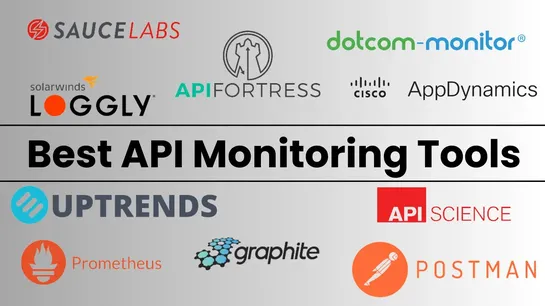
10 Best API Monitoring Tools in 2025

API monitoring tracks latency, errors and uptime. Tools tag real-time metrics. They fire alerts. They map traces. They automate tests. They crunch analytics. Examples span OSS starsPrometheus,Graphiteand SaaS champsAppDynamics,Postman. Each hooks into CI/CD pipelines and plants global synthetic prob.. read more  

10 Best API Monitoring Tools in 2025
Flask is an open-source web framework written in Python and created by Armin Ronacher in 2010. It is known as a microframework, not because it is weak or incomplete, but because it provides only the essential building blocks for developing web applications. Its core focuses on handling HTTP requests, defining routes, and rendering templates, while leaving decisions about databases, authentication, form handling, and other components to the developer. This minimalistic design makes Flask lightweight, flexible, and easy to learn, but also powerful enough to support complex systems when extended with the right tools.

At the heart of Flask are two libraries: Werkzeug, which is a WSGI utility library that handles the low-level details of communication between web servers and applications, and Jinja2, a templating engine that allows developers to write dynamic HTML pages with embedded Python logic. By combining these two, Flask provides a clean and pythonic way to create web applications without imposing strict architectural patterns.

One of the defining characteristics of Flask is its explicitness. Unlike larger frameworks such as Django, Flask does not try to hide complexity behind layers of abstraction or dictate how a project should be structured. Instead, it gives developers complete control over how they organize their code and which tools they integrate. This explicit nature makes applications easier to reason about and gives teams the freedom to design solutions that match their exact needs. At the same time, Flask benefits from a vast ecosystem of extensions contributed by the community. These extensions cover areas such as database integration through SQLAlchemy, user session and authentication management, form validation with CSRF protection, and database migration handling. This modular approach means a developer can start with a very simple application and gradually add only the pieces they require, avoiding the overhead of unused components.

Flask is also widely appreciated for its simplicity and approachability. Many developers write their first web application in Flask because the learning curve is gentle, the documentation is clear, and the framework itself avoids unnecessary complexity. It is particularly well suited for building prototypes, REST APIs, microservices, or small to medium-sized web applications. At the same time, production-grade deployments are supported by running Flask applications on WSGI servers such as Gunicorn or uWSGI, since the development server included with Flask is intended only for testing and debugging.

The strengths of Flask lie in its minimalism, flexibility, and extensibility. It gives developers the freedom to assemble their application architecture, choose their own libraries, and maintain tight control over how things work under the hood. This is attractive to experienced engineers who dislike being boxed in by heavy frameworks. However, the same freedom can become a limitation. Flask does not include features like an ORM, admin interface, or built-in authentication system, which means teams working on very large applications must take on more responsibility for enforcing patterns and maintaining consistency. In situations where a project requires an opinionated, all-in-one solution, Django or another full-stack framework may be a better fit.

In practice, Flask has grown far beyond its initial positioning as a lightweight tool. It has been used by startups for rapid prototypes and by large companies for production systems. Its design philosophy—keep the core simple, make extensions easy, and let developers decide—continues to attract both beginners and professionals. This balance between simplicity and power has made Flask one of the most enduring and widely used Python web frameworks.