Join us

ContentUpdates and recent posts about Flask..
Link
@faun shared a link, 11 months ago
FAUN.dev()

Building a Secure, Scalable, and Automated Cloud-Native Platform on AWS with EKS, GitOps, and…

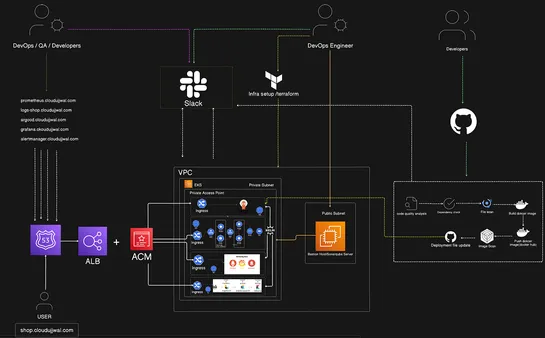
The blueprint carves out production-grade AWS infra. Terraform orchestrates VPCs with public and private subnets, deploys a Bastion host, spins up private EKS clusters, and stands up an internet-facing ALB armed with SSL/TLS. Argo CD drives GitOps. The CI pipeline runs SAST, builds Docker images, hu.. read more  
Building a Secure, Scalable, and Automated Cloud-Native Platform on AWS with EKS, GitOps, and…
Link
@faun shared a link, 11 months ago
FAUN.dev()

The Art of Azure RBAC for Kubernetes: A Complete Guide to Access Control Mastery

This article dives into Azure RBAC for Kubernetes. It maps each persona to pinpoint roles per namespace. Permissions stay minimal from the get-go. It ties role bindings toAzure AD groups, splits dev and prod, and flips on audit logs. Quarterly reviews, crisp docs keep RBAC lean and current... read more  

The Art of Azure RBAC for Kubernetes: A Complete Guide to Access Control Mastery
Link
@faun shared a link, 11 months ago
FAUN.dev()

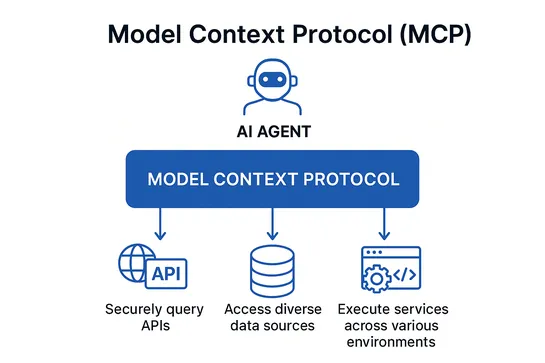
MCP Catalog: Finding the Right AI Tools for Your Project

Docker Desktop hatches a betaMCP CatalogandToolkit. It unleashes 100+ containerized Model Context Protocol servers loaded with metadata and use-case filters. Teams fire them via GUI or CLI. The catalog carvesDocker-builtimages from community builds, runs supply-chain scans, and seals isolation. Cust.. read more  

MCP Catalog: Finding the Right AI Tools for Your Project
Link
@faun shared a link, 11 months ago
FAUN.dev()

Critical VMware Tools VGAuth Vulnerabilities Enable Full System Access for Attackers

Two CVE-2025 vulns in VMware Tools allow SYSTEM access via named pipe hijacking and path traversal. Upgrade to 12.5.1+ ASAP for fixes. Administrators must upgrade... read more  

Critical VMware Tools VGAuth Vulnerabilities Enable Full System Access for Attackers
Link
@faun shared a link, 11 months ago
FAUN.dev()

We Added Chaos to Our CI/CD Pipelines — It Made Everything More Stable.

Wix’sMREteam injectsAI-drivenchaosintoCI/CDpipelines. Mobile releases gain speed and rock-solid stability. They harness hackathon-born prompt tests to bulletproof builds and deployments. Signal: AI resilience trials in pipelines mark a shift from rigid builds to probabilistic validation... read more  

We Added Chaos to Our CI/CD Pipelines — It Made Everything More Stable.
Link
@faun shared a link, 11 months ago
FAUN.dev()

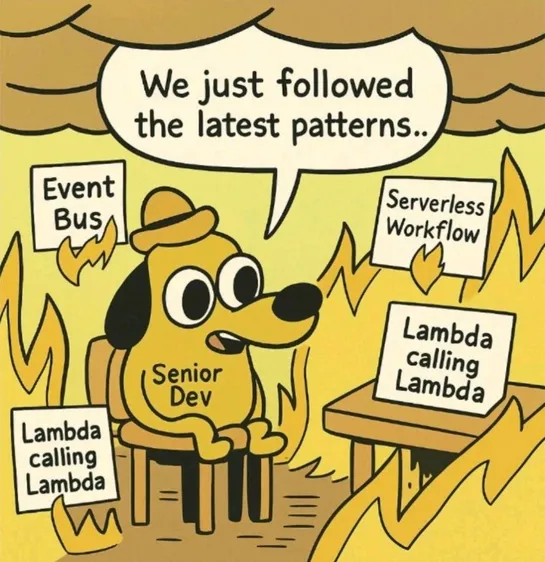
Serverless: The Illusion of Choice

A LinkedIn thread exposes a hack around AWS EventBridge’s256KBlimit. Someone chains Lambdas tocompressthendecompressevents. Serverless traps lurk: blown-upIAMpermissions. Triggers with zero validation. Wide-openegress. Unscanned packages fueling supply chain bombs... read more  

Serverless: The Illusion of Choice
Link
@faun shared a link, 11 months ago
FAUN.dev()

GitHub Spark in public preview for Copilot Pro+ subscribers

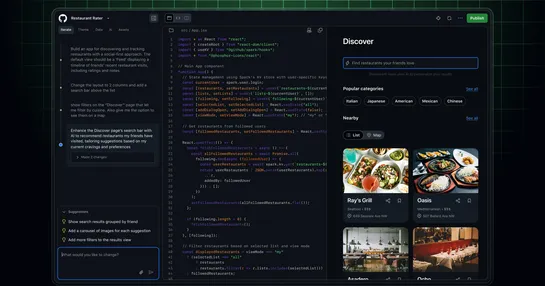
GitHub Spark spins natural-language prompts into full-stack AI apps in minutes. It tapsClaude Sonnet 4to scaffold UI and server logic. It hooks updata storage,LLM inference, hosting,GitHub Actions,Dependabot, plus multi-LLM smarts from OpenAI, Meta, DeepSeek and xAI—zero config. Trend to watch: AI .. read more  

GitHub Spark in public preview for Copilot Pro+ subscribers
Link
@faun shared a link, 11 months ago
FAUN.dev()

Kubernetes Image Builder Vulnerability Grants Root Access to Windows Nodes

A critical CVE-2025-7342 hauntsKubernetes Image Builder v0.1.44and earlier. It shipsNutanix/OVAimages with defaultWindows Administratorcreds intact. That slip-up invites root access on Windows nodes. Linux builds and other providers dodge this bullet. Mixed clusters run hot until images rebuild or p.. read more  

Link
@faun shared a link, 11 months ago
FAUN.dev()

A Mid-Year Look at CNCF Project Momentum

Cloud Native Computing Foundation’s mid-year report drops.Kubernetescommands 3,500+ authors.OpenTelemetryrockets to 1,884 contributors, snagging second in PR velocity.Backstageclimbs to 649.Argo(860) andFlux(156) lock GitOps in place.Kubeflowbreaks into the top 30 with 302. Trend to watch:Internal .. read more  

A Mid-Year Look at CNCF Project Momentum
Link
@faun shared a link, 11 months ago
FAUN.dev()

Centralized Amazon ECS task logging with Amazon OpenSearch

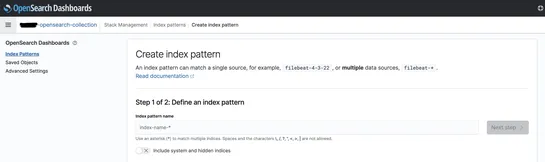
Amazon ECS tasks fire logs through a FireLens sidecar. Fluent Bit ships them into a shared Amazon OpenSearch Serverless domain. Cross-account IAM roles lock down access. The pipeline centralizes logs, unlocks full-text search, SQL and PPL queries, and slashes storage costs with on-demand indexing. .. read more  

Centralized Amazon ECS task logging with Amazon OpenSearch
Flask is an open-source web framework written in Python and created by Armin Ronacher in 2010. It is known as a microframework, not because it is weak or incomplete, but because it provides only the essential building blocks for developing web applications. Its core focuses on handling HTTP requests, defining routes, and rendering templates, while leaving decisions about databases, authentication, form handling, and other components to the developer. This minimalistic design makes Flask lightweight, flexible, and easy to learn, but also powerful enough to support complex systems when extended with the right tools.

At the heart of Flask are two libraries: Werkzeug, which is a WSGI utility library that handles the low-level details of communication between web servers and applications, and Jinja2, a templating engine that allows developers to write dynamic HTML pages with embedded Python logic. By combining these two, Flask provides a clean and pythonic way to create web applications without imposing strict architectural patterns.

One of the defining characteristics of Flask is its explicitness. Unlike larger frameworks such as Django, Flask does not try to hide complexity behind layers of abstraction or dictate how a project should be structured. Instead, it gives developers complete control over how they organize their code and which tools they integrate. This explicit nature makes applications easier to reason about and gives teams the freedom to design solutions that match their exact needs. At the same time, Flask benefits from a vast ecosystem of extensions contributed by the community. These extensions cover areas such as database integration through SQLAlchemy, user session and authentication management, form validation with CSRF protection, and database migration handling. This modular approach means a developer can start with a very simple application and gradually add only the pieces they require, avoiding the overhead of unused components.

Flask is also widely appreciated for its simplicity and approachability. Many developers write their first web application in Flask because the learning curve is gentle, the documentation is clear, and the framework itself avoids unnecessary complexity. It is particularly well suited for building prototypes, REST APIs, microservices, or small to medium-sized web applications. At the same time, production-grade deployments are supported by running Flask applications on WSGI servers such as Gunicorn or uWSGI, since the development server included with Flask is intended only for testing and debugging.

The strengths of Flask lie in its minimalism, flexibility, and extensibility. It gives developers the freedom to assemble their application architecture, choose their own libraries, and maintain tight control over how things work under the hood. This is attractive to experienced engineers who dislike being boxed in by heavy frameworks. However, the same freedom can become a limitation. Flask does not include features like an ORM, admin interface, or built-in authentication system, which means teams working on very large applications must take on more responsibility for enforcing patterns and maintaining consistency. In situations where a project requires an opinionated, all-in-one solution, Django or another full-stack framework may be a better fit.

In practice, Flask has grown far beyond its initial positioning as a lightweight tool. It has been used by startups for rapid prototypes and by large companies for production systems. Its design philosophy—keep the core simple, make extensions easy, and let developers decide—continues to attract both beginners and professionals. This balance between simplicity and power has made Flask one of the most enduring and widely used Python web frameworks.