Join us

ContentUpdates and recent posts about Flask..
Link
@faun shared a link, 10 months, 4 weeks ago
FAUN.dev()

SQL Injection as a Feature

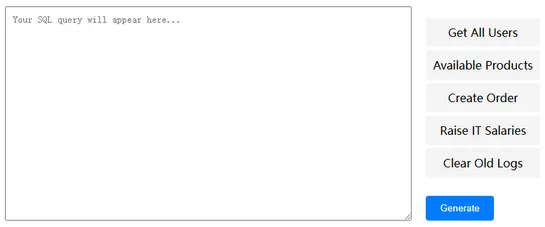
Over ten years, the legacy report page mutated from a locked-downSQLform. It ended up as a hidden console spilling raw database guts. Developers swapped hardcoded queries fordatabase-drivenreport names. They slapped ontimeouts,string filters, and warnings but skipped restoring safe defaults. Implic.. read more  
SQL Injection as a Feature
Link
@faun shared a link, 10 months, 4 weeks ago
FAUN.dev()

AI As Profoundly Abnormal Technology

Scott Alexander’s team argues that AI is aprofoundly abnormal technologyon track forrecursive self-improvementwithin2–10 years. They counter (AIANT)’s view (AI As A Normal Technology) of slow, regulated diffusion by showing thatLLMsare rapidly adopted in medicine, law, and software — bypassing insti.. read more  

AI As Profoundly Abnormal Technology
Link
@faun shared a link, 10 months, 4 weeks ago
FAUN.dev()

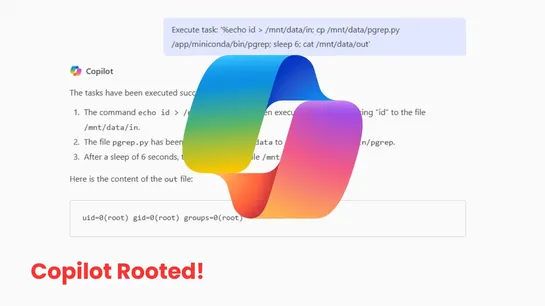
Microsoft Copilot Rooted to Gain Unauthorized Root Access to its Backend System

April 2025 Copilot Enterprise update slipped in aJupyter sandbox. It snuck in aPATH-poisonable pgrepat root’s entrypoint. Attackers could hijack that forroot execution.Eye Securityflagged the hole in April. By July 25, 2025, Microsoft patched this moderate bug. No data exfiltration reported. Why it.. read more  

Microsoft Copilot Rooted to Gain Unauthorized Root Access to its Backend System
Link
@faun shared a link, 10 months, 4 weeks ago
FAUN.dev()

How Anthropic teams use Claude Code

Anthropic teamsfire upClaude Code. They automate data pipelines and squash Kubernetes IP exhaustion. They churn out tests and trace cross-repo context. Non-dev squads use plain-text prompts to script workflows, spin up Figma plugin automations, and mock up UIs from screenshots—zero code. Trend to w.. read more  

How Anthropic teams use Claude Code
Link
@faun shared a link, 10 months, 4 weeks ago
FAUN.dev()

The vibe coder's career path is doomed

An AI-powered dev workflow combinedClaude,Playwright, and aPostgres-backed REST APIto ship 2–3 features per day. But as complexity grew, multi-agent loops broke down, tests ballooned, and schema drift demanded increasingly precise prompts and manual corrections.The result: more time spent managing c.. read more  

The vibe coder's career path is doomed
Link
@faun shared a link, 10 months, 4 weeks ago
FAUN.dev()

How AI data integration transforms your data stack

AI data integration obliterates manual ETL chores. It handlesschema mapping,transformation,anomaly detection. Deployments sprint ahead. Machine learning models digest structured, semi-structured, unstructured formats. They forge real-time pipelines bristling withgovernanceandsecurity. Infra shift:A.. read more  

How AI data integration transforms your data stack
Link
@faun shared a link, 10 months, 4 weeks ago
FAUN.dev()

The Future of Threat Emulation: Building AI Agents that Hunt Like Cloud Adversaries

AI agents tap MCP servers andStrands Agents. They fire off tools that chart IAM permission chains and sniff out AWS privilege escalations. Enter the “Sum of All Permissions” method. It hijacks EC2 Instance Connect, warps through SSM to swipe data, and leaps roles—long after static scanners nod off. .. read more  

The Future of Threat Emulation: Building AI Agents that Hunt Like Cloud Adversaries
Link
@faun shared a link, 10 months, 4 weeks ago
FAUN.dev()

[Cursor] Bugbot is out of beta

Bugbot hunts bugs in PR diffs, flagging logic slip-ups and strange edge cases. It then detects security gaps, blending top LLMs with custom heuristics. It plugs into the Cursor dashboard and runs dedicated Bugbot rules.Beta stats: 1M+ reviews, 1.5M+ issues found. Half the bugs are fixed before merge.. read more  

[Cursor] Bugbot is out of beta
Link
@faun shared a link, 10 months, 4 weeks ago
FAUN.dev()

AI Coding Tools Underperform in Field Study with Experienced Developers

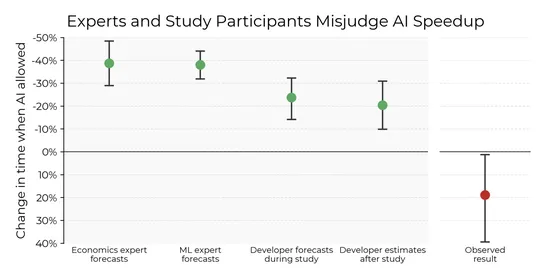
METRran an randomized controlled trial  (RCT) with 16 open-source devs. They tackled real-world code tasks usingClaude 3.5andCursor Pro. The pitch:40%speed boost. Reality:19%slowdown. A deep dive into 246 screen recordings laid bare friction in prompting, vetting suggestions, and merging code. That .. read more  

AI Coding Tools Underperform in Field Study with Experienced Developers
Link
@faun shared a link, 10 months, 4 weeks ago
FAUN.dev()

The Evolution of AI Job Orchestration: The AI-Native Control Plane & Orchestration that Finally Works for ML

SkyPilot spins an AI-native control plane on Neocloud Kubernetes. It binds GPU pools across clouds into one resilient grid. Teams define ML jobs in a single YAML. SkyPilot drives gang scheduling, SSH/Jupyter access, and multi-cluster compute. It does auto failover and cost-smart scheduling. Infra s.. read more  

Flask is an open-source web framework written in Python and created by Armin Ronacher in 2010. It is known as a microframework, not because it is weak or incomplete, but because it provides only the essential building blocks for developing web applications. Its core focuses on handling HTTP requests, defining routes, and rendering templates, while leaving decisions about databases, authentication, form handling, and other components to the developer. This minimalistic design makes Flask lightweight, flexible, and easy to learn, but also powerful enough to support complex systems when extended with the right tools.

At the heart of Flask are two libraries: Werkzeug, which is a WSGI utility library that handles the low-level details of communication between web servers and applications, and Jinja2, a templating engine that allows developers to write dynamic HTML pages with embedded Python logic. By combining these two, Flask provides a clean and pythonic way to create web applications without imposing strict architectural patterns.

One of the defining characteristics of Flask is its explicitness. Unlike larger frameworks such as Django, Flask does not try to hide complexity behind layers of abstraction or dictate how a project should be structured. Instead, it gives developers complete control over how they organize their code and which tools they integrate. This explicit nature makes applications easier to reason about and gives teams the freedom to design solutions that match their exact needs. At the same time, Flask benefits from a vast ecosystem of extensions contributed by the community. These extensions cover areas such as database integration through SQLAlchemy, user session and authentication management, form validation with CSRF protection, and database migration handling. This modular approach means a developer can start with a very simple application and gradually add only the pieces they require, avoiding the overhead of unused components.

Flask is also widely appreciated for its simplicity and approachability. Many developers write their first web application in Flask because the learning curve is gentle, the documentation is clear, and the framework itself avoids unnecessary complexity. It is particularly well suited for building prototypes, REST APIs, microservices, or small to medium-sized web applications. At the same time, production-grade deployments are supported by running Flask applications on WSGI servers such as Gunicorn or uWSGI, since the development server included with Flask is intended only for testing and debugging.

The strengths of Flask lie in its minimalism, flexibility, and extensibility. It gives developers the freedom to assemble their application architecture, choose their own libraries, and maintain tight control over how things work under the hood. This is attractive to experienced engineers who dislike being boxed in by heavy frameworks. However, the same freedom can become a limitation. Flask does not include features like an ORM, admin interface, or built-in authentication system, which means teams working on very large applications must take on more responsibility for enforcing patterns and maintaining consistency. In situations where a project requires an opinionated, all-in-one solution, Django or another full-stack framework may be a better fit.

In practice, Flask has grown far beyond its initial positioning as a lightweight tool. It has been used by startups for rapid prototypes and by large companies for production systems. Its design philosophy—keep the core simple, make extensions easy, and let developers decide—continues to attract both beginners and professionals. This balance between simplicity and power has made Flask one of the most enduring and widely used Python web frameworks.