Join us

ContentUpdates and recent posts about Flask..
Link
@faun shared a link, 10 months, 4 weeks ago
FAUN.dev()

Tencent’s AI-powered programming tool fully automates app development

Tencent’s AI team rolled out a 24-hour, invite-only beta of CodeBuddy to50,000 devs. CodeBuddy flips chat into code via itsconversation-is-programmingIDE. Devs forge end-to-end apps with natural language. Trend to watch:Chat-based IDEs portend a shift to natural-language dev workflows... read more  
Tencent’s AI-powered programming tool fully automates app development
Link
@faun shared a link, 10 months, 4 weeks ago
FAUN.dev()

TODOs aren’t for doing

Teams balk at trackingTODOcomments. Some funnel them into bug trackers. Others prune stale tags. The post saysTODOs stash edge-case insights, not tickets... read more  

Link
@faun shared a link, 10 months, 4 weeks ago
FAUN.dev()

Cursor makes developers less effective?

METRtapped 16 devs to squash 136 live bugs withCursor(Sonnet 3.5/3.7). They clocked 146 h. AI users zipped through code, but stalls, reviews, and IDE lag devoured their lead. One dev who logged 50+ hours withCursorunlocked a 38% speedup. That steep learning curve and costly context pivots wipe out g.. read more  

Cursor makes developers less effective?
Link
@faun shared a link, 10 months, 4 weeks ago
FAUN.dev()

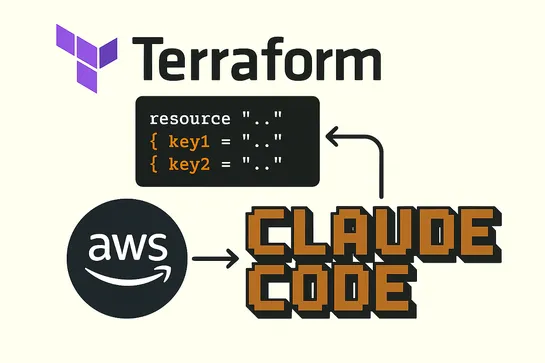
Automating Terraform Imports with Configuration Generation Using Claude Code

Terraform v1.5 debuts anexperimental flag,-generate-config-out. It grabs configs duringresource importand spits out raw HCL. Teams stash assets in animportblock, trigger the flag, then polish the generatedmain.tf. IaC onboarding feels like a sprint... read more  

Automating Terraform Imports with Configuration Generation Using Claude Code
Link
@faun shared a link, 10 months, 4 weeks ago
FAUN.dev()

OpenAI prepares to launch GPT-5 in August, The Verge reports

OpenAI set to launch GPT-5 in August, blending distinct models for versatile AI functionality. Watch for potential delays due to development hurdles or competitor announcements.Implication: OpenAI is shifting from "one model fits all" to a modular AI architecture. Expect future LLMs to act more like.. read more  

Link
@faun shared a link, 10 months, 4 weeks ago
FAUN.dev()

Secrets Management Tools: The Complete 2025 Guide

Pulumi ESC corrals secrets from 20 + stores—Vault, AWS, Azure, GCP—into a singleYAML config-as-codeengine. It spawns dynamic short-lived credentials and locks every action behind a centralized audit log. Existing secret stores stay intact. Retrieval hitssub-secondspeeds. Envelope encryption shields .. read more  

Link
@faun shared a link, 10 months, 4 weeks ago
FAUN.dev()

Amazon AI coding agent hacked to inject data wiping commands

A hacker slipped a wiper intoAmazon Qv1.84.0 via a dodgy GitHub pull. AWS revoked every key, nuked the rogue commit, then rolled outAmazon Q v1.85.0... read more  

Amazon AI coding agent hacked to inject data wiping commands
Link
@faun shared a link, 10 months, 4 weeks ago
FAUN.dev()

I Watched Gemini CLI Hallucinate and Delete My Files

The Gemini CLI on Windows bungled a failedmkdir. It flagged the error as success, then ranmovecommands. Files landed in a ghost folder and got overwritten. Data vanished. WindowsmkdirsetsERRORLEVELon failure.movetreats missing targets as rename directives. No exit-code checks. No read-after-write ve.. read more  

Link
@faun shared a link, 10 months, 4 weeks ago
FAUN.dev()

Alibaba Launches Qwen3-Coder AI Model for Agentic Programming Excellence

Alibaba unleashedQwen3-Coder, a480B-parameter MoE titan. It ignites35Bparameters per token to code, debug, and automate workflows. It spans256Ktokens of context—and can stretch to a million. It ships asQwen3-Coder-480B-A35B-Instructon Hugging Face and GitHub. It hooks intoQwen CodeCLI orClaude Code... read more  

Alibaba Launches Qwen3-Coder AI Model for Agentic Programming Excellence
Link
@faun shared a link, 10 months, 4 weeks ago
FAUN.dev()

SQL Injection as a Feature

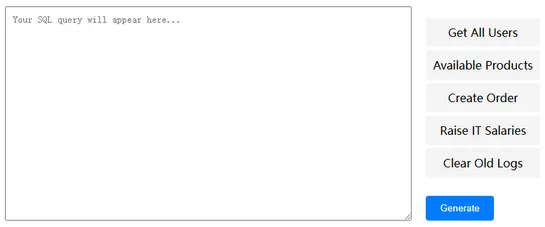
Over ten years, the legacy report page mutated from a locked-downSQLform. It ended up as a hidden console spilling raw database guts. Developers swapped hardcoded queries fordatabase-drivenreport names. They slapped ontimeouts,string filters, and warnings but skipped restoring safe defaults. Implic.. read more  

SQL Injection as a Feature
Flask is an open-source web framework written in Python and created by Armin Ronacher in 2010. It is known as a microframework, not because it is weak or incomplete, but because it provides only the essential building blocks for developing web applications. Its core focuses on handling HTTP requests, defining routes, and rendering templates, while leaving decisions about databases, authentication, form handling, and other components to the developer. This minimalistic design makes Flask lightweight, flexible, and easy to learn, but also powerful enough to support complex systems when extended with the right tools.

At the heart of Flask are two libraries: Werkzeug, which is a WSGI utility library that handles the low-level details of communication between web servers and applications, and Jinja2, a templating engine that allows developers to write dynamic HTML pages with embedded Python logic. By combining these two, Flask provides a clean and pythonic way to create web applications without imposing strict architectural patterns.

One of the defining characteristics of Flask is its explicitness. Unlike larger frameworks such as Django, Flask does not try to hide complexity behind layers of abstraction or dictate how a project should be structured. Instead, it gives developers complete control over how they organize their code and which tools they integrate. This explicit nature makes applications easier to reason about and gives teams the freedom to design solutions that match their exact needs. At the same time, Flask benefits from a vast ecosystem of extensions contributed by the community. These extensions cover areas such as database integration through SQLAlchemy, user session and authentication management, form validation with CSRF protection, and database migration handling. This modular approach means a developer can start with a very simple application and gradually add only the pieces they require, avoiding the overhead of unused components.

Flask is also widely appreciated for its simplicity and approachability. Many developers write their first web application in Flask because the learning curve is gentle, the documentation is clear, and the framework itself avoids unnecessary complexity. It is particularly well suited for building prototypes, REST APIs, microservices, or small to medium-sized web applications. At the same time, production-grade deployments are supported by running Flask applications on WSGI servers such as Gunicorn or uWSGI, since the development server included with Flask is intended only for testing and debugging.

The strengths of Flask lie in its minimalism, flexibility, and extensibility. It gives developers the freedom to assemble their application architecture, choose their own libraries, and maintain tight control over how things work under the hood. This is attractive to experienced engineers who dislike being boxed in by heavy frameworks. However, the same freedom can become a limitation. Flask does not include features like an ORM, admin interface, or built-in authentication system, which means teams working on very large applications must take on more responsibility for enforcing patterns and maintaining consistency. In situations where a project requires an opinionated, all-in-one solution, Django or another full-stack framework may be a better fit.

In practice, Flask has grown far beyond its initial positioning as a lightweight tool. It has been used by startups for rapid prototypes and by large companies for production systems. Its design philosophy—keep the core simple, make extensions easy, and let developers decide—continues to attract both beginners and professionals. This balance between simplicity and power has made Flask one of the most enduring and widely used Python web frameworks.