Join us

ContentUpdates and recent posts about Pelagia..
Link
@faun shared a link, 10 months ago
FAUN.dev()

The 'Lift-and-Shift' Trap: Why Cloud Migrations Go Wrong

Lift-and-shiftplays like a hit song on the AM radio—it’s a decent tune, but lacks soul. Cloud-native? Now that's a rock concert, shaking the ground with power. Redefine apps, don't just shuffle the old stuff upstairs... read more  
Link
@faun shared a link, 10 months ago
FAUN.dev()

The reality of GitOps application recreation

52%of teams believe they're ace at cloning apps from Git. High-performers?70%of them share in this delusion. Yet, lurking infrastructure wrinkles often deflate their grand plans. GitOps, that wild ride, inspires confidence. It dips, then soars. But just when enthusiasts think they're cruising, they .. read more  

Link
@faun shared a link, 10 months ago
FAUN.dev()

Server-Driven UI: Agile Interfaces Without App Releases

Server-driven UI (SDUI) shifts UI control to the server, allowing for instant, dynamic updates without app releases. JSON payloads define components, improving agility but requiring client-side rendering adjustments. Complex UI changes may still need app updates due to missing client-side components.. read more  

Link
@faun shared a link, 10 months ago
FAUN.dev()

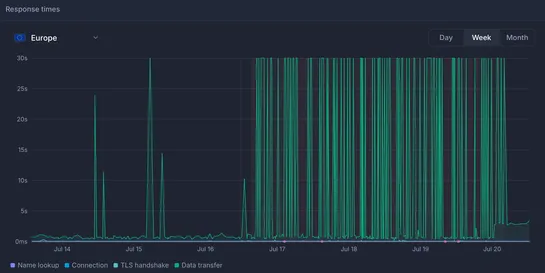
A four day hiking trip into ScreenshotOne infrastructure to solve an issue

Misleading monitor alerts: Turns out, the villain wasexample.comblocking those pesky automated requests. No real service drama here. Just a wake-up call to tame those testing environments!.. read more  

A four day hiking trip into ScreenshotOne infrastructure to solve an issue
Link
@faun shared a link, 10 months ago
FAUN.dev()

Use Terraform Modules in Pulumi Without Conversion

Pulumijust leveled up. It now runsTerraformmodules straight up. This means all that slick Pulumi magic paired with the Terraform groundwork you've already laid. Drop in a module, and Pulumi takes over execution and state management. Consider it your bridge to full Pulumi bliss... read more  

Link
@faun shared a link, 10 months ago
FAUN.dev()

AI-Powered Ransomware and Malware Detection in Cloud Environments

Cloud platforms face increasing ransomware and malware threats, leading to a shift towards AI and ML for advanced detection. Supervised models excel at known threats, while unsupervised methods detect novel attacks but generate more false positives. Deep learning is great for complex patterns but la.. read more  

Link
@faun shared a link, 10 months ago
FAUN.dev()

Stop Wasting Time: The Only Guide You’ll Ever Need to Setup/Fix SSH on EC2

GitHub's giving passwords the boot for HTTPS logins. Say hello topublic-key SSHor a Personal Access Token. So, load up those SSH keys—or hit the road... read more  

Stop Wasting Time: The Only Guide You’ll Ever Need to Setup/Fix SSH on EC2
Link
@faun shared a link, 10 months ago
FAUN.dev()

AI is making developers faster, but at a cost

AI adoption edges code quality up by 3.4% and speeds up reviews by 3.1%, but beware—a 7.2% nosedive in delivery stability rears ugly security holes.Mask AI’s risky behavior with afortress-like infrastructure, a central vault for secrets,and a transparency upgrade to reclaim stability and nail compli.. read more  

AI is making developers faster, but at a cost
Link
@faun shared a link, 10 months ago
FAUN.dev()

Debugging the One-in-a-Million Failure: Migrating Pinterest’s Search Infrastructure to Kubernetes

Migrating Pinterest's search infrastructure to Kubernetes—toasty, right? But it tripped over a rare hiccup: sluggish 5-second latencies. The culprit? cAdvisor, overzealously spying on memory like a helicopter parent. Flicking off WSS? Problem evaporated... read more  

Debugging the One-in-a-Million Failure: Migrating Pinterest’s Search Infrastructure to Kubernetes
Link
@faun shared a link, 10 months ago
FAUN.dev()

Wix Adds Chaos to CI/CD Pipelines with AI and Improves Reliability

Wixhas slipped probabilistic AI into the mix inCI/CD, and it doesn't clutter the works. This AI chews through build logs, shaving off hours from developer workloads. Migrating 100 modules took three months? Not anymore. They've sliced it to a mere 24-48 hours by marrying AI insights with their sharp.. read more  

Wix Adds Chaos to CI/CD Pipelines with AI and Improves Reliability
Pelagia is a Kubernetes controller that provides all-in-one management for Ceph clusters installed by Rook. It delivers two main features:

Aggregates all Rook Custom Resources (CRs) into a single CephDeployment resource, simplifying the management of Ceph clusters.
Provides automated lifecycle management (LCM) of Rook Ceph OSD nodes for bare-metal clusters. Automated LCM is managed by the special CephOsdRemoveTask resource.

It is designed to simplify the management of Ceph clusters in Kubernetes installed by Rook.

Being solid Rook users, we had dozens of Rook CRs to manage. Thus, one day we decided to create a single resource that would aggregate all Rook CRs and deliver a smoother LCM experience. This is how Pelagia was born.

It supports almost all Rook CRs API, including CephCluster, CephBlockPool, CephFilesystem, CephObjectStore, and others, aggregating them into a single specification. We continuously work on improving Pelagia's API, adding new features, and enhancing existing ones.

Pelagia collects Ceph cluster state and all Rook CRs statuses into single CephDeploymentHealth CR. This resource highlights of Ceph cluster and Rook APIs issues, if any.

Another important thing we implemented in Pelagia is the automated lifecycle management of Rook Ceph OSD nodes for bare-metal clusters. This feature is delivered by the CephOsdRemoveTask resource, which automates the process of removing OSD disks and nodes from the cluster. We are using this feature in our everyday day-2 operations routine.