Join us

ContentUpdates and recent posts about Pelagia..
Link
@faun shared a link, 10 months, 1 week ago
FAUN.dev()

Report - AI tools slow down experienced developers by 19%. A wake up call for industry hype?

Open-source devs got stuck, wasting 19% more time on tasks thanks to AI tools—oppose the hype and vendor bluster.Yet, a baffling 69% clung to AI, suggesting some sneaky perks lurk beneath the surface... read more  

Link
@faun shared a link, 10 months, 1 week ago
FAUN.dev()

Implementing High-Performance LLM Serving on GKE: An Inference Gateway Walkthrough

GKE Inference Gatewayflips LLM serving on its head. It’s all about that GPU-aware smart routing. By juggling the KV Cache in real time, it amps up throughput and slices latency like a hot knife through butter... read more  

Implementing High-Performance LLM Serving on GKE: An Inference Gateway Walkthrough
Link
@faun shared a link, 10 months, 1 week ago
FAUN.dev()

Unlocking High-Performance AI/ML in Kubernetes with DRANet and RDMA

DraNetslaps networking woes straight out the door. It natively handles RDMA in Kubernetes, so you can toss those convoluted scripts. Now in beta and weighing only 50MB, it offers deployments that are lean, speedy, and unyieldingly secure... read more  

Unlocking High-Performance AI/ML in Kubernetes with DRANet and RDMA
Link
@faun shared a link, 10 months, 1 week ago
FAUN.dev()

Critical NVIDIA Container Toolkit Flaw Allows Privilege Escalation on AI Cloud Services

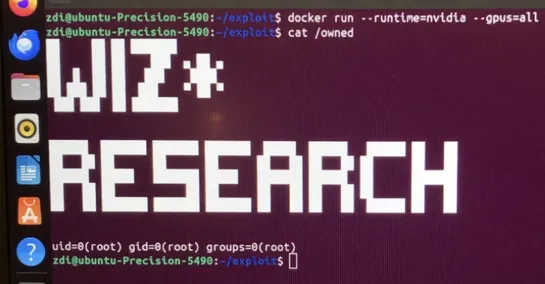
A critical container escape vulnerability (CVE-2025-23266) in NVIDIA Container Toolkit poses a severe threat to managed AI cloud services, earning a CVSS score of 9.0 out of 10.0. This flaw allows37%of cloud environments to potentially be accessed by attackers using a three-line exploit, enabling co.. read more  

Critical NVIDIA Container Toolkit Flaw Allows Privilege Escalation on AI Cloud Services
Link
@faun shared a link, 10 months, 1 week ago
FAUN.dev()

Automated Kubernetes Threat Detection with Tetragon and Azure Sentinel

Kubernetes security tools usually drop the ball. Enter the dynamic duo:Tetragonwielding eBPF magic for deep observability, and smart notifications for sniper-precise alerts.Fluent Bitpairs withAzure Logic Appsin an automated setup so you can hunt down threats in real-time. Not a drop of sweat needed.. read more  

Automated Kubernetes Threat Detection with Tetragon and Azure Sentinel
Link
@faun shared a link, 10 months, 1 week ago
FAUN.dev()

Securing Kubernetes 1.33 Pods: The Impact of User Namespace Isolation

Kubernetes 1.33rolls out with a security upgrade. It flips the switch onuser namespacesby default, shoving pods into the safety zone as unprivileged users. Potential breaches? Curbed. But don't get too comfy—idmap-capable file systems and up-to-date runtimes are now your new best friends if you want.. read more  

Securing Kubernetes 1.33 Pods: The Impact of User Namespace Isolation
Link
@faun shared a link, 10 months, 1 week ago
FAUN.dev()

Rethinking Node Drains: A Webhook Based Approach to Graceful Pod Removal

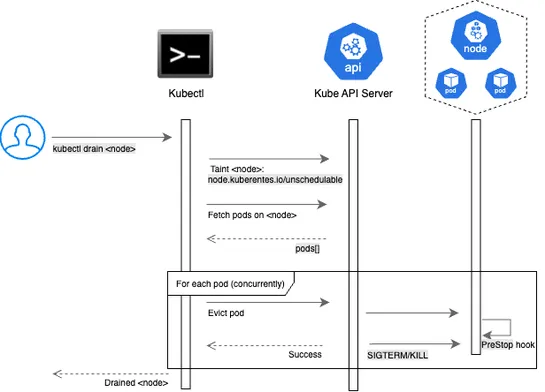
Eviction Reschedule Hooksticks its nose in Kubernetes eviction requests, letting operator-managed stateful apps wriggle their way through node drains without breaking a sweat. 🎯.. read more  

Rethinking Node Drains: A Webhook Based Approach to Graceful Pod Removal
Link
@faun shared a link, 10 months, 1 week ago
FAUN.dev()

Setting up Prometheus Stack on Kubernetes

Devtronis Kubernetes monitoring on overdrive. It ropes inPrometheusandGrafana, automates the pesky setup, and shoots real-time insights straight into a slick UI. Effort? Minimal. Results? Maximal... read more  

Setting up Prometheus Stack on Kubernetes
Link
@faun shared a link, 10 months, 1 week ago
FAUN.dev()

Upcoming changes to the Bitnami catalog

Bitnamiclears out the virtual cobwebs by tucking its oldDebian-based imagesinto a digital time capsule, also known as theLegacy repository. It throws a friendly nudge to devs: get with the times and swap to the "latest" images. In production-ville, serious users should hitch a ride on theBitnami Sec.. read more  

Link
@faun shared a link, 10 months, 1 week ago
FAUN.dev()

OpenShift LACP bonding performance expectations

Red Hat OpenShift and NIC bonding for high availability is getting popular in data centers. Consider layer2/layer2+3 configurations for balanced traffic distribution across bonded links. Layer3+4 hashing offers highest throughput but may lead to out-of-order packets due to 802.3ad non-compliance. It.. read more  

Pelagia is a Kubernetes controller that provides all-in-one management for Ceph clusters installed by Rook. It delivers two main features:

Aggregates all Rook Custom Resources (CRs) into a single CephDeployment resource, simplifying the management of Ceph clusters.
Provides automated lifecycle management (LCM) of Rook Ceph OSD nodes for bare-metal clusters. Automated LCM is managed by the special CephOsdRemoveTask resource.

It is designed to simplify the management of Ceph clusters in Kubernetes installed by Rook.

Being solid Rook users, we had dozens of Rook CRs to manage. Thus, one day we decided to create a single resource that would aggregate all Rook CRs and deliver a smoother LCM experience. This is how Pelagia was born.

It supports almost all Rook CRs API, including CephCluster, CephBlockPool, CephFilesystem, CephObjectStore, and others, aggregating them into a single specification. We continuously work on improving Pelagia's API, adding new features, and enhancing existing ones.

Pelagia collects Ceph cluster state and all Rook CRs statuses into single CephDeploymentHealth CR. This resource highlights of Ceph cluster and Rook APIs issues, if any.

Another important thing we implemented in Pelagia is the automated lifecycle management of Rook Ceph OSD nodes for bare-metal clusters. This feature is delivered by the CephOsdRemoveTask resource, which automates the process of removing OSD disks and nodes from the cluster. We are using this feature in our everyday day-2 operations routine.