Join us

ContentUpdates and recent posts about Pelagia..
Link
@faun shared a link, 10 months ago
FAUN.dev()

Stop Saying RAG Is Dead

RAG isn’t dead — lazy RAG is.Compressing whole docs into single vectors fails; smarter retrieval needs diversity, reasoning, and richer representations. The future: evaluate what matters, retrieve with intent, and route across specialized, info-preserving indices... read more  
Link
@faun shared a link, 10 months ago
FAUN.dev()

Linux Foundation Report Finds Organizations Embrace Upskilling and Open Source to Meet AI-driven Job Demands

AI is set to overhaul 94% of businesses, yet fewer than half possess the crucial AI chops. They scramble to bridge this gap withupskillingandopen-sourcecollaboration. Companies, always finding a loophole, claim upskilling outpaces hiring by 62%. Meanwhile, open source impressively bumps up retention.. read more  

Linux Foundation Report Finds Organizations Embrace Upskilling and Open Source to Meet AI-driven Job Demands
Link
@faun shared a link, 10 months ago
FAUN.dev()

Atlassian research: AI adoption is rising, but friction persists

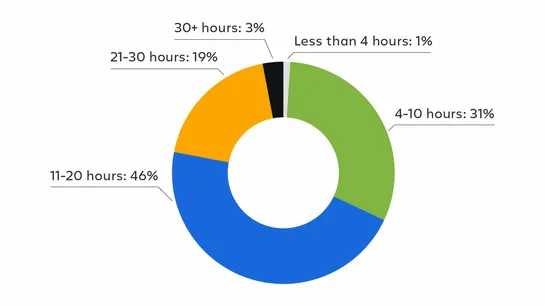
AI tools now save 68% of developers over 10 hours a week.Impressive, right? Yet for 50% of them, chaos and bureaucratic nonsense eat up more than 10 precious hours. The culprit? A staggering 63% empathy gap between the developers in the trenches and leaders who overlook big pain points. The result: .. read more  

Atlassian research: AI adoption is rising, but friction persists
Link
@faun shared a link, 10 months ago
FAUN.dev()

Using Ansible File Module to Manage Files & Directories

Ansible's file moduleshakes up file and directory management on remote systems, letting you tweak ownership and permissions like a pro. Unlike the copy module, it zeroes in solely on file attributes, keeping it idempotent and streamlining automation across your whole fleet... read more  

Link
@faun shared a link, 10 months ago
FAUN.dev()

Implementing High-Performance LLM Serving on GKE: An Inference Gateway Walkthrough

Meet theGKE Inference Gateway—a swaggering rebel changing the way you deploy LLMs. It waves goodbye to basic load balancers, opting instead for AI-savvy routing. What does it do best? Turbocharge your throughput with nimbleKV Cachemanagement. Throw in someNVIDIA L4 GPUsand Google's model artistry, a.. read more  

Implementing High-Performance LLM Serving on GKE: An Inference Gateway Walkthrough
Link
@faun shared a link, 10 months ago
FAUN.dev()

Unpopular opinion: Kubernetes is a symptom, not a solution.

Kubernetesis not the miracle cure everyone claims. It's more like a bucket of complications, allegedly cramping cloud innovation just to wrangle unruly containers. Ditch theYAML circusand zero in on platforms likeWASIand fresh concepts likeUnison. These offer semantic, cross-language cloud deploymen.. read more  

Unpopular opinion: Kubernetes is a symptom, not a solution.
Link
@faun shared a link, 10 months ago
FAUN.dev()

Platform Engineering At A Crossroads: Golden Paths Or Dark Alleyways

Platform engineeringisn't just another flashy tech term. It's the backbone of reliability and speed in workflows. But the "golden path" it maps can swiftly morph into a chaoticWild Westof unruly, bespoke processes if you're not careful. Enter theDevEx teamas the cavalry, bringing order with shared t.. read more  

Platform Engineering At A Crossroads: Golden Paths Or Dark Alleyways
Link
@faun shared a link, 10 months ago
FAUN.dev()

Introducing Cloud Storage bucket relocation

Google's Cloud Storage bucket relocationmakes data moves a breeze. Downtime? Forget about it. Your metadata and storage class stay intact, so you can focus on optimizing costs instead of stressing over logistics... read more  

Introducing Cloud Storage bucket relocation
Link
@faun shared a link, 10 months ago
FAUN.dev()

Monitor Nginx with OpenTelemetry Tracing

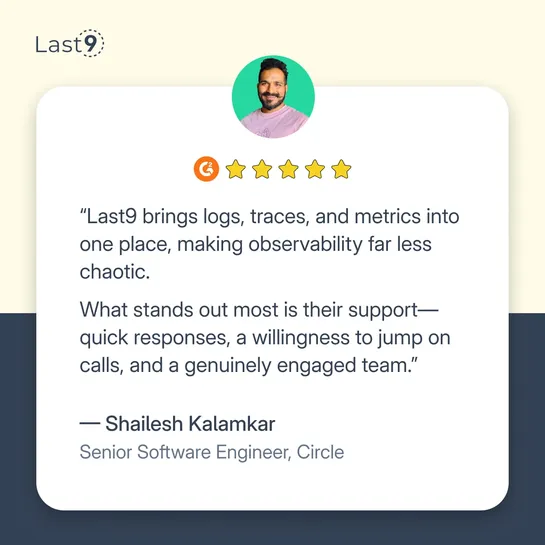
Wiring upNGINXwithOpenTelemetryshines a spotlight on your request paths. Logs, traces, metrics—no more fumbling in the dark. Dive into crystal-clear traces for every single request. Spot API or database slowdowns? Connect the dots in a snap. Thank theOpenTelemetry Collectorfor pulling strings like a.. read more  

Monitor Nginx with OpenTelemetry Tracing
Link
@faun shared a link, 10 months ago
FAUN.dev()

Bash Shell 5.3 Released with New Command Substitution

Bash 5.3chops fork overhead by running substitutions smack in the current shell. A godsend for those sweating tight loops and embedded systems. Plus, feast on the newGLOBORDERvariable—it hands you the reins for pathname sorting precision. And to sweeten the deal, Readline 8.3 sprinkles in case-insen.. read more  

Bash Shell 5.3 Released with New Command Substitution
Pelagia is a Kubernetes controller that provides all-in-one management for Ceph clusters installed by Rook. It delivers two main features:

Aggregates all Rook Custom Resources (CRs) into a single CephDeployment resource, simplifying the management of Ceph clusters.
Provides automated lifecycle management (LCM) of Rook Ceph OSD nodes for bare-metal clusters. Automated LCM is managed by the special CephOsdRemoveTask resource.

It is designed to simplify the management of Ceph clusters in Kubernetes installed by Rook.

Being solid Rook users, we had dozens of Rook CRs to manage. Thus, one day we decided to create a single resource that would aggregate all Rook CRs and deliver a smoother LCM experience. This is how Pelagia was born.

It supports almost all Rook CRs API, including CephCluster, CephBlockPool, CephFilesystem, CephObjectStore, and others, aggregating them into a single specification. We continuously work on improving Pelagia's API, adding new features, and enhancing existing ones.

Pelagia collects Ceph cluster state and all Rook CRs statuses into single CephDeploymentHealth CR. This resource highlights of Ceph cluster and Rook APIs issues, if any.

Another important thing we implemented in Pelagia is the automated lifecycle management of Rook Ceph OSD nodes for bare-metal clusters. This feature is delivered by the CephOsdRemoveTask resource, which automates the process of removing OSD disks and nodes from the cluster. We are using this feature in our everyday day-2 operations routine.