Join us

ContentUpdates and recent posts about NanoClaw..
Link
@faun shared a link, 1 year ago
FAUN.dev()

Impromptu disaster recovery

K3s reconciler threw a fit. A botched YAML reformat doubled up resources and obliterated the author’s cluster, courtesy of the clumsy hands of language models. It’s a vivid postcard from the island of LLM limitations. Luckily, Hetzner’s system rebuild stepped in to save the day. But it wasn’t painle.. read more  

Impromptu disaster recovery
Link
@faun shared a link, 1 year ago
FAUN.dev()

The Kubernetes Gateway API through beginner’s eyes

Gateway API, the sassy heir to Ingress, jugglesL4 & L7 protocolslike it was born for it. Tosses out those annoying, vendor-specific annotations to clean up Kubernetes networking. On a whim, I swapped an external cronjob for aKubernetes CronJob—because tinkering is a blast, and, let's face it, automa.. read more  

The Kubernetes Gateway API through beginner’s eyes
Link
@faun shared a link, 1 year ago
FAUN.dev()

How to build small and secure Docker images for Rust (FROM scratch)

This Dockerfile allows for the creation of minimal and secure Docker images for Rust projects. It utilizes multi-stage builds to avoid unnecessary dependencies and reduces the size of the final image... read more  

Link
@faun shared a link, 1 year ago
FAUN.dev()

v1.33: Streaming List responses

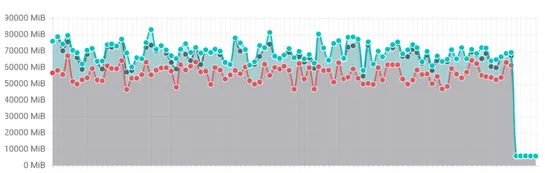
Kubernetesunleashed a game-changer:streaming encoding for List responses. What used to hog70-80GBnow zips by on a sleek3GB. That's a20x improvementin memory conservation. Say goodbye to those aggravating Out-of-Memory errors. This upgrade tackles mammoth datasets while babysitting your cluster's sta.. read more  

v1.33: Streaming List responses
Link
@faun shared a link, 1 year ago
FAUN.dev()

Uber’s Journey to Ray on Kubernetes

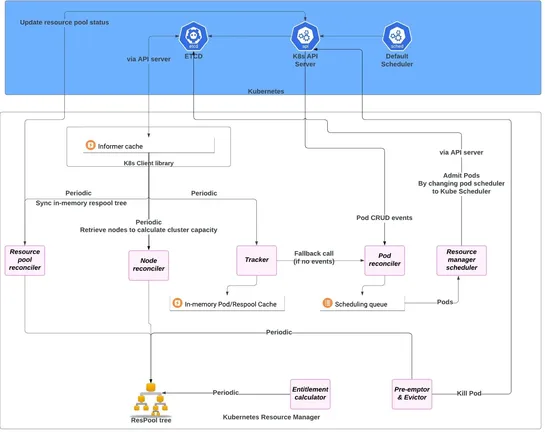
Uber tossed manual ML resource wrangling for a slick Kubernetes-Ray duo, amping up scalability and slashing inefficiencies.With dynamic resource pools, elastic sharing, and smart scheduling, they rev up utilization and demolish GPU waste—no micromanaging required... read more  

Uber’s Journey to Ray on Kubernetes
Link
@faun shared a link, 1 year ago
FAUN.dev()

v1.33: Prevent PersistentVolume Leaks When Deleting out of Order graduates to GA

Kubernetes v1.33finally pulls its socks up with storage cleanup. It now respects reclaim policies by wielding finalizers. No more leakingPersistentVolumes, even if you delete PVs like a mad hatter... read more  

Link
@faun shared a link, 1 year ago
FAUN.dev()

Cutting Kubernetes Costs with kube-downscaler

kube-downscaleris your go-to for scheduling time-based scaling inKubernetes. It dodges HPA’s hiccups for pre-planned workloads. Imagine cron jobs but for replicas. Straightforward, effective, and perfect for trimming costs on snoozing dev environments... read more  

Cutting Kubernetes Costs with kube-downscaler
Link
@faun shared a link, 1 year ago
FAUN.dev()

Microservices Are a Tax Your Startup Probably Can’t Afford

Premature microservicesare like planting seeds in concrete. They'll stall your startup's momentum. A monolith is your friend here—simple, reliable, with the vast realm of open-source at your disposal. A crispmonorepotightens team synergy and sidesteps the quagmire of complexity, unlike those headach.. read more  

Microservices Are a Tax Your Startup Probably Can’t Afford
Link
@faun shared a link, 1 year ago
FAUN.dev()

v1.33: Fine-grained SupplementalGroups Control Graduates to Beta

Kubernetes v1.33 rolls in a snazzy beta feature: control over supplemental group merging in containers. It sharpenssecurityby exposing those sneaky implicit GIDs. But don't get too cozy—this power comes with strings. You’ll need CRI runtimes that play nice, or your pods will get the boot on unsuppor.. read more  

Link
@faun shared a link, 1 year ago
FAUN.dev()

Podfox: World's First Container-Aware Browser

Podfoxswoops in to transform your browser into a Podman rootless container with a SOCKS proxy—no port forwarding monkey business required. It's like magic for your dev groove. Meanwhile,Homebrewgives container development a twist: it mounts user environments in read-only mode. This way, your favorit.. read more  

Podfox: World's First Container-Aware Browser
NanoClaw is an open-source personal AI agent designed to run locally on your machine while remaining small enough to fully understand and audit. Built as a lightweight alternative to larger agent frameworks, the system runs as a single Node.js process with roughly 3,900 lines of code spread across about 15 source files.

The agent integrates with messaging platforms such as WhatsApp and Telegram, allowing users to interact with their AI assistant directly through familiar chat applications. Each conversation group operates independently and maintains its own memory and execution environment.

A core design principle of NanoClaw is security through isolation. Every agent session runs inside its own container using Docker or Apple Container, ensuring that the agent can only access files and resources that are explicitly mounted. This approach relies on operating system–level sandboxing rather than application-level permission checks.

The architecture is intentionally simple: a single orchestrator process manages message queues, schedules tasks, launches containerized agents, and stores state in SQLite. Additional functionality can be added through a modular skills system, allowing users to extend capabilities without increasing the complexity of the core codebase.

By combining a minimal architecture with container-based isolation and messaging integration, NanoClaw aims to provide a transparent, customizable personal AI agent that users can run and control entirely on their own infrastructure.