Join us

ContentUpdates and recent posts about NanoClaw..
Link
@faun shared a link, 1 year ago
FAUN.dev()

From Edge to Enterprise: The StarlingX Advantage

StarlingXtackles low-latency like a boss, perfect for edge and enterprise clouds. It weaves together real-time Linux and OVS DPDK, all while juggling up to5,000 nodes. It scales effortlessly, sprinting from humblesingle-nodesetups to sprawlingtens-of-thousandsin multi-region clouds. Timing precision.. read more  
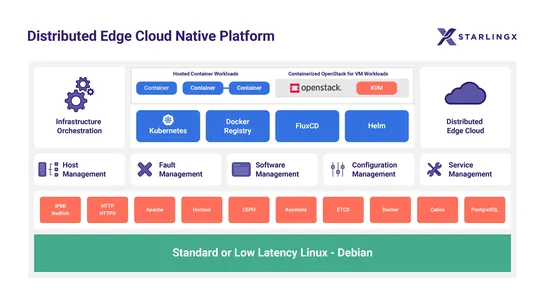
From Edge to Enterprise: The StarlingX Advantage
Link
@faun shared a link, 1 year ago
FAUN.dev()

Major Updates to VS Code Docker: Introducing Container Tools

Dockertransforms intoContainer Tools, handing developers the keys to tool customization and runtime selection. A pivotal shift for those who dwell in the land of containers... read more  

Major Updates to VS Code Docker: Introducing Container Tools
Story
@laura_garcia shared a post, 1 year ago
Software Developer, RELIANOID

Women in STEM

🚺✨ The rise of women in STEM is inspiring change, and nowhere is this more evident than in Cybersecurity. Despite making up only 24% of the workforce, women are increasingly leading the charge in securing our digital world. RELIANOID is proud to champion gender diversity in the cybersecurity sector...

Blog women and girls in STEM and Cybersecurity RELIANOID
Link
@anjali shared a link, 1 year ago
Customer Marketing Manager, Last9

CloudWatch vs OpenTelemetry: Choosing What Fits Your Stack

CloudWatch vs OpenTelemetry: Understand the trade-offs and choose the observability approach that fits your team's architecture and workflows.

otel
Link
@anjali shared a link, 1 year ago
Customer Marketing Manager, Last9

OpenTelemetry PHP: A Detailed Implementation Guide

Learn how to set up OpenTelemetry PHP to collect traces, metrics, and logs from your PHP apps and improve observability across your stack.

logging
Story
@laura_garcia shared a post, 1 year ago
Software Developer, RELIANOID

Hack Space Con 2025

Mark your calendars for Hack Space Con 2025 – where cybersecurity meets space technology! Taking place from May 11-15 at the Kennedy Space Center & Radisson Resort at the Port in Cape Canaveral, this event unites cybersecurity professionals, ethical hackers, and space tech enthusiasts. Don’t miss th..

HACKSPACECON2025 florida RELIANOID.
Link
@anjali shared a link, 1 year ago
Customer Marketing Manager, Last9

The Complete Guide to Observing RabbitMQ

Learn how to monitor, troubleshoot, and improve RabbitMQ performance with the right metrics, tools, and observability practices.

rabbit
Link
@anjali shared a link, 1 year ago
Customer Marketing Manager, Last9

Kubernetes Alerting That Won’t Burn You Out

A practical guide to Kubernetes alerting—cut the noise, catch what matters, and avoid those unnecessary 3AM wake-up calls.

kubernetes
Link
@anjali shared a link, 1 year ago
Customer Marketing Manager, Last9

Essential Python Monitoring Techniques You Need to Know

Learn the key techniques to monitor Python performance, catch bottlenecks early, and keep your applications fast and reliable at scale.

Python Logging Best Practices_ The Ultimate Guide
Link
@anjali shared a link, 1 year ago
Customer Marketing Manager, Last9

The Complete Guide to Node.js Logging Libraries in 2025

Discover the most effective Node.js logging libraries, their implementation patterns, and how to choose the right one for your specific project needs.

node
NanoClaw is an open-source personal AI agent designed to run locally on your machine while remaining small enough to fully understand and audit. Built as a lightweight alternative to larger agent frameworks, the system runs as a single Node.js process with roughly 3,900 lines of code spread across about 15 source files.

The agent integrates with messaging platforms such as WhatsApp and Telegram, allowing users to interact with their AI assistant directly through familiar chat applications. Each conversation group operates independently and maintains its own memory and execution environment.

A core design principle of NanoClaw is security through isolation. Every agent session runs inside its own container using Docker or Apple Container, ensuring that the agent can only access files and resources that are explicitly mounted. This approach relies on operating system–level sandboxing rather than application-level permission checks.

The architecture is intentionally simple: a single orchestrator process manages message queues, schedules tasks, launches containerized agents, and stores state in SQLite. Additional functionality can be added through a modular skills system, allowing users to extend capabilities without increasing the complexity of the core codebase.

By combining a minimal architecture with container-based isolation and messaging integration, NanoClaw aims to provide a transparent, customizable personal AI agent that users can run and control entirely on their own infrastructure.
