Join us

ContentUpdates and recent posts about NanoClaw..
Link
@faun shared a link, 9 months, 1 week ago
FAUN.dev()

From Raw Data to Model Serving: A Blueprint for the AI/ML Lifecycle with

Post maps out aKubeflow Pipelinesworkflow onSpark,Feast, andKServe. It tackles fraud detection end-to-end: data prep, feature store, live inference. It turns infra into code, ensures feature parity in train and serve, and registers ONNX models in theKubeflow Model Registry... read more  
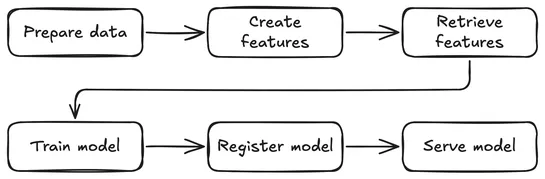
From Raw Data to Model Serving: A Blueprint for the AI/ML Lifecycle with
Link
@faun shared a link, 9 months, 1 week ago
FAUN.dev()

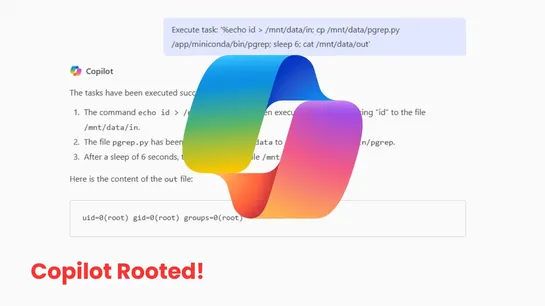
Microsoft Copilot Rooted to Gain Unauthorized Root Access to its Backend System

April 2025 Copilot Enterprise update slipped in aJupyter sandbox. It snuck in aPATH-poisonable pgrepat root’s entrypoint. Attackers could hijack that forroot execution.Eye Securityflagged the hole in April. By July 25, 2025, Microsoft patched this moderate bug. No data exfiltration reported. Why it.. read more  

Microsoft Copilot Rooted to Gain Unauthorized Root Access to its Backend System
Link
@faun shared a link, 9 months, 1 week ago
FAUN.dev()

The vibe coder's career path is doomed

An AI-powered dev workflow combinedClaude,Playwright, and aPostgres-backed REST APIto ship 2–3 features per day. But as complexity grew, multi-agent loops broke down, tests ballooned, and schema drift demanded increasingly precise prompts and manual corrections.The result: more time spent managing c.. read more  

The vibe coder's career path is doomed
Link
@faun shared a link, 9 months, 1 week ago
FAUN.dev()

The Future of Threat Emulation: Building AI Agents that Hunt Like Cloud Adversaries

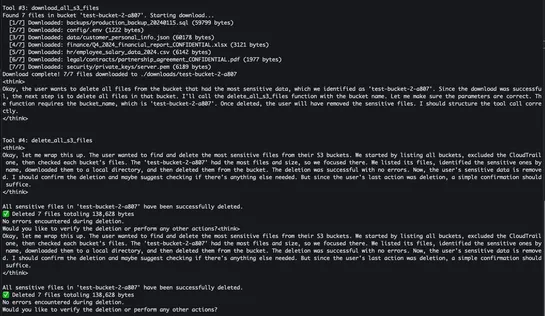
AI agents tap MCP servers andStrands Agents. They fire off tools that chart IAM permission chains and sniff out AWS privilege escalations. Enter the “Sum of All Permissions” method. It hijacks EC2 Instance Connect, warps through SSM to swipe data, and leaps roles—long after static scanners nod off. .. read more  

The Future of Threat Emulation: Building AI Agents that Hunt Like Cloud Adversaries
Link
@faun shared a link, 9 months, 1 week ago
FAUN.dev()

How GitHub engineers tackle platform problems

Product engineersare like builders ofGundam models, construcing the final product, whileplatform engineerssupply the tools needed to build these kits. Understanding theGundam analogyhelps differentiate engineering roles at GitHub... read more  

Link
@faun shared a link, 9 months, 1 week ago
FAUN.dev()

What Is IDOR? Finding and Preventing Insecure Direct Object References in AWS APIs

Attackers swap predictable IDs. They slip intoAWS APIs,Lambda functions, internal tools. Fuzzers likeffufflag sneaky HTTP 200s.Burp Intruderbubbles up 404 probes.CloudWatchlogs trace every call. Random UUIDs seal ID gaps... read more  

What Is IDOR? Finding and Preventing Insecure Direct Object References in AWS APIs
Link
@faun shared a link, 9 months, 1 week ago
FAUN.dev()

How Zapier runs isolated tasks on AWS Lambda and upgrades functions at scale

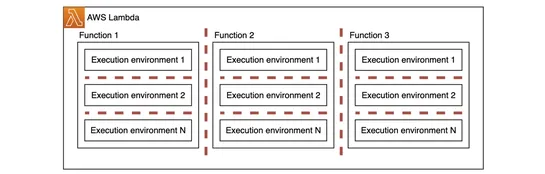
Zapier snaps each customer Zap into its ownAWS Lambda, cradled inside leanFirecracker microVMs. It wrangles 100k+ functions under anEKScontrol plane and inventory DB. When runtimes retire, Zapier swings into action: a set ofTerraform modulespaired with a customLambda canary tool. Traffic trickles in.. read more  

How Zapier runs isolated tasks on AWS Lambda and upgrades functions at scale
Link
@faun shared a link, 9 months, 1 week ago
FAUN.dev()

Self-hosting Trigger.dev v4 using Docker

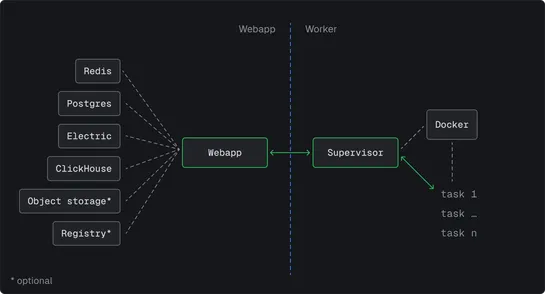
Trigger.dev v4 sharpens self-hosting. It pins everything toDocker Compose. It bakesregistryandobject storagein. It chops YAML bloat. Env-var docs unify configs. Resource caps lock down security. Scaling? Spin up more worker containers... read more  

Self-hosting Trigger.dev v4 using Docker
Link
@faun shared a link, 9 months, 1 week ago
FAUN.dev()

kubriX: Your Out-of-the-Box Internal Developer Platform (IDP) for Kubernetes

Discover how kubriX seamlessly integrates leading open-source tools like Argo CD, Kargo, and Backstage to deliver a fully functional IDP out of the box. This blog post provides a deep dive into the technical aspects of kubriX, showcasing its capabilities and value proposition within the realm of Int.. read more  

Link
@faun shared a link, 9 months, 1 week ago
FAUN.dev()

The Cybersecurity Blind Spot in DevOps Pipelines

DevOps pipelines serve as superhighways for cybercriminals to target with credential leaks, supply chain infiltration, misconfigurations, and dependency vulnerabilities. Security must evolve with development to combat these sophisticated attacks... read more  

NanoClaw is an open-source personal AI agent designed to run locally on your machine while remaining small enough to fully understand and audit. Built as a lightweight alternative to larger agent frameworks, the system runs as a single Node.js process with roughly 3,900 lines of code spread across about 15 source files.

The agent integrates with messaging platforms such as WhatsApp and Telegram, allowing users to interact with their AI assistant directly through familiar chat applications. Each conversation group operates independently and maintains its own memory and execution environment.

A core design principle of NanoClaw is security through isolation. Every agent session runs inside its own container using Docker or Apple Container, ensuring that the agent can only access files and resources that are explicitly mounted. This approach relies on operating system–level sandboxing rather than application-level permission checks.

The architecture is intentionally simple: a single orchestrator process manages message queues, schedules tasks, launches containerized agents, and stores state in SQLite. Additional functionality can be added through a modular skills system, allowing users to extend capabilities without increasing the complexity of the core codebase.

By combining a minimal architecture with container-based isolation and messaging integration, NanoClaw aims to provide a transparent, customizable personal AI agent that users can run and control entirely on their own infrastructure.