Join us

ContentUpdates and recent posts about Lustre..
Link
@faun shared a link, 7 months, 1 week ago
FAUN.dev()

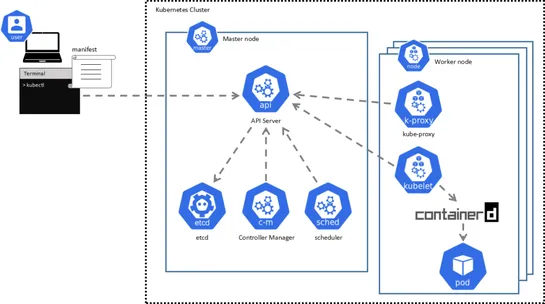
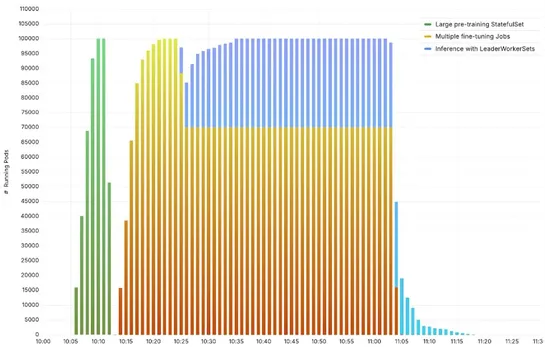
Amazon EKS Enables Ultra-Scale AI/ML Workloads with Support for 100K Nodes per Cluster

Amazon EKS just cranked its Kubernetes cluster limit to100,000 nodes—a 10x jump. The secret sauce? A reworkedetcdwith an internaljournalsystem andin-memorystorage. Toss in tightAPI server tuningand network tweaks, and the result is wild: 500 pods per second, 900K pods, 10M+ objects, no sweat—even un.. read more  
Amazon EKS Enables Ultra-Scale AI/ML Workloads with Support for 100K Nodes per Cluster
Link
@faun shared a link, 7 months, 1 week ago
FAUN.dev()

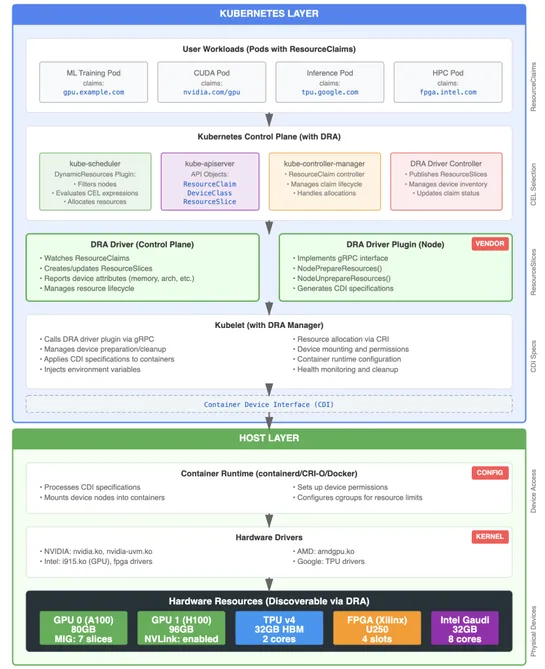
Kubernetes Primer: Dynamic Resource Allocation (DRA) for GPU Workloads

Kubernetes 1.34 brings serious heat for anyone juggling GPUs or accelerators. MeetDynamic Resource Allocation (DRA)—a new way to schedule hardware like you mean it. DRA addsResourceClaims,DeviceClasses, andResourceSlices, slicing device management away from pod specs. It replaces the old device plu.. read more  

Kubernetes Primer: Dynamic Resource Allocation (DRA) for GPU Workloads
Link
@faun shared a link, 7 months, 1 week ago
FAUN.dev()

Lucidity turns spotlight onto Kubernetes storage costs

Lucidity has upgraded itsAutoScaler. It now handles persistent volumes on AWS-hosted Kubernetes, automatically scaling storage and reducing waste. The upgrade bringspod-level isolation,fault tolerance, andbulk Linux onboarding. Azure and GCP are next on the list... read more  

Lucidity turns spotlight onto Kubernetes storage costs
Link
@faun shared a link, 7 months, 1 week ago
FAUN.dev()

The Quiet Revolution in Kubernetes Security

Nigel Douglas discusses the challenges of security in Kubernetes, particularly with traditional base operating systems. Talos Linux offers a different approach with a secure-by-default, API-driven model specifically for Kubernetes. CISOs play a critical role in guiding organizations through the shif.. read more  

Link
@faun shared a link, 7 months, 1 week ago
FAUN.dev()

Kubernetes DNS Exploit Enables Git Credential Theft from ArgoCD

A new attack chain messes withKubernetes DNS resolutionandArgoCD’s certificate injectionto swipe GitHub credentials. With the right permissions, a user inside the cluster can reroute GitOps traffic to a fake internal service, sniff auth headers, and quietly walk off with tokens. What’s broken:GitOp.. read more  

Kubernetes DNS Exploit Enables Git Credential Theft from ArgoCD
Story
@laura_garcia shared a post, 7 months, 1 week ago
Software Developer, RELIANOID

🌐 NIS2 is reshaping cybersecurity compliance across Europe.

At RELIANOID, we are fully aligned and compliant with NIS2 requirements, helping organizations strengthen their security posture. 👉 Explore more: https://www.relianoid.com/security-compliances/relianoid-nis2-compliance/ #NIS2#CyberSecurity#Compliance#Regulation#EUCompliance#InfoSec#DataProtection#Go..

nis2 compliance RELIANOID
Story
@ketbostoganashvili shared a post, 7 months, 1 week ago
Technical Content Writer

Send emails with Vercel and Mailtrap

Next.js Vercel Mailtrap.io

Learn how to integrate Mailtrap with your Vercel-hosted applications to send transactional emails with reliable delivery and comprehensive analytics.

Story
@ketbostoganashvili shared a post, 7 months, 1 week ago
Technical Content Writer

Send emails with Bolt.new and Mailtrap

Bolt Mailtrap.io

Learn how to integrate Mailtrap with your Bolt.new application to send transactional emails and manage contacts without writing complex code.

Link
@anjali shared a link, 7 months, 1 week ago
Customer Marketing Manager, Last9

APM for Kubernetes: Monitor Distributed Applications at Scale

Understand Kubernetes APM by linking request flows with pod, node, and cluster data to get complete visibility at scale.

k8
Story
@laura_garcia shared a post, 7 months, 1 week ago
Software Developer, RELIANOID

🌊 Load Balancing Smart Wave with RELIANOID — Built for Marine Telemetry

The Smart Wave platform is key for real-time telemetry from offshore buoys, vessels, and coastal stations. But how do you ensure it performs reliably — even over satellite links? We've published a new technical guide showing how to load balance Smart Wave using RELIANOID: ✅ MQTT & TCP ingestion for ..

Knowledge base_how to load balance SMART WAVE_blue economy
Lustre is an open-source, parallel distributed file system built for high-performance computing environments that require extremely fast, large-scale data access. Designed to serve thousands of compute nodes concurrently, Lustre enables HPC clusters to read and write data at multi-terabyte-per-second speeds while maintaining low latency and fault tolerance.

A Lustre deployment separates metadata and file data into distinct services—Metadata Servers (MDS) handling namespace operations and Object Storage Servers (OSS) serving file contents stored across multiple Object Storage Targets (OSTs). This architecture allows clients to access data in parallel, achieving performance far beyond traditional network file systems.

Widely adopted in scientific computing, supercomputing centers, weather modeling, genomics, and large-scale AI training, Lustre remains a foundational component of modern HPC stacks. It integrates with resource managers like Slurm, supports POSIX semantics, and is designed to scale from small clusters to some of the world’s fastest supercomputers.

With strong community and enterprise support, Lustre provides a mature, battle-tested solution for workloads that demand extreme I/O performance, massive concurrency, and petabyte-scale distributed storage.