Join us

ContentUpdates and recent posts about GPT-5.4..
Story
@cloudsignals shared a post, 1 day, 20 hours ago
Director - Cloud Engineering, osttra

From Hunters to Algorithms: How AI Is Rewriting the Rules of Vulnerability Discovery

Security has entered its algorithmic era. AI is rapidly transforming vulnerability discovery by scanning code at scale, uncovering hidden patterns, and accelerating detection beyond human limits. For maintainers, this means shifting from reactive patching to intelligent triage and secure-by-design systems. For bug hunters, success now lies in combining AI speed with human creativity to uncover deeper, context-driven flaws. The future of security isn’t human vs machine—it’s human amplified by machine.

AI-driven vulnerability discovery concept showing a split human and artificial intelligence face analyzing cybersecurity threats, with dashboards displaying SQL injection detection, risk score, and automated code analysis in a futuristic interface.
 Activity
@koukibadr started using tool Mapbox GL JS , 2 days, 5 hours ago.
 Activity
@koukibadr started using tool Google Maps , 2 days, 5 hours ago.
 Activity
@koukibadr started using tool GitLab CI/CD , 2 days, 5 hours ago.
 Activity
@koukibadr started using tool GitHub Pages , 2 days, 5 hours ago.
 Activity
@koukibadr started using tool Amplitude , 2 days, 5 hours ago.
Story
@koukibadr shared a post, 2 days, 5 hours ago
Mobile Developer, Nventive

Optimizing Performance in Android Apps with Kotlin

Optimizing the performance of your Android applications is crucial for providing a smooth and responsive user experience. Kotlin, with its concise syntax and powerful features, offers several ways to enhance the performance of your apps. In this article, we'll explore various techniques and best pra..

Story
@laura_garcia shared a post, 2 days, 13 hours ago
Software Developer, RELIANOID

𝗖𝗵𝗶𝗹𝗲 𝗮𝗰𝗰𝗲𝗹𝗲𝗿𝗮𝘁𝗲𝘀 𝗶𝘁𝘀 𝘁𝗲𝗰𝗵𝗻𝗼𝗹𝗼𝗴𝗶𝗰𝗮𝗹 𝗹𝗲𝗮𝗽

𝗖𝗵𝗶𝗹𝗲 𝗮𝗰𝗰𝗲𝗹𝗲𝗿𝗮𝘁𝗲𝘀 𝗶𝘁𝘀 𝘁𝗲𝗰𝗵𝗻𝗼𝗹𝗼𝗴𝗶𝗰𝗮𝗹 𝗹𝗲𝗮𝗽🚀 More than 𝟳𝟬% 𝙤𝙛 𝘾𝙝𝙞𝙡𝙚𝙖𝙣 𝙤𝙧𝙜𝙖𝙣𝙞𝙯𝙖𝙩𝙞𝙤𝙣𝙨 are actively driving projects around 𝗔𝗿𝘁𝗶𝗳𝗶𝗰𝗶𝗮𝗹 𝗜𝗻𝘁𝗲𝗹𝗹𝗶𝗴𝗲𝗻𝗰𝗲, 𝗮𝗱𝘃𝗮𝗻𝗰𝗲𝗱 𝗰𝘆𝗯𝗲𝗿𝘀𝗲𝗰𝘂𝗿𝗶𝘁𝘆, 𝗮𝘂𝘁𝗼𝗺𝗮𝘁𝗶𝗼𝗻, 𝗮𝗻𝗱 𝗻𝗲𝘅𝘁-𝗴𝗲𝗻𝗲𝗿𝗮𝘁𝗶𝗼𝗻 𝗰𝗼𝗻𝗻𝗲𝗰𝘁𝗶𝘃𝗶𝘁𝘆. This rapid transformation—supported by strong public policies, 5G deployment, and long-..

Blog_Chile’s Technological Acceleration_RELIANOID
Story
@alok00k shared a post, 2 days, 14 hours ago

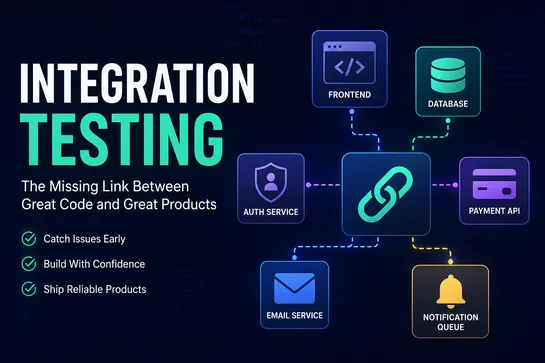
Integration Testing: The Bridge Between Unit Tests and Real-World Software Reliability

Integration testing verifies that different parts of an application—such as APIs, databases, and services—work correctly together. It helps catch real-world issues that unit tests miss, like broken data flow or failed service communication. Essential for modern apps, especially microservices, it improves reliability, reduces production bugs, and should be automated in CI/CD pipelines.

ChatGPT Image Apr 27, 2026, 02_56_29 PM
Story Keploy Team
@sancharini shared a post, 2 days, 14 hours ago

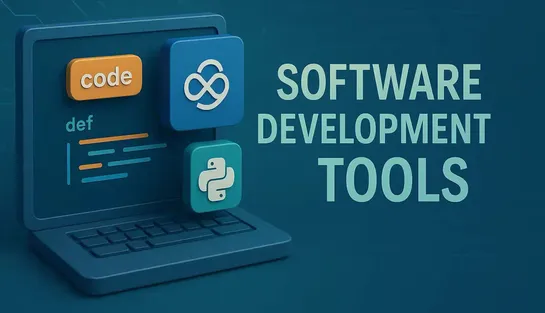
How Software Development Tools Influence Code Quality Over Time?

Learn how software development tools shape code quality over time by enforcing standards, automating testing, and improving developer workflows. Discover key factors that impact long-term software reliability.

Software Development Tools in 2026
GPT-5.4 is OpenAI’s latest frontier AI model designed to perform complex professional and technical work more reliably. It combines advances in reasoning, coding, tool use, and long-context understanding into a single system capable of handling multi-step workflows across software environments. The model builds on earlier GPT-5 releases while integrating the strong coding capabilities previously introduced with GPT-5.3-Codex.

One of the defining features of GPT-5.4 is its ability to operate as part of agent-style workflows. The model can interact with tools, APIs, and external systems to complete tasks that extend beyond simple text generation. It also introduces native computer-use capabilities, allowing AI agents to operate applications using keyboard and mouse commands, screenshots, and browser automation frameworks such as Playwright.

GPT-5.4 supports context windows of up to one million tokens, enabling it to process and reason over very large documents, long conversations, or complex project contexts. This makes it suitable for tasks such as analyzing codebases, generating technical documentation, working with large spreadsheets, or coordinating long-running workflows. The model also introduces a feature called tool search, which allows it to dynamically retrieve tool definitions only when needed. This reduces token usage and makes it more efficient to work with large ecosystems of tools, including environments with dozens of APIs or MCP servers.

In addition to improved reasoning and automation capabilities, GPT-5.4 focuses on real-world productivity tasks. It performs better at generating and editing spreadsheets, presentations, and documents, and it is designed to maintain stronger context across longer reasoning processes. The model also improves factual accuracy and reduces hallucinations compared with previous versions.

GPT-5.4 is available across OpenAI’s ecosystem, including ChatGPT, the OpenAI API, and Codex. A higher-performance variant, GPT-5.4 Pro, is also available for users and developers who require maximum performance for complex tasks such as advanced research, large-scale automation, and demanding engineering workflows. Together, these capabilities position GPT-5.4 as a model aimed not just at conversation, but at executing real work across software systems.