Join us

ContentUpdates and recent posts about GPT-5.4..
Link
@anjali shared a link, 1 year, 1 month ago
Customer Marketing Manager, Last9

Angular OpenTelemetry Setup and Troubleshooting

Learn how to set up OpenTelemetry in your Angular app and troubleshoot common issues with tracing, instrumentation, and export configuration.

Opentelemetry tracing
Link
@faun shared a link, 1 year, 1 month ago
FAUN.dev()

Impromptu disaster recovery

K3s reconciler threw a fit. A botched YAML reformat doubled up resources and obliterated the author’s cluster, courtesy of the clumsy hands of language models. It’s a vivid postcard from the island of LLM limitations. Luckily, Hetzner’s system rebuild stepped in to save the day. But it wasn’t painle.. read more  

Impromptu disaster recovery
Link
@faun shared a link, 1 year, 1 month ago
FAUN.dev()

Anubis and caddy-docker-proxy

CKANfaced a barrage: 60 requests per second, courtesy of some mischief-maker in Brazil. EnterAnubis. With its SHA256 challenge, it cut through the chaos like a hot knife through warm Brazilian pão de queijo. Now, plugging Anubis intocaddy-docker-proxypractically did itself. The proxy auto-configures.. read more  

Link
@faun shared a link, 1 year, 1 month ago
FAUN.dev()

1.33: Volume Populators Graduate to GA

Kubernetes v1.33unleashesvolume populatorsfor all to enjoy. Custom resources now power data sources. Say goodbye to pesky resource leaks, mishmash configurations, and sleepy metrics. Prepare for a wild ride of flexibility... read more  

Link
@faun shared a link, 1 year, 1 month ago
FAUN.dev()

v1.33: From Secrets to Service Accounts: Image Pulls Evolved

Kubernetes drops ephemeral KSA tokens into the mix for image pulls, putting long-lived credentials in the rearview mirror. Granular access? Absolutely rocks. Compliance? Consider it handled... read more  

Link
@faun shared a link, 1 year, 1 month ago
FAUN.dev()

The state of Kubernetes jobs in 2025 Q1

North American Kubernetes salariestook a 6% nosedive, settling at an average$165,288. Meanwhile, Europe enjoyed a tidy 4% uptick. Remote work? Holding steady at68%. No surprise—Pythonremained the darling of coding languages, getting a nod in62%of job posts, whileDockerwasn't far behind, gracing57%of.. read more  
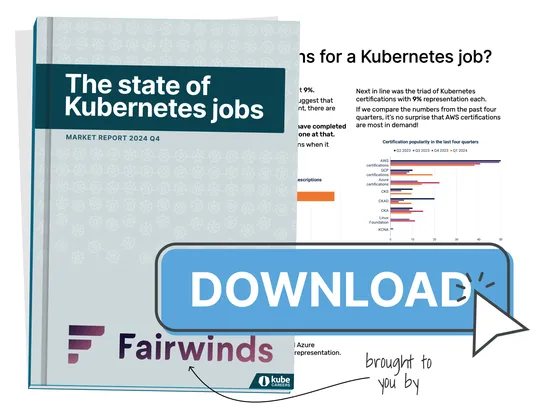
The state of Kubernetes jobs in 2025 Q1
Link
@faun shared a link, 1 year, 1 month ago
FAUN.dev()

v1.33: Prevent PersistentVolume Leaks When Deleting out of Order graduates to GA

Kubernetes v1.33finally pulls its socks up with storage cleanup. It now respects reclaim policies by wielding finalizers. No more leakingPersistentVolumes, even if you delete PVs like a mad hatter... read more  

Link
@faun shared a link, 1 year, 1 month ago
FAUN.dev()

Major Updates to VS Code Docker: Introducing Container Tools

Dockertransforms intoContainer Tools, handing developers the keys to tool customization and runtime selection. A pivotal shift for those who dwell in the land of containers... read more  

Major Updates to VS Code Docker: Introducing Container Tools
Link
@faun shared a link, 1 year, 1 month ago
FAUN.dev()

The Kubernetes Gateway API through beginner’s eyes

Gateway API, the sassy heir to Ingress, jugglesL4 & L7 protocolslike it was born for it. Tosses out those annoying, vendor-specific annotations to clean up Kubernetes networking. On a whim, I swapped an external cronjob for aKubernetes CronJob—because tinkering is a blast, and, let's face it, automa.. read more  

The Kubernetes Gateway API through beginner’s eyes
Link
@faun shared a link, 1 year, 1 month ago
FAUN.dev()

Podfox: World's First Container-Aware Browser

Podfoxswoops in to transform your browser into a Podman rootless container with a SOCKS proxy—no port forwarding monkey business required. It's like magic for your dev groove. Meanwhile,Homebrewgives container development a twist: it mounts user environments in read-only mode. This way, your favorit.. read more  
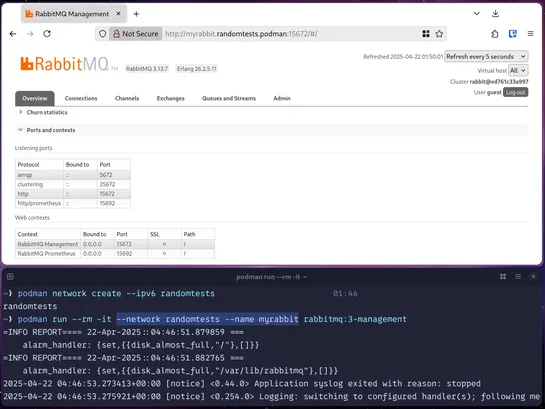
Podfox: World's First Container-Aware Browser
GPT-5.4 is OpenAI’s latest frontier AI model designed to perform complex professional and technical work more reliably. It combines advances in reasoning, coding, tool use, and long-context understanding into a single system capable of handling multi-step workflows across software environments. The model builds on earlier GPT-5 releases while integrating the strong coding capabilities previously introduced with GPT-5.3-Codex.

One of the defining features of GPT-5.4 is its ability to operate as part of agent-style workflows. The model can interact with tools, APIs, and external systems to complete tasks that extend beyond simple text generation. It also introduces native computer-use capabilities, allowing AI agents to operate applications using keyboard and mouse commands, screenshots, and browser automation frameworks such as Playwright.

GPT-5.4 supports context windows of up to one million tokens, enabling it to process and reason over very large documents, long conversations, or complex project contexts. This makes it suitable for tasks such as analyzing codebases, generating technical documentation, working with large spreadsheets, or coordinating long-running workflows. The model also introduces a feature called tool search, which allows it to dynamically retrieve tool definitions only when needed. This reduces token usage and makes it more efficient to work with large ecosystems of tools, including environments with dozens of APIs or MCP servers.

In addition to improved reasoning and automation capabilities, GPT-5.4 focuses on real-world productivity tasks. It performs better at generating and editing spreadsheets, presentations, and documents, and it is designed to maintain stronger context across longer reasoning processes. The model also improves factual accuracy and reduces hallucinations compared with previous versions.

GPT-5.4 is available across OpenAI’s ecosystem, including ChatGPT, the OpenAI API, and Codex. A higher-performance variant, GPT-5.4 Pro, is also available for users and developers who require maximum performance for complex tasks such as advanced research, large-scale automation, and demanding engineering workflows. Together, these capabilities position GPT-5.4 as a model aimed not just at conversation, but at executing real work across software systems.