Join us

ContentUpdates and recent posts about GPT-5.4..
Link
@faun shared a link, 1 year, 1 month ago
FAUN.dev()

v1.33: Fine-grained SupplementalGroups Control Graduates to Beta

Kubernetes v1.33 rolls in a snazzy beta feature: control over supplemental group merging in containers. It sharpenssecurityby exposing those sneaky implicit GIDs. But don't get too cozy—this power comes with strings. You’ll need CRI runtimes that play nice, or your pods will get the boot on unsuppor.. read more  
Link
@faun shared a link, 1 year, 1 month ago
FAUN.dev()

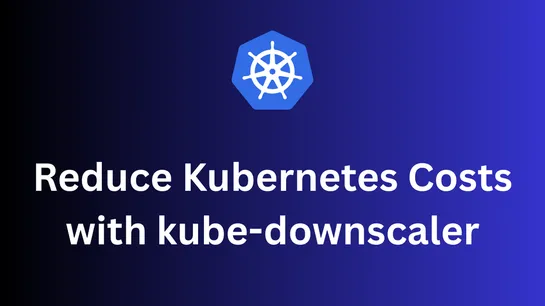
Cutting Kubernetes Costs with kube-downscaler

kube-downscaleris your go-to for scheduling time-based scaling inKubernetes. It dodges HPA’s hiccups for pre-planned workloads. Imagine cron jobs but for replicas. Straightforward, effective, and perfect for trimming costs on snoozing dev environments... read more  

Cutting Kubernetes Costs with kube-downscaler
Link
@faun shared a link, 1 year, 1 month ago
FAUN.dev()

Microservices Are a Tax Your Startup Probably Can’t Afford

Premature microservicesare like planting seeds in concrete. They'll stall your startup's momentum. A monolith is your friend here—simple, reliable, with the vast realm of open-source at your disposal. A crispmonorepotightens team synergy and sidesteps the quagmire of complexity, unlike those headach.. read more  

Microservices Are a Tax Your Startup Probably Can’t Afford
Link
@faun shared a link, 1 year, 1 month ago
FAUN.dev()

Uber’s Journey to Ray on Kubernetes

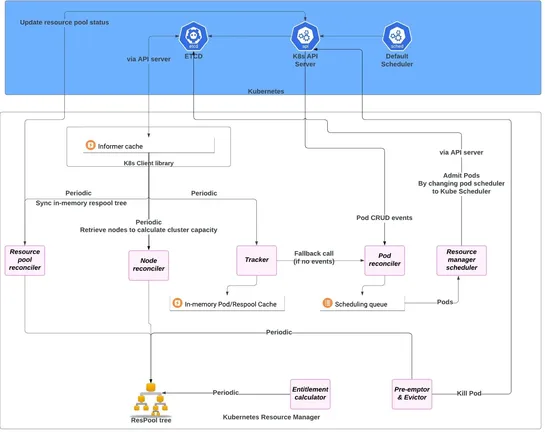
Uber tossed manual ML resource wrangling for a slick Kubernetes-Ray duo, amping up scalability and slashing inefficiencies.With dynamic resource pools, elastic sharing, and smart scheduling, they rev up utilization and demolish GPU waste—no micromanaging required... read more  

Uber’s Journey to Ray on Kubernetes
Link
@faun shared a link, 1 year, 1 month ago
FAUN.dev()

From Edge to Enterprise: The StarlingX Advantage

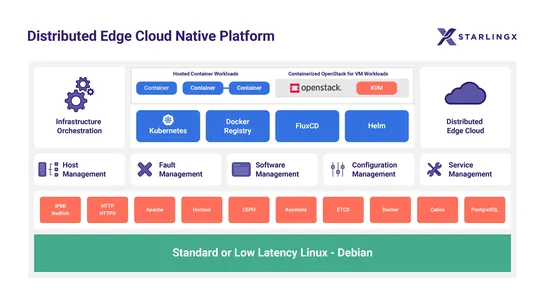
StarlingXtackles low-latency like a boss, perfect for edge and enterprise clouds. It weaves together real-time Linux and OVS DPDK, all while juggling up to5,000 nodes. It scales effortlessly, sprinting from humblesingle-nodesetups to sprawlingtens-of-thousandsin multi-region clouds. Timing precision.. read more  

From Edge to Enterprise: The StarlingX Advantage
Link
@faun shared a link, 1 year, 1 month ago
FAUN.dev()

How to build small and secure Docker images for Rust (FROM scratch)

This Dockerfile allows for the creation of minimal and secure Docker images for Rust projects. It utilizes multi-stage builds to avoid unnecessary dependencies and reduces the size of the final image... read more  

Link
@faun shared a link, 1 year, 1 month ago
FAUN.dev()

v1.33: Streaming List responses

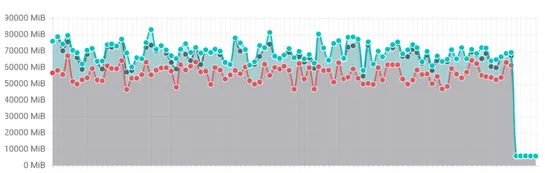
Kubernetesunleashed a game-changer:streaming encoding for List responses. What used to hog70-80GBnow zips by on a sleek3GB. That's a20x improvementin memory conservation. Say goodbye to those aggravating Out-of-Memory errors. This upgrade tackles mammoth datasets while babysitting your cluster's sta.. read more  

v1.33: Streaming List responses
Story
@laura_garcia shared a post, 1 year, 1 month ago
Software Developer, RELIANOID

Women in STEM

🚺✨ The rise of women in STEM is inspiring change, and nowhere is this more evident than in Cybersecurity. Despite making up only 24% of the workforce, women are increasingly leading the charge in securing our digital world. RELIANOID is proud to champion gender diversity in the cybersecurity sector...

Blog women and girls in STEM and Cybersecurity RELIANOID
Link
@anjali shared a link, 1 year, 1 month ago
Customer Marketing Manager, Last9

CloudWatch vs OpenTelemetry: Choosing What Fits Your Stack

CloudWatch vs OpenTelemetry: Understand the trade-offs and choose the observability approach that fits your team's architecture and workflows.

otel
Link
@anjali shared a link, 1 year, 1 month ago
Customer Marketing Manager, Last9

OpenTelemetry PHP: A Detailed Implementation Guide

Learn how to set up OpenTelemetry PHP to collect traces, metrics, and logs from your PHP apps and improve observability across your stack.

logging
GPT-5.4 is OpenAI’s latest frontier AI model designed to perform complex professional and technical work more reliably. It combines advances in reasoning, coding, tool use, and long-context understanding into a single system capable of handling multi-step workflows across software environments. The model builds on earlier GPT-5 releases while integrating the strong coding capabilities previously introduced with GPT-5.3-Codex.

One of the defining features of GPT-5.4 is its ability to operate as part of agent-style workflows. The model can interact with tools, APIs, and external systems to complete tasks that extend beyond simple text generation. It also introduces native computer-use capabilities, allowing AI agents to operate applications using keyboard and mouse commands, screenshots, and browser automation frameworks such as Playwright.

GPT-5.4 supports context windows of up to one million tokens, enabling it to process and reason over very large documents, long conversations, or complex project contexts. This makes it suitable for tasks such as analyzing codebases, generating technical documentation, working with large spreadsheets, or coordinating long-running workflows. The model also introduces a feature called tool search, which allows it to dynamically retrieve tool definitions only when needed. This reduces token usage and makes it more efficient to work with large ecosystems of tools, including environments with dozens of APIs or MCP servers.

In addition to improved reasoning and automation capabilities, GPT-5.4 focuses on real-world productivity tasks. It performs better at generating and editing spreadsheets, presentations, and documents, and it is designed to maintain stronger context across longer reasoning processes. The model also improves factual accuracy and reduces hallucinations compared with previous versions.

GPT-5.4 is available across OpenAI’s ecosystem, including ChatGPT, the OpenAI API, and Codex. A higher-performance variant, GPT-5.4 Pro, is also available for users and developers who require maximum performance for complex tasks such as advanced research, large-scale automation, and demanding engineering workflows. Together, these capabilities position GPT-5.4 as a model aimed not just at conversation, but at executing real work across software systems.