Join us

ContentUpdates and recent posts about GPT-5.4..
Link
@faun shared a link, 9 months, 2 weeks ago
FAUN.dev()

Server-Driven UI: Agile Interfaces Without App Releases

Server-driven UI (SDUI) shifts UI control to the server, allowing for instant, dynamic updates without app releases. JSON payloads define components, improving agility but requiring client-side rendering adjustments. Complex UI changes may still need app updates due to missing client-side components.. read more  

Link
@faun shared a link, 9 months, 2 weeks ago
FAUN.dev()

Implementing High-Performance LLM Serving on GKE: An Inference Gateway Walkthrough

GKE Inference Gatewayflips LLM serving on its head. It’s all about that GPU-aware smart routing. By juggling the KV Cache in real time, it amps up throughput and slices latency like a hot knife through butter... read more  

Implementing High-Performance LLM Serving on GKE: An Inference Gateway Walkthrough
Link
@faun shared a link, 9 months, 2 weeks ago
FAUN.dev()

Unlocking High-Performance AI/ML in Kubernetes with DRANet and RDMA

DraNetslaps networking woes straight out the door. It natively handles RDMA in Kubernetes, so you can toss those convoluted scripts. Now in beta and weighing only 50MB, it offers deployments that are lean, speedy, and unyieldingly secure... read more  

Unlocking High-Performance AI/ML in Kubernetes with DRANet and RDMA
Link
@faun shared a link, 9 months, 2 weeks ago
FAUN.dev()

Critical NVIDIA Container Toolkit Flaw Allows Privilege Escalation on AI Cloud Services

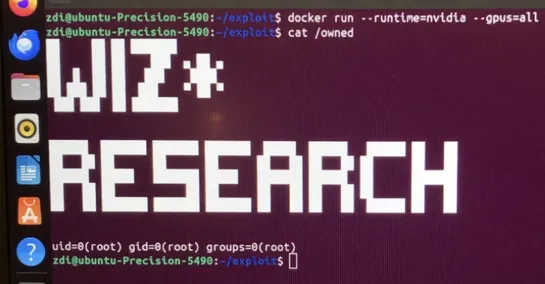
A critical container escape vulnerability (CVE-2025-23266) in NVIDIA Container Toolkit poses a severe threat to managed AI cloud services, earning a CVSS score of 9.0 out of 10.0. This flaw allows37%of cloud environments to potentially be accessed by attackers using a three-line exploit, enabling co.. read more  

Critical NVIDIA Container Toolkit Flaw Allows Privilege Escalation on AI Cloud Services
Link
@faun shared a link, 9 months, 2 weeks ago
FAUN.dev()

Post-Quantum Cryptography in Kubernetes

Kubernetes v1.33quietly rides thepost-quantum securitywave, thanks to Go 1.24's hybrid key exchanges. Watch out for version mismatches, though—those could sneakily downgrade your defenses... read more  

Link
@faun shared a link, 9 months, 2 weeks ago
FAUN.dev()

Setting up Prometheus Stack on Kubernetes

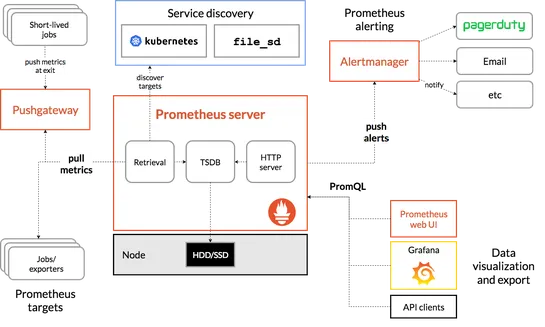
Devtronis Kubernetes monitoring on overdrive. It ropes inPrometheusandGrafana, automates the pesky setup, and shoots real-time insights straight into a slick UI. Effort? Minimal. Results? Maximal... read more  

Setting up Prometheus Stack on Kubernetes
Link
@faun shared a link, 9 months, 2 weeks ago
FAUN.dev()

Zendesk Streamlines Infrastructure Provisioning with Foundation Interface Platform

Zendeskhas tossed out the old playbook with itsFoundation Interface. Forget the guessing games of infrastructure provisioning; engineers now scribble their demands in YAML, and voilà—magic happens. Kubernetes operators step in, spinning these requests into Custom Resources. It’s self-service nirvana.. read more  

Zendesk Streamlines Infrastructure Provisioning with Foundation Interface Platform
Link
@faun shared a link, 9 months, 2 weeks ago
FAUN.dev()

Kubernetes Scaling Strategies

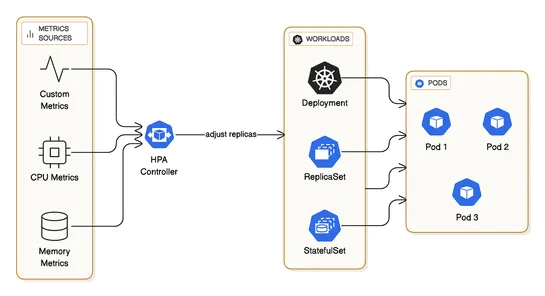
Horizontal Pod Autoscaler(HPA) cranks up pods based on CPU, memory, or custom quirks. A dream for stateless adventures, but you'll need a metrics server.Vertical Pod Autoscaler(VPA) fine-tunes CPU and memory for pods. Works like a charm for jobs where scaling out is sketchy, though it demands restar.. read more  

Kubernetes Scaling Strategies
Link
@faun shared a link, 9 months, 2 weeks ago
FAUN.dev()

Upcoming changes to the Bitnami catalog

Bitnamiclears out the virtual cobwebs by tucking its oldDebian-based imagesinto a digital time capsule, also known as theLegacy repository. It throws a friendly nudge to devs: get with the times and swap to the "latest" images. In production-ville, serious users should hitch a ride on theBitnami Sec.. read more  

Link
@faun shared a link, 9 months, 2 weeks ago
FAUN.dev()

Securing Kubernetes 1.33 Pods: The Impact of User Namespace Isolation

Kubernetes 1.33rolls out with a security upgrade. It flips the switch onuser namespacesby default, shoving pods into the safety zone as unprivileged users. Potential breaches? Curbed. But don't get too comfy—idmap-capable file systems and up-to-date runtimes are now your new best friends if you want.. read more  

Securing Kubernetes 1.33 Pods: The Impact of User Namespace Isolation
GPT-5.4 is OpenAI’s latest frontier AI model designed to perform complex professional and technical work more reliably. It combines advances in reasoning, coding, tool use, and long-context understanding into a single system capable of handling multi-step workflows across software environments. The model builds on earlier GPT-5 releases while integrating the strong coding capabilities previously introduced with GPT-5.3-Codex.

One of the defining features of GPT-5.4 is its ability to operate as part of agent-style workflows. The model can interact with tools, APIs, and external systems to complete tasks that extend beyond simple text generation. It also introduces native computer-use capabilities, allowing AI agents to operate applications using keyboard and mouse commands, screenshots, and browser automation frameworks such as Playwright.

GPT-5.4 supports context windows of up to one million tokens, enabling it to process and reason over very large documents, long conversations, or complex project contexts. This makes it suitable for tasks such as analyzing codebases, generating technical documentation, working with large spreadsheets, or coordinating long-running workflows. The model also introduces a feature called tool search, which allows it to dynamically retrieve tool definitions only when needed. This reduces token usage and makes it more efficient to work with large ecosystems of tools, including environments with dozens of APIs or MCP servers.

In addition to improved reasoning and automation capabilities, GPT-5.4 focuses on real-world productivity tasks. It performs better at generating and editing spreadsheets, presentations, and documents, and it is designed to maintain stronger context across longer reasoning processes. The model also improves factual accuracy and reduces hallucinations compared with previous versions.

GPT-5.4 is available across OpenAI’s ecosystem, including ChatGPT, the OpenAI API, and Codex. A higher-performance variant, GPT-5.4 Pro, is also available for users and developers who require maximum performance for complex tasks such as advanced research, large-scale automation, and demanding engineering workflows. Together, these capabilities position GPT-5.4 as a model aimed not just at conversation, but at executing real work across software systems.