Join us

ContentUpdates and recent posts about GPT-5.4..
Link
@faun shared a link, 9 months, 2 weeks ago
FAUN.dev()

OpenShift LACP bonding performance expectations

Red Hat OpenShift and NIC bonding for high availability is getting popular in data centers. Consider layer2/layer2+3 configurations for balanced traffic distribution across bonded links. Layer3+4 hashing offers highest throughput but may lead to out-of-order packets due to 802.3ad non-compliance. It.. read more  

Link
@faun shared a link, 9 months, 2 weeks ago
FAUN.dev()

Automated Kubernetes Threat Detection with Tetragon and Azure Sentinel

Kubernetes security tools usually drop the ball. Enter the dynamic duo:Tetragonwielding eBPF magic for deep observability, and smart notifications for sniper-precise alerts.Fluent Bitpairs withAzure Logic Appsin an automated setup so you can hunt down threats in real-time. Not a drop of sweat needed.. read more  

Automated Kubernetes Threat Detection with Tetragon and Azure Sentinel
Link
@faun shared a link, 9 months, 2 weeks ago
FAUN.dev()

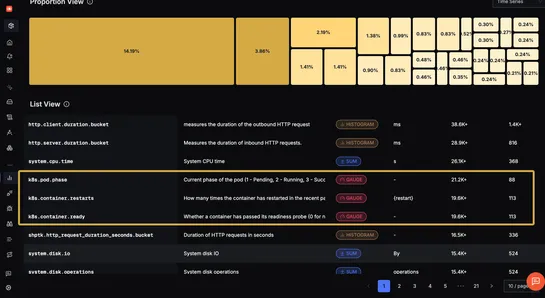
Kubernetes Observability with OpenTelemetry | A Complete Setup Guide

OpenTelemetrydelivers a full observability package for Kubernetes—traces, metrics, logs—all without handcuffs to a single vendor. Deployyour own OTEL Collectorson Minikube usingHelm charts. Dive into node and pod-level metrics and grab those can't-miss Kubernetes cluster events... read more  

Kubernetes Observability with OpenTelemetry | A Complete Setup Guide
Link
@faun shared a link, 9 months, 2 weeks ago
FAUN.dev()

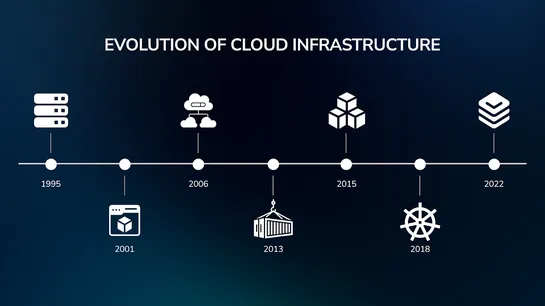
The Evolution of Virtualization Platforms: The Rise of Managed Services and Local Providers’ Edge Against Hyperscalers

Cozystackwants local cloud providers to flex by deliveringKubernetes-based managed serviceswithout breaking a sweat. Who needs hyperscalers anyway? Built on open-source goodness, it ditches vendor lock-in, giving these providers the freedom to roll out next-gen infrastructures in style... read more  

The Evolution of Virtualization Platforms: The Rise of Managed Services and Local Providers’ Edge Against Hyperscalers
Link
@faun shared a link, 9 months, 2 weeks ago
FAUN.dev()

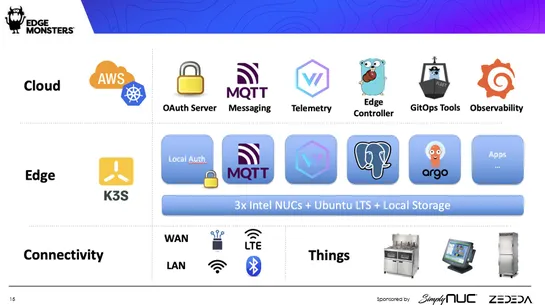
6 Design Principles for Edge Computing Systems

Edge systemseach have their eccentricities, needing solutions as unique as they are:Chick-fil-Aswears byKubernetesto herd its standard operations. TheAir Force, however, prizes nimbleness and ironclad security for deployments scattered across the globe. Smart edge management? It’s a mix ofInfrastruc.. read more  

6 Design Principles for Edge Computing Systems
Link
@faun shared a link, 9 months, 2 weeks ago
FAUN.dev()

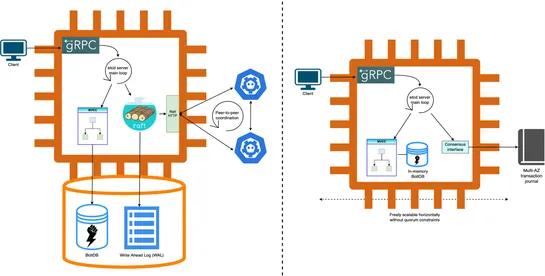
Under the hood: Amazon EKS ultra scale clusters

Amazon EKScranked up its gear—you can now spin up clusters with a staggering100,000 nodesat your beck and call. That’s a cozy home for either1.6 million AWS Trainium chipsor800,000 NVIDIA GPUs. Welcome to the playground for ultra-scale AI/ML. Performance soars skyward by ditching old etcd consensus .. read more  

Under the hood: Amazon EKS ultra scale clusters
Link
@faun shared a link, 9 months, 2 weeks ago
FAUN.dev()

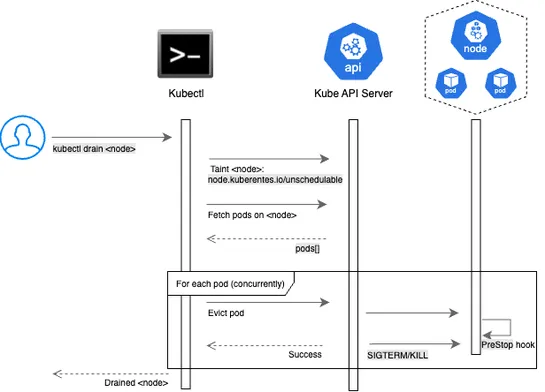
Rethinking Node Drains: A Webhook Based Approach to Graceful Pod Removal

Eviction Reschedule Hooksticks its nose in Kubernetes eviction requests, letting operator-managed stateful apps wriggle their way through node drains without breaking a sweat. 🎯.. read more  

Rethinking Node Drains: A Webhook Based Approach to Graceful Pod Removal
Link
@faun shared a link, 9 months, 2 weeks ago
FAUN.dev()

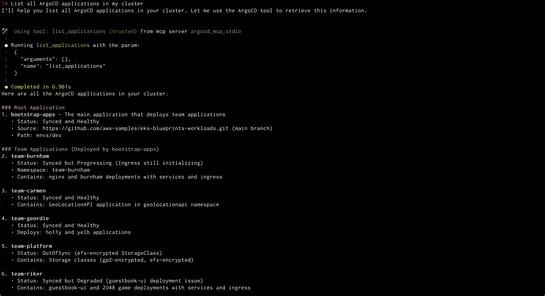
GitOps continuous delivery with ArgoCD and EKS using natural language

ArgoCD MCP Serverteams up withAmazon Q CLIto shake up Kubernetes with natural language controls. Finally, GitOps that even the non-tech crowd can handle. Kiss those roadblocks goodbye. No more brain strain from Kubernetes. Now, plain language syncs apps, reveals resource trees, and checks health sta.. read more  

GitOps continuous delivery with ArgoCD and EKS using natural language
Link
@faun shared a link, 9 months, 2 weeks ago
FAUN.dev()

Building scalable secrets management in hybrid cloud environments

GitGuardian's 2024 reportsounds the alarm:23 million secrets slipped through leaks in 2023. A whopping 70% hung around for months. Talk about a security nightmare! EnterHashiCorp VaultandAkeyless. These tools mastered the multi-cloud juggling act and automated secrets management. Result? A satisfyin.. read more  

Building scalable secrets management in hybrid cloud environments
Story
@laura_garcia shared a post, 9 months, 2 weeks ago
Software Developer, RELIANOID

🚨 Is Your Business Ready for a Cyber Crisis? 🚨

A cyberattack can strike at any time—causing operational disruption, financial loss, and reputational damage. Preparing for and effectively managing a cyber crisis is no longer optional—it's essential. At RELIANOID, we help businesses build robust cyber resilience through advanced solutions and expe..

Blog Preparing and Managing a Cyber Crisis RELIANOID
GPT-5.4 is OpenAI’s latest frontier AI model designed to perform complex professional and technical work more reliably. It combines advances in reasoning, coding, tool use, and long-context understanding into a single system capable of handling multi-step workflows across software environments. The model builds on earlier GPT-5 releases while integrating the strong coding capabilities previously introduced with GPT-5.3-Codex.

One of the defining features of GPT-5.4 is its ability to operate as part of agent-style workflows. The model can interact with tools, APIs, and external systems to complete tasks that extend beyond simple text generation. It also introduces native computer-use capabilities, allowing AI agents to operate applications using keyboard and mouse commands, screenshots, and browser automation frameworks such as Playwright.

GPT-5.4 supports context windows of up to one million tokens, enabling it to process and reason over very large documents, long conversations, or complex project contexts. This makes it suitable for tasks such as analyzing codebases, generating technical documentation, working with large spreadsheets, or coordinating long-running workflows. The model also introduces a feature called tool search, which allows it to dynamically retrieve tool definitions only when needed. This reduces token usage and makes it more efficient to work with large ecosystems of tools, including environments with dozens of APIs or MCP servers.

In addition to improved reasoning and automation capabilities, GPT-5.4 focuses on real-world productivity tasks. It performs better at generating and editing spreadsheets, presentations, and documents, and it is designed to maintain stronger context across longer reasoning processes. The model also improves factual accuracy and reduces hallucinations compared with previous versions.

GPT-5.4 is available across OpenAI’s ecosystem, including ChatGPT, the OpenAI API, and Codex. A higher-performance variant, GPT-5.4 Pro, is also available for users and developers who require maximum performance for complex tasks such as advanced research, large-scale automation, and demanding engineering workflows. Together, these capabilities position GPT-5.4 as a model aimed not just at conversation, but at executing real work across software systems.