Join us

ContentUpdates and recent posts about GPT-5.4..
Link
@faun shared a link, 9 months ago
FAUN.dev()

How I Scanned all of GitHub’s “Oops Commits” for Leaked Secrets

Truffle Security dropped a sharp new open-source tool that digs through GitHub’s public commit history looking forzero-commit force pushes—a tactic devs use to erase mistakes, usually secrets. Problem is, they don’t go quietly. By tapping into historical GitHub PushEvents via GH Archive, the tool h.. read more  
Link
@faun shared a link, 9 months ago
FAUN.dev()

You might not need tmux

A dev swapped outtmuxfor a slick combo:Zellij,SSH multiplexing, andsystemdsocket daemons. No more virtual splits. Just clean session persistence and tight remote control. This setup brings scrollback back where it belongs—your terminal’s native buffer. It plays nice with extras like theKitty graphi.. read more  

Link
@faun shared a link, 9 months ago
FAUN.dev()

Zero Trust and Cloud-Native Windows

Microsoft’s moving the cheese again—this time steering Windows deep into the cloud. The old on-prem management playbook? Getting dusty. At the core:Intune, pushingZero Trustlike it means it. Identity-based access, always-on compliance, real-time config—no more trusting the device just because it’s .. read more  

Link
@faun shared a link, 9 months ago
FAUN.dev()

Amazon DocumentDB Serverless is now available

Amazon DocumentDB Serverless is out of preview and ready to roll. It auto-scales compute and memory usingDCUsfor MongoDB-compatible clusters. No migration needed—just upgrade your existing instance and go. Available starting in version5.0, with per-second billing based on DCU burn. What’s new:Fixed.. read more  

Link
@faun shared a link, 9 months ago
FAUN.dev()

Cloudflare and the infinite sadness of migrations

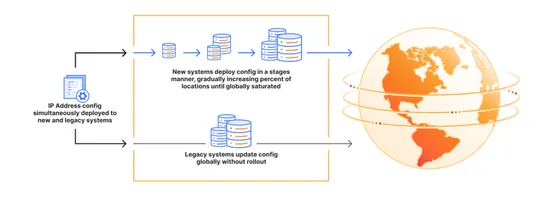
A recent Cloudflare DNS outage traced back to legacy gear tangled with global config changes. Turns out, incomplete migrations can still pack a punch. Their newer topology system does support progressive rollouts—but running it side-by-side with the old one just made the blast radius bigger. System.. read more  

Cloudflare and the infinite sadness of migrations
Link
@faun shared a link, 9 months ago
FAUN.dev()

Supply chain attack compromises npm packages to spread backdoor malware

A fresh supply chain ambush—Scavenger—slipped into npm through the front door. Attackers phished maintainers of high-profile packages likeis,eslint-plugin-prettier, andsynckit, then dropped cross-platform JavaScript malware straight into the codebase. Real-time C2 channels included. They typosquatt.. read more  

Link
@faun shared a link, 9 months ago
FAUN.dev()

Beyond IAM access keys: Modern authentication approaches for AWS

AWS wants long-term IAM access keys gone. In their place:temporary creds via IAM roles,IAM Identity Center,CloudShell, andOIDC integrations. The push covers everything—CLI tools, local dev, compute, CI/CD, even old-school on-prem. The message is clear: rotate automatically, grant minimally, and sto.. read more  

Link
@faun shared a link, 9 months ago
FAUN.dev()

Creating a GitHub App based Azure DevOps Pipelines Service Connection

Azure DevOps made it easier to link up with GitHub—no more re-installing the Azure Pipelines GitHub App to kick things off. Teams can spin up aGitHub App–based service connectiondirectly from a dummy pipeline setup. The service connection comes GitHub App–authenticated out of the gate. Super handy .. read more  

Creating a GitHub App based Azure DevOps Pipelines Service Connection
Link
@faun shared a link, 9 months ago
FAUN.dev()

vCluster: The Performance Paradox – How Virtual Clusters Save Millions Without Sacrificing Speed

vClustercuts Kubernetes infra costs by running virtual clusters as pods inside a shared host. No more spinning up full control planes for every tenant. Itslean Syncerfilters API traffic to keep clusters from melting down.Shared controllersand a built-insleep modekeep idle workloads quiet—and cheap... read more  

Link
@faun shared a link, 9 months ago
FAUN.dev()

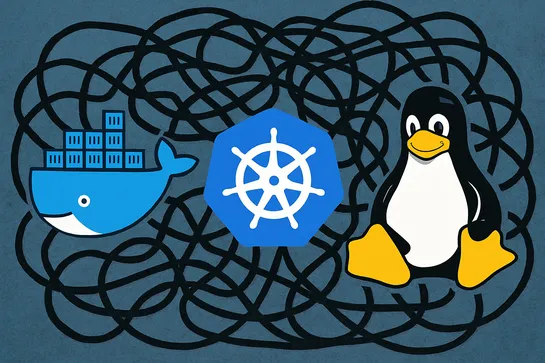
From Borg to Broken: why Kubernetes 2.0 is an apology letter

Kubernetes 2.0 is kicking YAML to the curb.After years of living and breathing.yamlfiles, the project is eyeing a hard break. Maintainers haven’t said it outright, but the message is clear: YAML isn’t cutting it anymore. System shift:This could signal a real usability reboot—maybe even a less painf.. read more  

From Borg to Broken: why Kubernetes 2.0 is an apology letter
GPT-5.4 is OpenAI’s latest frontier AI model designed to perform complex professional and technical work more reliably. It combines advances in reasoning, coding, tool use, and long-context understanding into a single system capable of handling multi-step workflows across software environments. The model builds on earlier GPT-5 releases while integrating the strong coding capabilities previously introduced with GPT-5.3-Codex.

One of the defining features of GPT-5.4 is its ability to operate as part of agent-style workflows. The model can interact with tools, APIs, and external systems to complete tasks that extend beyond simple text generation. It also introduces native computer-use capabilities, allowing AI agents to operate applications using keyboard and mouse commands, screenshots, and browser automation frameworks such as Playwright.

GPT-5.4 supports context windows of up to one million tokens, enabling it to process and reason over very large documents, long conversations, or complex project contexts. This makes it suitable for tasks such as analyzing codebases, generating technical documentation, working with large spreadsheets, or coordinating long-running workflows. The model also introduces a feature called tool search, which allows it to dynamically retrieve tool definitions only when needed. This reduces token usage and makes it more efficient to work with large ecosystems of tools, including environments with dozens of APIs or MCP servers.

In addition to improved reasoning and automation capabilities, GPT-5.4 focuses on real-world productivity tasks. It performs better at generating and editing spreadsheets, presentations, and documents, and it is designed to maintain stronger context across longer reasoning processes. The model also improves factual accuracy and reduces hallucinations compared with previous versions.

GPT-5.4 is available across OpenAI’s ecosystem, including ChatGPT, the OpenAI API, and Codex. A higher-performance variant, GPT-5.4 Pro, is also available for users and developers who require maximum performance for complex tasks such as advanced research, large-scale automation, and demanding engineering workflows. Together, these capabilities position GPT-5.4 as a model aimed not just at conversation, but at executing real work across software systems.