Join us

ContentUpdates and recent posts about GPT-5.4..
Link
@faun shared a link, 9 months ago
FAUN.dev()

Choosing the Best Kubernetes API Gateway: comparing Kong, Envoy, and kgateway

TheKubernetes Gateway APIhit v1.0 and is officially stable. It's a clean break from the old Ingress model, bringing modular, role-aware, multi-protocol control. Core players:Gateway,GatewayClass, andHTTPRoute. On the flip side,Kong Gatewayis losing ground. The newer kids—Envoy Gatewayandkgateway—ar.. read more  
Link
@faun shared a link, 9 months ago
FAUN.dev()

Retiring Docker Content Trust

Docker’s sunsettingDocker Content Trust (DCT)in 2025, starting withDocker Official Images. Not many used it, andNotary v1is toast. So they’re moving to modern signing tools likeSigstoreandNotation. Migration guides are on the way. What’s really happening:The container world’s ditching old trustboxe.. read more  

Link
@faun shared a link, 9 months ago
FAUN.dev()

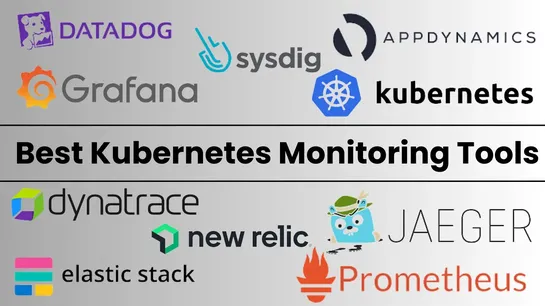
20 Best Kubernetes Monitoring Tools in 2025

Kubernetes monitoring isn't just about scraping metrics anymore. It's grown up into full-stack observability—metrics, logs, traces, plus flashy toys like AI-powered anomaly detection, real-time dashboards, and distributed tracing that actually works. The big players—Prometheus,Grafana,Datadog,Dynat.. read more  

20 Best Kubernetes Monitoring Tools in 2025
Link
@faun shared a link, 9 months ago
FAUN.dev()

How to use cache mounts to speed up Docker builds

Depot just droppedNVMe-backed cache mounts—persistent, high-speed, and wired for true incremental Docker builds. Yes, even inephemeral CI. It hooks intonative BuildKit cache mounts, supporting bothsharedandexclusiveaccess. No more fragile registry caches. No more arcane CI cache duct tape... read more  

Link
@faun shared a link, 9 months ago
FAUN.dev()

I've been using Talos Linux for Kubernetes, and I'll never look back

Talos Linux—an OS stripped down to the essentials and locked tighter than a production firewall—now boots cleanly as a VM onProxmox, playing nice with fullKVM/QEMUsupport. No shell, read-only filesystem, all wired forKubernetesviatalosctl. System shift:Devs are tossing old-school VM stacks for bare.. read more  

I've been using Talos Linux for Kubernetes, and I'll never look back
Link
@faun shared a link, 9 months ago
FAUN.dev()

Docker Scout for Vulnerability management of Containers and remediation

Docker Scout now scans Azure Linux 3.0 containers for CVEs in real time—right in your pipeline. It spots vulns by layer, shows you how to fix them, and plays nice withDocker,Azure DevOps, andGitHub Actions. Security scanning isn't extra credit anymore. It's shipping with the build... read more  

Link
@faun shared a link, 9 months ago
FAUN.dev()

Azure Kubernetes Cluster with Terraform

Spin up a production-gradeAKScluster withTerraform, but skip the hand-wavy theory. This new hands-on project gets into the weeds—RBAC, autoscaling, network policies, IP lockdowns, and yes,Azure Monitorwired up for observability out of the gate. Costs? Controlled. Infra? All code. It’s IaC for teams.. read more  

Link
@faun shared a link, 9 months ago
FAUN.dev()

Kubernetes v1.34 Sneak Peek

Kubernetes v1.34 lands in August 2025. It bringsDynamic Resource Allocation (DRA)to stable—structured resource requests, CEL filtering, and support for GPUs and custom gear. Built on new API types. Finally. Kubelet and API Server tracinglevel up with OpenTelemetry. Stable's the goal. Per-HPA autos.. read more  

Link
@faun shared a link, 9 months ago
FAUN.dev()

Understanding Kubernetes Commands and Arguments

Kubernetes lets you override a container’sCMDandENTRYPOINTwith thecommandandargsfields in your Pod spec. But don’t expect to change them after the Pod’s spun up—this isn’t Docker. No runtime flags here... read more  

Link
@faun shared a link, 9 months ago
FAUN.dev()

How Freshworks optimized server provisioning using Karpenter

Freshworks optimized AWS EKS with Karpenter to handle diverse instance types, reduce costs, and achieve seamless node provisioning, disruptions, and terminations with minimal impact to service availability and resource utilization... read more  

GPT-5.4 is OpenAI’s latest frontier AI model designed to perform complex professional and technical work more reliably. It combines advances in reasoning, coding, tool use, and long-context understanding into a single system capable of handling multi-step workflows across software environments. The model builds on earlier GPT-5 releases while integrating the strong coding capabilities previously introduced with GPT-5.3-Codex.

One of the defining features of GPT-5.4 is its ability to operate as part of agent-style workflows. The model can interact with tools, APIs, and external systems to complete tasks that extend beyond simple text generation. It also introduces native computer-use capabilities, allowing AI agents to operate applications using keyboard and mouse commands, screenshots, and browser automation frameworks such as Playwright.

GPT-5.4 supports context windows of up to one million tokens, enabling it to process and reason over very large documents, long conversations, or complex project contexts. This makes it suitable for tasks such as analyzing codebases, generating technical documentation, working with large spreadsheets, or coordinating long-running workflows. The model also introduces a feature called tool search, which allows it to dynamically retrieve tool definitions only when needed. This reduces token usage and makes it more efficient to work with large ecosystems of tools, including environments with dozens of APIs or MCP servers.

In addition to improved reasoning and automation capabilities, GPT-5.4 focuses on real-world productivity tasks. It performs better at generating and editing spreadsheets, presentations, and documents, and it is designed to maintain stronger context across longer reasoning processes. The model also improves factual accuracy and reduces hallucinations compared with previous versions.

GPT-5.4 is available across OpenAI’s ecosystem, including ChatGPT, the OpenAI API, and Codex. A higher-performance variant, GPT-5.4 Pro, is also available for users and developers who require maximum performance for complex tasks such as advanced research, large-scale automation, and demanding engineering workflows. Together, these capabilities position GPT-5.4 as a model aimed not just at conversation, but at executing real work across software systems.