Join us

ContentUpdates and recent posts about GPT-5.4..
Link
@faun shared a link, 8 months, 1 week ago
FAUN.dev()

Is GPT-5 really worse than GPT-4o? Ars puts them to the test.

OpenAI walked back its latest release after users flaggedGPT-5for sounding flat, hallucinating more, and losing creative spark. The fix? Rolling back to the friendlierGPT-4o. Head-to-head tests told a nuanced story:GPT-5nailed accuracy and structure across most prompts. But when the task called for.. read more  

Is GPT-5 really worse than GPT-4o? Ars puts them to the test.
Link
@faun shared a link, 8 months, 1 week ago
FAUN.dev()

Tiny Agents in Python: a MCP-powered agent in ~70 lines of code

A new demo walks through buildingTiny Agents in Python—just ~70 lines using theModel Context Protocol (MCP). No boilerplate. Just clean LLM-to-tool hookups with standardized agent configs. Agents plug into multiple MCP servers out of the box—from local filesystems to Playwright browsers—and handle .. read more  

Link
@faun shared a link, 8 months, 1 week ago
FAUN.dev()

Myth Or Reality: Will AI Replace Computer Programmers?

Generative AI tools likeGPT-4oandClaude Sonnetnow handle the grunt work—fixing bugs, cranking out code, writing docs—with scary accuracy. Amazon and Anthropic are already hinting at hiring fewer engineers. But the jobs aren’t vanishing; they’re mutating... read more  

Myth Or Reality: Will AI Replace Computer Programmers?
Link
@faun shared a link, 8 months, 1 week ago
FAUN.dev()

Building an AI-Powered E-commerce Chat Assistant with MongoDB

freeCodeCamp dropped a new course that walks devs through building an AI-powered shopping agent from scratch. It ties togetherLangGraphfor orchestration,Geminifor reasoning, andMongoDB Atlasas the vector memory layer. The build covers aNode.js backend, aReact frontend, and wires inmulti-step agent .. read more  

Building an AI-Powered E-commerce Chat Assistant with MongoDB
Link
@faun shared a link, 8 months, 1 week ago
FAUN.dev()

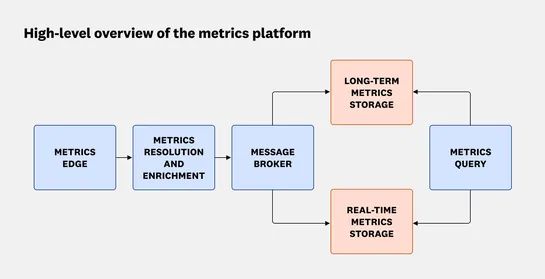
Evolving our real-time timeseries storage again: Built in Rust for performance at scale

Datadog just dropped its 6th-gen real-time timeseries engine:RTDB. It's built inRust, sharded per core, and backed by LSM trees that don’t blink under pressure. The secret sauce? A custom storage engine calledMonocle—optimized for high-cardinality chaos and bursty workloads. It’s pulling60x faster .. read more  

Evolving our real-time timeseries storage again: Built in Rust for performance at scale
Link
@faun shared a link, 8 months, 1 week ago
FAUN.dev()

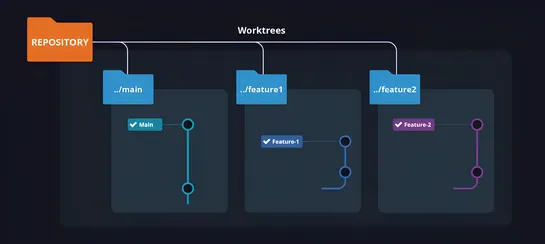
Worktrees: Git's best kept secret (and why you should use them)

Git worktrees have been around since 2015, but few devs use them like they could. They let you work on multiple branches at once—each in its own directory—without the usual stash-switch-stash-repeat dance. The real power move? Pair them with abare repo. That gives you a clean, central base where ea.. read more  

Worktrees: Git's best kept secret (and why you should use them)
Link
@faun shared a link, 8 months, 1 week ago
FAUN.dev()

Dynamo, DynamoDB, and Aurora DSQL

Marc Brooker breaks down the jump fromAmazon DynamotoDynamoDBandAurora DSQL, tracing how the guts of cloud databases have changed. It’s a story about dropping old trade-offs and picking up stronger guarantees. DynamoDB ditches the old hash-ring replication for multi-AZ replica sets backed by Paxos... read more  

Link
@faun shared a link, 8 months, 1 week ago
FAUN.dev()

Can LLMs replace on call SREs today?

ClickHouse ran five LLMs through an autonomous root cause gauntlet using OpenTelemetry data. None nailed it solo. OpenAI’s o3 and Claude Sonnet 4 came closest. GPT-4.1 was the cheapest brain on the block. Things got weird under the hood. Token usage spiked unpredictably. Queries slammed observabili.. read more  

Can LLMs replace on call SREs today?
Link
@faun shared a link, 8 months, 1 week ago
FAUN.dev()

Using DuckDB in AWS Lambda

DuckDB is an open-source in-process SQL OLAP database management system optimized for analytical queries. It can efficiently handle large datasets in a memory-efficient manner, making it suitable for serverless architectures. A DuckDB Lambda layer can be used to run performant queries on remote data.. read more  

Link
@faun shared a link, 8 months, 1 week ago
FAUN.dev()

Best Linux distro for developers of 2025

TechRadar rounds up the best Linux distros for devs.Manjarodelivers Arch power without the pain.DebianandUbuntu LTShold steady for those who put uptime over edge.Fedorakeeps the new stuff flowing. Solusrolls with a tight curation hand—smooth updates, no chaos.Mocaccinoaims at Gentoo lovers who want.. read more  

Best Linux distro for developers of 2025
GPT-5.4 is OpenAI’s latest frontier AI model designed to perform complex professional and technical work more reliably. It combines advances in reasoning, coding, tool use, and long-context understanding into a single system capable of handling multi-step workflows across software environments. The model builds on earlier GPT-5 releases while integrating the strong coding capabilities previously introduced with GPT-5.3-Codex.

One of the defining features of GPT-5.4 is its ability to operate as part of agent-style workflows. The model can interact with tools, APIs, and external systems to complete tasks that extend beyond simple text generation. It also introduces native computer-use capabilities, allowing AI agents to operate applications using keyboard and mouse commands, screenshots, and browser automation frameworks such as Playwright.

GPT-5.4 supports context windows of up to one million tokens, enabling it to process and reason over very large documents, long conversations, or complex project contexts. This makes it suitable for tasks such as analyzing codebases, generating technical documentation, working with large spreadsheets, or coordinating long-running workflows. The model also introduces a feature called tool search, which allows it to dynamically retrieve tool definitions only when needed. This reduces token usage and makes it more efficient to work with large ecosystems of tools, including environments with dozens of APIs or MCP servers.

In addition to improved reasoning and automation capabilities, GPT-5.4 focuses on real-world productivity tasks. It performs better at generating and editing spreadsheets, presentations, and documents, and it is designed to maintain stronger context across longer reasoning processes. The model also improves factual accuracy and reduces hallucinations compared with previous versions.

GPT-5.4 is available across OpenAI’s ecosystem, including ChatGPT, the OpenAI API, and Codex. A higher-performance variant, GPT-5.4 Pro, is also available for users and developers who require maximum performance for complex tasks such as advanced research, large-scale automation, and demanding engineering workflows. Together, these capabilities position GPT-5.4 as a model aimed not just at conversation, but at executing real work across software systems.