Join us

ContentUpdates and recent posts about GPT-5.4..
Link
@faun shared a link, 8 months, 1 week ago
FAUN.dev()

Migrating Airbnb’s JVM Monorepo to Bazel

Airbnb yanked tens of millions of lines of Java, Kotlin, and Scala out of Gradle and dropped them intoBazel. Why? Faster builds, reproducible results, and smoother dev workflows. They didn’t just swap tools—they rewired the whole thing. A customautomated build file generatornow slices up targets fi.. read more  

Migrating Airbnb’s JVM Monorepo to Bazel
Link
@faun shared a link, 8 months, 1 week ago
FAUN.dev()

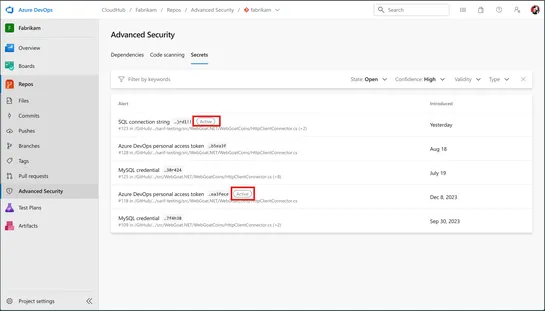
Hunting Living Secrets: Secret Validity Checks Arrive in GitHub Advanced Security for Azure DevOps

GitHub Advanced Security for Azure DevOps just got sharper: it now checks if leaked secrets are actuallyvalid. Secrets are flagged asActiveorUnknownby pinging providers in real time. No setup needed. It auto-kicks in for supported secret types. Why care?Because not every secret leak is an emergenc.. read more  

Hunting Living Secrets: Secret Validity Checks Arrive in GitHub Advanced Security for Azure DevOps
Link
@faun shared a link, 8 months, 1 week ago
FAUN.dev()

Kubernetes v1.34 Sneak Peek: A Game-Changer for the Kubernetes Expert’s Lifecycle

Kubernetes v1.34 lands August 2025 with a clear agenda: smarter scheduling, tighter control, fewer surprises. Dynamic Resource Allocationgoes stable, letting clusters actually reason about GPUs, FPGAs, and NICs. AI/ML and HPC jobs stop guessing and start requesting what they need. ServiceAccount t.. read more  

Link
@faun shared a link, 8 months, 1 week ago
FAUN.dev()

Kubernetes costs keep rising. Can AI bring relief?

88% of Kubernetes users say their total costs keep climbing—thanks to overprovisioned clusters, messy architectures, and hands-on ops. So now, 92% are bringing inAI-driven cost toolsto automate rightsizing and squeeze waste from sprawling workloads. System shift:AI isn't just sneaking into cluster .. read more  

Kubernetes costs keep rising. Can AI bring relief?
Link
@faun shared a link, 8 months, 1 week ago
FAUN.dev()

Elon Musk's xAI Offers Up To $440K For Infrastructure Engineers, Calls It 'Adventure Of A Lifetime'

xAI wants infrastructure engineers to help scale itssupercomputing stack—and they're not playing small. They're after folks who knowKubernetes, can wrangleL4/L7 proxies, and speak fluentcloud networking. The goal: pushmulti-cluster production inferenceacross the Memphis supercluster (yeah, the one .. read more  

Elon Musk's xAI Offers Up To $440K For Infrastructure Engineers, Calls It 'Adventure Of A Lifetime'
Link
@faun shared a link, 8 months, 1 week ago
FAUN.dev()

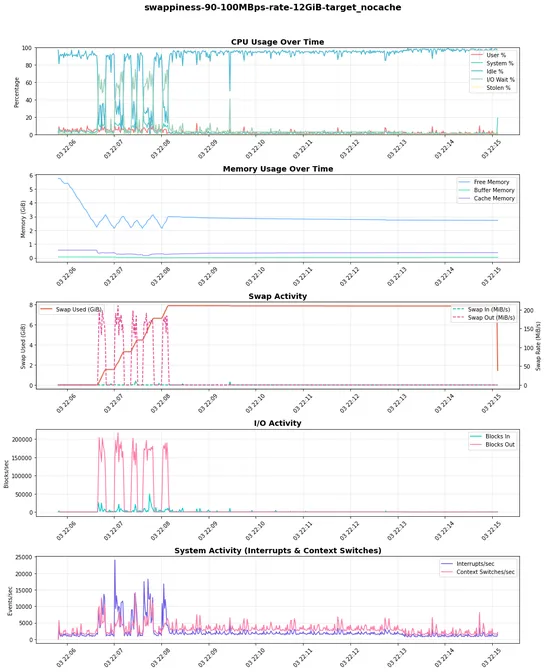
Tuning Linux Swap for Kubernetes: A Deep Dive

Kubernetes v1.34makesNodeSwapofficial. For the first time, swap on Linux nodes is fully supported—breaking with the old norm of just turning it off. Why it matters: NodeSwap gives the kubelet a pressure valve. Instead of firing off OOM kills, it can push some memory to disk. But this isn’t a free w.. read more  

Tuning Linux Swap for Kubernetes: A Deep Dive
Link
@faun shared a link, 8 months, 1 week ago
FAUN.dev()

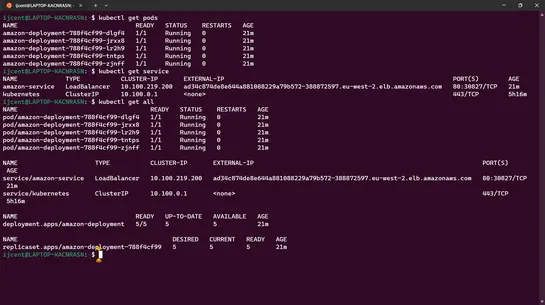
How to Deploy a Kubernetes App on AWS EKS

AWS EKS takes the grunt work out of running Kubernetes. It handles the control plane, automates upgrades, hooks into IAM and VPC, and scales without breaking a sweat. Witheksctlandkubectl, devs can launch clusters fast, drop in their YAML, and wire up services through built-in load balancers... read more  

How to Deploy a Kubernetes App on AWS EKS
Link
@faun shared a link, 8 months, 1 week ago
FAUN.dev()

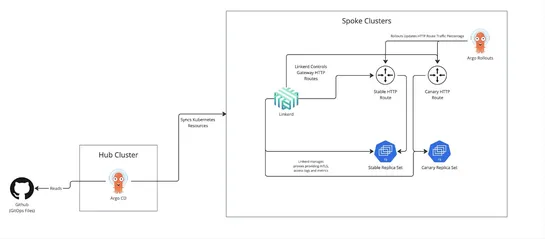
How Imagine Learning Reduced Operational Overhead by 20% With Linkerd

Imagine Learning tore down its old platform and rebuilt it onLinkerdwithAWS EKS, layering inArgo CDandArgo Rollouts. The result? GitOps deploys, canary releases via the Gateway API, and mTLS baked in from the start. The payoff: Over80%cut in compute costs. 97%fewer service mesh CVEs. 20%drop in op.. read more  

How Imagine Learning Reduced Operational Overhead by 20% With Linkerd
Link
@faun shared a link, 8 months, 1 week ago
FAUN.dev()

Critical Kubernetes Capsule Vulnerability Allows Arbitrary Namespace Label Injection

Capsule v0.10.3had a problem. Tenant users could sneak their own labels into system namespaces—an easy way to punch holes in Kubernetes multi-tenancy. v0.10.4shuts that down. It tightens namespace validation and clamps down on label injection... read more  

Link
@faun shared a link, 8 months, 1 week ago
FAUN.dev()

OpenTelemetry configuration gotchas

Zero-code OpenTelemetry still feels like a myth. Python skips logs out of the box. Quarkus wires up tracing, nothing else. Micrometer Tracing (Spring Boot) ignores OTel env vars unless you’re on 3.5 or later. Every stack plays by its own rules... read more  

OpenTelemetry configuration gotchas
GPT-5.4 is OpenAI’s latest frontier AI model designed to perform complex professional and technical work more reliably. It combines advances in reasoning, coding, tool use, and long-context understanding into a single system capable of handling multi-step workflows across software environments. The model builds on earlier GPT-5 releases while integrating the strong coding capabilities previously introduced with GPT-5.3-Codex.

One of the defining features of GPT-5.4 is its ability to operate as part of agent-style workflows. The model can interact with tools, APIs, and external systems to complete tasks that extend beyond simple text generation. It also introduces native computer-use capabilities, allowing AI agents to operate applications using keyboard and mouse commands, screenshots, and browser automation frameworks such as Playwright.

GPT-5.4 supports context windows of up to one million tokens, enabling it to process and reason over very large documents, long conversations, or complex project contexts. This makes it suitable for tasks such as analyzing codebases, generating technical documentation, working with large spreadsheets, or coordinating long-running workflows. The model also introduces a feature called tool search, which allows it to dynamically retrieve tool definitions only when needed. This reduces token usage and makes it more efficient to work with large ecosystems of tools, including environments with dozens of APIs or MCP servers.

In addition to improved reasoning and automation capabilities, GPT-5.4 focuses on real-world productivity tasks. It performs better at generating and editing spreadsheets, presentations, and documents, and it is designed to maintain stronger context across longer reasoning processes. The model also improves factual accuracy and reduces hallucinations compared with previous versions.

GPT-5.4 is available across OpenAI’s ecosystem, including ChatGPT, the OpenAI API, and Codex. A higher-performance variant, GPT-5.4 Pro, is also available for users and developers who require maximum performance for complex tasks such as advanced research, large-scale automation, and demanding engineering workflows. Together, these capabilities position GPT-5.4 as a model aimed not just at conversation, but at executing real work across software systems.