Join us

ContentUpdates and recent posts about GPT-5.4..
Link
@faun shared a link, 7 months, 2 weeks ago
FAUN.dev()

Kubernetes VPA: Limitations, Best Practices, and the Future of Pod Rightsizing

Kubernetes'Vertical Pod Autoscaler (VPA)tries to be helpful by tweaking CPU and memory requests on the fly. Problem is, it needs to bounce your pods to do it. And if you're also runningHorizontal Pod Autoscaler (HPA)on the same metrics? Now they're fighting over control. VPA sees a narrow slice of .. read more  
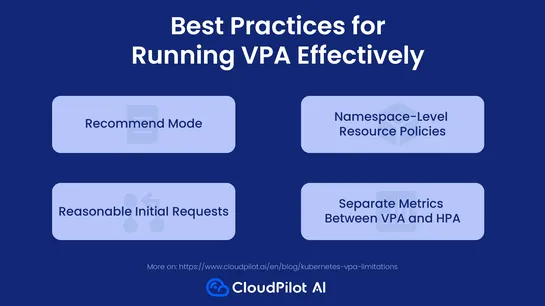
Kubernetes VPA: Limitations, Best Practices, and the Future of Pod Rightsizing
Link
@faun shared a link, 7 months, 2 weeks ago
FAUN.dev()

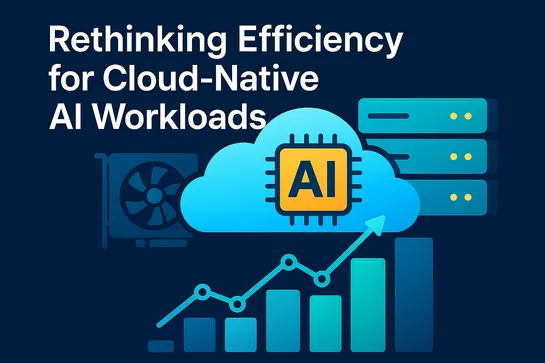
Rethinking Efficiency for Cloud-Native AI Workloads

AI isn’t just burning compute—it's torching old-school FinOps. Reserved Instances? Idle detection? Cute, but not built for GPU bottlenecks and model-heavy pipelines. What’s actually happening:Infra teams are ditching cost-first playbooks for something smarter—business-aligned orchestrationthat chas.. read more  

Rethinking Efficiency for Cloud-Native AI Workloads
Link
@faun shared a link, 7 months, 2 weeks ago
FAUN.dev()

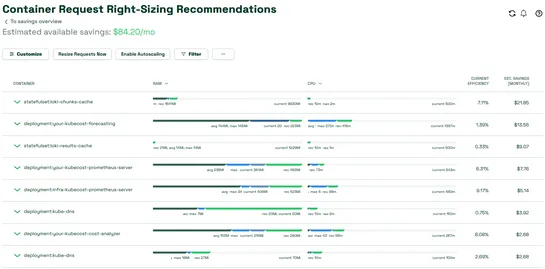
Dynamic Kubernetes request right sizing with Kubecost

Kubecost’s Amazon EKS add-on now handlesautomated container request right-sizing. That means teams can tweak CPU and memory requests based on actual usage—once or on a recurring schedule. Optimization profiles are customizable, and resizing can be baked into cluster setup using Helm. Yes, that mean.. read more  

Dynamic Kubernetes request right sizing with Kubecost
Link
@faun shared a link, 7 months, 2 weeks ago
FAUN.dev()

Why I Ditched Docker for Podman (And You Should Too)

Older container technologies like Docker have been prone to security vulnerabilities, such as CVE-2019-5736 and CVE-2022-0847, which allowed for potential host system compromise. Podman changes the game by eliminating the need for a persistent background service like the Docker daemon, enhancing sec.. read more  

Story
@laura_garcia shared a post, 7 months, 2 weeks ago
Software Developer, RELIANOID

🌐 NIS2 is reshaping cybersecurity compliance across Europe.

At RELIANOID, we are fully aligned and compliant with NIS2 requirements, helping organizations strengthen their security posture. 👉 Explore more: https://www.relianoid.com/security-compliances/relianoid-nis2-compliance/ #NIS2#CyberSecurity#Compliance#Regulation#EUCompliance#InfoSec#DataProtection#Go..

nis2 compliance RELIANOID
Story
@ketbostoganashvili shared a post, 7 months, 2 weeks ago
Technical Content Writer

Send emails with Vercel and Mailtrap

Next.js Vercel Mailtrap.io

Learn how to integrate Mailtrap with your Vercel-hosted applications to send transactional emails with reliable delivery and comprehensive analytics.

Story
@ketbostoganashvili shared a post, 7 months, 2 weeks ago
Technical Content Writer

Send emails with Bolt.new and Mailtrap

Bolt Mailtrap.io

Learn how to integrate Mailtrap with your Bolt.new application to send transactional emails and manage contacts without writing complex code.

Link
@anjali shared a link, 7 months, 2 weeks ago
Customer Marketing Manager, Last9

APM for Kubernetes: Monitor Distributed Applications at Scale

Understand Kubernetes APM by linking request flows with pod, node, and cluster data to get complete visibility at scale.

k8
Story
@laura_garcia shared a post, 7 months, 3 weeks ago
Software Developer, RELIANOID

🌊 Load Balancing Smart Wave with RELIANOID — Built for Marine Telemetry

The Smart Wave platform is key for real-time telemetry from offshore buoys, vessels, and coastal stations. But how do you ensure it performs reliably — even over satellite links? We've published a new technical guide showing how to load balance Smart Wave using RELIANOID: ✅ MQTT & TCP ingestion for ..

Knowledge base_how to load balance SMART WAVE_blue economy
Link
@faun shared a link, 7 months, 3 weeks ago
FAUN.dev()

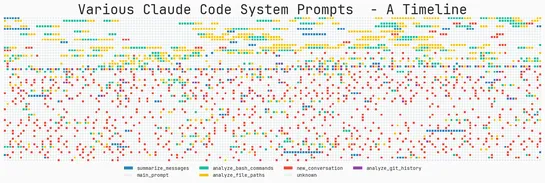
What makes Claude Code so damn good (and how to recreate that magic in your agent)!?

Claude Code skips the multi-agent circus. One main loop. At most, one fork in the road. Everything runs through a flat message history, tracked by a tidy little to-do list. Over half its LLM calls? Outsourced to lighter, cheaper models likeclaude-3-5-haiku. Smart split: heavyweight reasoning when y.. read more  

What makes Claude Code so damn good (and how to recreate that magic in your agent)!?
GPT-5.4 is OpenAI’s latest frontier AI model designed to perform complex professional and technical work more reliably. It combines advances in reasoning, coding, tool use, and long-context understanding into a single system capable of handling multi-step workflows across software environments. The model builds on earlier GPT-5 releases while integrating the strong coding capabilities previously introduced with GPT-5.3-Codex.

One of the defining features of GPT-5.4 is its ability to operate as part of agent-style workflows. The model can interact with tools, APIs, and external systems to complete tasks that extend beyond simple text generation. It also introduces native computer-use capabilities, allowing AI agents to operate applications using keyboard and mouse commands, screenshots, and browser automation frameworks such as Playwright.

GPT-5.4 supports context windows of up to one million tokens, enabling it to process and reason over very large documents, long conversations, or complex project contexts. This makes it suitable for tasks such as analyzing codebases, generating technical documentation, working with large spreadsheets, or coordinating long-running workflows. The model also introduces a feature called tool search, which allows it to dynamically retrieve tool definitions only when needed. This reduces token usage and makes it more efficient to work with large ecosystems of tools, including environments with dozens of APIs or MCP servers.

In addition to improved reasoning and automation capabilities, GPT-5.4 focuses on real-world productivity tasks. It performs better at generating and editing spreadsheets, presentations, and documents, and it is designed to maintain stronger context across longer reasoning processes. The model also improves factual accuracy and reduces hallucinations compared with previous versions.

GPT-5.4 is available across OpenAI’s ecosystem, including ChatGPT, the OpenAI API, and Codex. A higher-performance variant, GPT-5.4 Pro, is also available for users and developers who require maximum performance for complex tasks such as advanced research, large-scale automation, and demanding engineering workflows. Together, these capabilities position GPT-5.4 as a model aimed not just at conversation, but at executing real work across software systems.