Join us

ContentUpdates and recent posts about Flask..
Link
@faun shared a link, 10 months, 2 weeks ago
FAUN.dev()

How to Build an Agent

A new framework lays out six sharp steps for building agents that actually ship. It kicks off with a grounded task, locks in SOPs, then tunes high-leverage prompts. The real choke point? LLM reasoning. Everything else—architecture, data flow, testing—is scoped to chase tight, measurable gains there... read more  

Link
@faun shared a link, 10 months, 2 weeks ago
FAUN.dev()

Typed languages are better suited for vibecoding

Claude’s making typed, compiled languages feel like cheating. Rust, Go, TypeScript—rising fast where Python used to reign. Why? AI coding tools now catch bugs early, validate sprawling diffs, and help devs grok unfamiliar codebases without breaking a sweat. Compiler guarantees + AI pair = fast, safe.. read more  

Link
@faun shared a link, 10 months, 2 weeks ago
FAUN.dev()

Azure AI Speech Service Configuration

Azure AI Speech now splits config paths forTTS(text-to-speech) andSTT(speech-to-text) when usingmanaged identity—and yes, they're different enough to matter. Roles, env vars, and auth flows don’t line up. Private endpoints? They nuke regional fallbacks, so you’ll need to pass full URLs. A shared ut.. read more  

Link
@faun shared a link, 10 months, 2 weeks ago
FAUN.dev()

Browser-Based LLMs: WebGPU Enables AI in Your Browser

Browser-based LLMs likeBrowser-LLMnow run models likeLlama 2entirely in the browser—no server round-trips, no cloud bill. Just you, WebGPU, and up to7B parametershumming along on your machine. System shift:WebGPU cracks open real AI horsepower in the browser. Local inference gets faster, more priva.. read more  

Browser-Based LLMs: WebGPU Enables AI in Your Browser
Link
@faun shared a link, 10 months, 2 weeks ago
FAUN.dev()

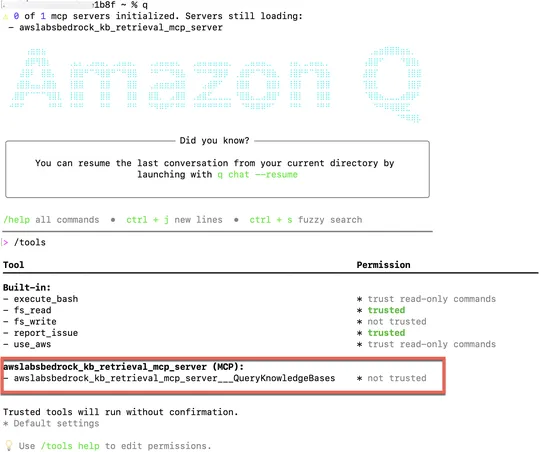
Building AIOps with Amazon Q Developer CLI and MCP Server

Amazon Q Developer CLI now hooks into Model Context Protocol (MCP) servers, unlocking AIOps tasks—incident detection, remediation, security fixes—through plain English. Natural language in, real-time control out. It fetches data and talks to your AWS stack via a low-code UI. Tinkerable, scriptable,.. read more  

Building AIOps with Amazon Q Developer CLI and MCP Server
Link
@faun shared a link, 10 months, 2 weeks ago
FAUN.dev()

OpenAI prepares to launch GPT-5, but big leaps are unlikely

Internal testing showsGPT-5edges ahead of GPT-4—better code, cleaner math, sharper step-by-step thinking. But no breakthrough. No leap. OpenAI even scrapped “Orion,” the original GPT-5 push, and settled on GPT-4.5 instead. Translation: scaling Transformers is hitting a wall. System pivot:OpenAI’s n.. read more  

OpenAI prepares to launch GPT-5, but big leaps are unlikely
Link
@faun shared a link, 10 months, 2 weeks ago
FAUN.dev()

Code Execution Through Deception: Gemini AI CLI Hijack

Tracebit discovered a silent attack on Gemini CLI due to improper validation, prompt injection, and misleading UX leading to execution of malicious commands without user awareness. Google fixed this in v0.1.14... read more  

Link
@faun shared a link, 10 months, 2 weeks ago
FAUN.dev()

6 Weeks of Claude Code

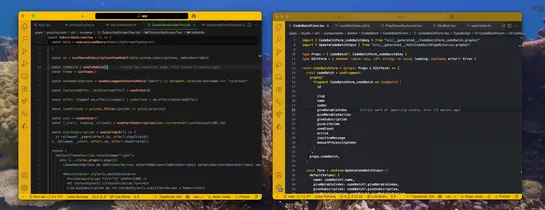
Puzzmo just nuked years of tech debt in six weeks thanks toClaude Code, Anthropic’s AI-powered dev sidekick. With a clean monorepo, tight tooling (React, GraphQL, Relay), and some well-aimed prompts, one engineer knocked out core migrations, unified the UI, and abstracted the CMS—all without derail.. read more  

6 Weeks of Claude Code
Link
@faun shared a link, 10 months, 2 weeks ago
FAUN.dev()

One Dataset. No Warning. Google Took Everything. You’re Not Safe Either.

An indie dev got their Google account nuked—no warning—right after unzipping an NSFW dataset on Drive. It was for benchmarking a private, on-device AI model that actually beat the cloud. Didn’t matter. The system flagged a CSAM violation, locked everything, and offered no appeals. Key takeway:If yo.. read more  

Link
@faun shared a link, 10 months, 2 weeks ago
FAUN.dev()

AWS CLI Cheatsheet

The AWS CLI lets developers skip the console and drive AWS straight from the terminal. It’s scriptable, cross-region, and built for automation. Run a command, get back JSON. Pipe it intojq, slice what you need, done. Tab-completion and in-line help make it faster to poke around and stitch together .. read more  

Flask is an open-source web framework written in Python and created by Armin Ronacher in 2010. It is known as a microframework, not because it is weak or incomplete, but because it provides only the essential building blocks for developing web applications. Its core focuses on handling HTTP requests, defining routes, and rendering templates, while leaving decisions about databases, authentication, form handling, and other components to the developer. This minimalistic design makes Flask lightweight, flexible, and easy to learn, but also powerful enough to support complex systems when extended with the right tools.

At the heart of Flask are two libraries: Werkzeug, which is a WSGI utility library that handles the low-level details of communication between web servers and applications, and Jinja2, a templating engine that allows developers to write dynamic HTML pages with embedded Python logic. By combining these two, Flask provides a clean and pythonic way to create web applications without imposing strict architectural patterns.

One of the defining characteristics of Flask is its explicitness. Unlike larger frameworks such as Django, Flask does not try to hide complexity behind layers of abstraction or dictate how a project should be structured. Instead, it gives developers complete control over how they organize their code and which tools they integrate. This explicit nature makes applications easier to reason about and gives teams the freedom to design solutions that match their exact needs. At the same time, Flask benefits from a vast ecosystem of extensions contributed by the community. These extensions cover areas such as database integration through SQLAlchemy, user session and authentication management, form validation with CSRF protection, and database migration handling. This modular approach means a developer can start with a very simple application and gradually add only the pieces they require, avoiding the overhead of unused components.

Flask is also widely appreciated for its simplicity and approachability. Many developers write their first web application in Flask because the learning curve is gentle, the documentation is clear, and the framework itself avoids unnecessary complexity. It is particularly well suited for building prototypes, REST APIs, microservices, or small to medium-sized web applications. At the same time, production-grade deployments are supported by running Flask applications on WSGI servers such as Gunicorn or uWSGI, since the development server included with Flask is intended only for testing and debugging.

The strengths of Flask lie in its minimalism, flexibility, and extensibility. It gives developers the freedom to assemble their application architecture, choose their own libraries, and maintain tight control over how things work under the hood. This is attractive to experienced engineers who dislike being boxed in by heavy frameworks. However, the same freedom can become a limitation. Flask does not include features like an ORM, admin interface, or built-in authentication system, which means teams working on very large applications must take on more responsibility for enforcing patterns and maintaining consistency. In situations where a project requires an opinionated, all-in-one solution, Django or another full-stack framework may be a better fit.

In practice, Flask has grown far beyond its initial positioning as a lightweight tool. It has been used by startups for rapid prototypes and by large companies for production systems. Its design philosophy—keep the core simple, make extensions easy, and let developers decide—continues to attract both beginners and professionals. This balance between simplicity and power has made Flask one of the most enduring and widely used Python web frameworks.