Join us

ContentUpdates and recent posts about Flask..
Link
@faun shared a link, 10 months, 2 weeks ago
FAUN.dev()

AWS CLI Cheatsheet

The AWS CLI lets developers skip the console and drive AWS straight from the terminal. It’s scriptable, cross-region, and built for automation. Run a command, get back JSON. Pipe it intojq, slice what you need, done. Tab-completion and in-line help make it faster to poke around and stitch together .. read more  
Link
@faun shared a link, 10 months, 2 weeks ago
FAUN.dev()

When Process Becomes Latency: Optimizing Incident Response Cadence

In incident response, adaptability is key. Instead of endless playbooks, focus on flexible frameworks for faster, more effective responses. Brandon Chalk,16-year Google SRE, shares insights onbalancing structure and speedwhen every second counts... read more  

Link
@faun shared a link, 10 months, 2 weeks ago
FAUN.dev()

GitHub Copilot DevOps Excellence: Prompt Files vs Instructions vs Chat Modes

GitHub Copilot just leveled up:prompt files,custom instructions, andcustom chat modesare live. Now it's not just tagging along—it’s shaping how you work. Automate code reviews, security scans, or implementation plans. Reuse setups across teams. Control it all from VS Code... read more  

Link
@faun shared a link, 10 months, 2 weeks ago
FAUN.dev()

GitOps Done Right: 10 Best Practices That Make It Work

GitOps ditches hand-rolled deployment scripts for a cleaner, declarative model. Git becomes the truth. Agents likeArgo CDorFlux CDwatch for changes and sync your clusters on their own. It’s not just about pushing YAML. Good GitOps setups lean onKustomizefor modular config, wire inautomated image up.. read more  

GitOps Done Right: 10 Best Practices That Make It Work
Link
@faun shared a link, 10 months, 2 weeks ago
FAUN.dev()

Indexed Views in SQL Server: A Production DBA's Complete Guide

Indexed viewsare apowerfulyet underutilized feature in SQL Server for optimizing complex query performance, with potential for significant performance gains in read-heavy applications. Automatic query substitution is a game-changer when it comes to leveragingindexed viewsfor performance optimization.. read more  

Link
@faun shared a link, 10 months, 2 weeks ago
FAUN.dev()

How I Scanned all of GitHub’s “Oops Commits” for Leaked Secrets

Truffle Security dropped a sharp new open-source tool that digs through GitHub’s public commit history looking forzero-commit force pushes—a tactic devs use to erase mistakes, usually secrets. Problem is, they don’t go quietly. By tapping into historical GitHub PushEvents via GH Archive, the tool h.. read more  

Link
@faun shared a link, 10 months, 2 weeks ago
FAUN.dev()

You might not need tmux

A dev swapped outtmuxfor a slick combo:Zellij,SSH multiplexing, andsystemdsocket daemons. No more virtual splits. Just clean session persistence and tight remote control. This setup brings scrollback back where it belongs—your terminal’s native buffer. It plays nice with extras like theKitty graphi.. read more  

Link
@faun shared a link, 10 months, 2 weeks ago
FAUN.dev()

Writing a basic service for GNU Guix

A developer walks through building acustom GNU Guix system serviceforkmonad—yes, the keyboard remapper—by wiring up a newservice-typethat plugs intoShepherdandaccount-service-type. To get there, they lift patterns from services likewesnothd, usemake-forkexec-constructorto spin up the daemon, and de.. read more  

Link
@faun shared a link, 10 months, 2 weeks ago
FAUN.dev()

Automating infrastructure deployments in the Cloud with Terraform and Azure Pipelines

This Azure lab wires upTerraformwithAzure Pipelines CI/CDto spin up infrastructure and deploy a .NET Core app using IaC. It handles remote state with Azure Storage, automatesplanandapplyin pipelines, and swaps in config values via token replacement during deploy... read more  

Link
@faun shared a link, 10 months, 2 weeks ago
FAUN.dev()

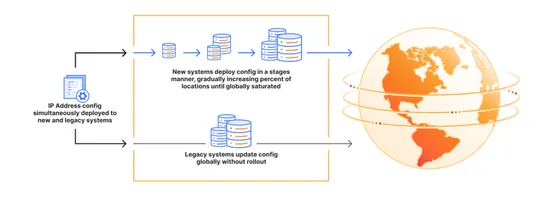
Cloudflare and the infinite sadness of migrations

A recent Cloudflare DNS outage traced back to legacy gear tangled with global config changes. Turns out, incomplete migrations can still pack a punch. Their newer topology system does support progressive rollouts—but running it side-by-side with the old one just made the blast radius bigger. System.. read more  

Cloudflare and the infinite sadness of migrations
Flask is an open-source web framework written in Python and created by Armin Ronacher in 2010. It is known as a microframework, not because it is weak or incomplete, but because it provides only the essential building blocks for developing web applications. Its core focuses on handling HTTP requests, defining routes, and rendering templates, while leaving decisions about databases, authentication, form handling, and other components to the developer. This minimalistic design makes Flask lightweight, flexible, and easy to learn, but also powerful enough to support complex systems when extended with the right tools.

At the heart of Flask are two libraries: Werkzeug, which is a WSGI utility library that handles the low-level details of communication between web servers and applications, and Jinja2, a templating engine that allows developers to write dynamic HTML pages with embedded Python logic. By combining these two, Flask provides a clean and pythonic way to create web applications without imposing strict architectural patterns.

One of the defining characteristics of Flask is its explicitness. Unlike larger frameworks such as Django, Flask does not try to hide complexity behind layers of abstraction or dictate how a project should be structured. Instead, it gives developers complete control over how they organize their code and which tools they integrate. This explicit nature makes applications easier to reason about and gives teams the freedom to design solutions that match their exact needs. At the same time, Flask benefits from a vast ecosystem of extensions contributed by the community. These extensions cover areas such as database integration through SQLAlchemy, user session and authentication management, form validation with CSRF protection, and database migration handling. This modular approach means a developer can start with a very simple application and gradually add only the pieces they require, avoiding the overhead of unused components.

Flask is also widely appreciated for its simplicity and approachability. Many developers write their first web application in Flask because the learning curve is gentle, the documentation is clear, and the framework itself avoids unnecessary complexity. It is particularly well suited for building prototypes, REST APIs, microservices, or small to medium-sized web applications. At the same time, production-grade deployments are supported by running Flask applications on WSGI servers such as Gunicorn or uWSGI, since the development server included with Flask is intended only for testing and debugging.

The strengths of Flask lie in its minimalism, flexibility, and extensibility. It gives developers the freedom to assemble their application architecture, choose their own libraries, and maintain tight control over how things work under the hood. This is attractive to experienced engineers who dislike being boxed in by heavy frameworks. However, the same freedom can become a limitation. Flask does not include features like an ORM, admin interface, or built-in authentication system, which means teams working on very large applications must take on more responsibility for enforcing patterns and maintaining consistency. In situations where a project requires an opinionated, all-in-one solution, Django or another full-stack framework may be a better fit.

In practice, Flask has grown far beyond its initial positioning as a lightweight tool. It has been used by startups for rapid prototypes and by large companies for production systems. Its design philosophy—keep the core simple, make extensions easy, and let developers decide—continues to attract both beginners and professionals. This balance between simplicity and power has made Flask one of the most enduring and widely used Python web frameworks.