Join us

ContentUpdates and recent posts about Flask..
Link
@faun shared a link, 10 months, 2 weeks ago
FAUN.dev()

2025 Stack Overflow Developer Survey

Visual Studio and VS Code continue to reign supreme, fending off AI IDEs in the Stack Overflow 2025 Developer Survey. AI-generated devs noted as time-consuming and lacking trust, while Microsoft tools still dominate in agentic AI with GitHub and ChatGPT. More to discover, as always, Stack Overflow D.. read more  

Link
@faun shared a link, 10 months, 2 weeks ago
FAUN.dev()

GenAI vs. Agentic AI: What Developers Need to Know

Docker’s getting serious about agent-based AI. It just rolled out tools tailor-made for building modular, goal-chasing LLM systems. Model Runnerlets devs spin up LLMs locally—zero cloud, zero wait.Offloadtaps cloud GPUs when local ones tap out. And theMCP Gatewaypipes in external tools without duct.. read more  

Link
@faun shared a link, 10 months, 2 weeks ago
FAUN.dev()

Building a Redis Clone from Scratch – In-Memory KV Store with TCP

A solo dev just spun up a public build of aRedis-style key-value store in Java—lean, thread-safe, and backed by a custom TCP server. Right now it handlesGET,SET, andDELETEover a socket-level protocol. No HTTP. No bloat. At its core: aConcurrentHashMapdoing the heavy lifting. Fast, in-memory, and de.. read more  

Link
@faun shared a link, 10 months, 2 weeks ago
FAUN.dev()

I used NotebookLM to learn a new programming language, and it actually worked

A CS student taught themselvesSwiftusingNotebookLM, Google’s AI that sticks to sources you feed it. They pulled in handpicked docs, YouTube transcripts, and visual mind maps—all dropped into a custom notebook. No generic guesses. No hallucinated trivia. Just clean, source-grounded answers on syntax .. read more  

Link
@faun shared a link, 10 months, 2 weeks ago
FAUN.dev()

How we discovered, and recovered from, Postgres corruption on the homeserver

PostgreSQL index corruption silently broke the matrix.org homeserver. State groups were corrupted, active data was deleted, and restoring consistency took a week of forensic debugging and reindexing. The root cause? Unclear. Hardware, maybe. But not Postgres or Synapse. The team’s fix involved disab.. read more  

Story
@laura_garcia shared a post, 10 months, 2 weeks ago
Software Developer, RELIANOID

📌 New: netstat Command Cheatsheet

Need to check active connections, monitor listening ports, or debug network issues? The Linux netstat command remains a go-to tool for quick and effective diagnostics. We’ve created a clear, quick-reference cheatsheet with: 🔍 Essential command flags 📊 Real-world use cases ⚙️ Integration tips for REL..

The_Linux_netstat_command_Cheatsheet
Link
@faun shared a link, 10 months, 2 weeks ago
FAUN.dev()

Building Reproducible ML Systems with Apache Iceberg and SparkSQL

Apache Iceberg +SparkSQLbringsACID transactions,schema evolution, andtime travelto data lakes. That means ML pipelines finally get reproducibility and consistency without the hacks. Iceberg’s snapshot-based guts track every version, handle parallel writes without stepping on toes, and keep training .. read more  

Building Reproducible ML Systems with Apache Iceberg and SparkSQL
Link
@faun shared a link, 10 months, 2 weeks ago
FAUN.dev()

AWS AgentCore: The Overlooked Privilege Escalation Path in Bedrock’s AI Tooling

AWS Bedrock AgentCore just got a new trick: agents (and anyone IAM-blessed) can now runCode Interpreters. Think arbitrary code execution—with custom or predefined IAM roles. But here’s the kicker: these interpreters skipresource policies, lean on control plane APIs, and don’t log squat—unlessyou fl.. read more  

Link
@faun shared a link, 10 months, 2 weeks ago
FAUN.dev()

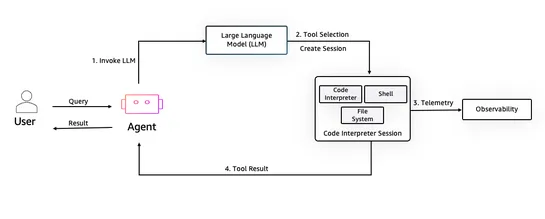
Introducing the Amazon Bedrock AgentCore Code Interpreter

AWS just droppedAgentCore Code Interpreter—a managed box where AI agents can run Python, JavaScript, and TypeScript in isolation. Think of it as a secure playground with autoscaling, controlled file access, and deep hooks into frameworks likeLangChain,LangGraph,Strands, andCrewAI. Big picture: This.. read more  

Introducing the Amazon Bedrock AgentCore Code Interpreter
Link
@faun shared a link, 10 months, 2 weeks ago
FAUN.dev()

Using generative AI for building AWS networks

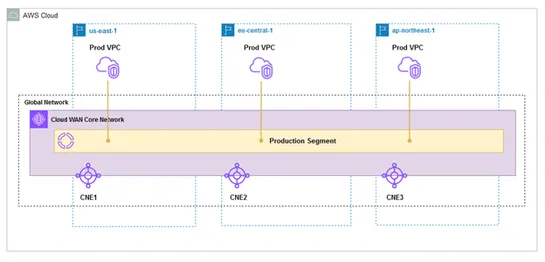
Amazon Q Developer CLI and Bedrock just leveled up. You can now spin up AWS Cloud WANs and VPCs using plain English. Type what you need—get full deployments, phased migrations, and IaC for both CloudFormation and Terraform. Agents handle the whole stack: network discovery, rollout, and config. No m.. read more  

Using generative AI for building AWS networks
Flask is an open-source web framework written in Python and created by Armin Ronacher in 2010. It is known as a microframework, not because it is weak or incomplete, but because it provides only the essential building blocks for developing web applications. Its core focuses on handling HTTP requests, defining routes, and rendering templates, while leaving decisions about databases, authentication, form handling, and other components to the developer. This minimalistic design makes Flask lightweight, flexible, and easy to learn, but also powerful enough to support complex systems when extended with the right tools.

At the heart of Flask are two libraries: Werkzeug, which is a WSGI utility library that handles the low-level details of communication between web servers and applications, and Jinja2, a templating engine that allows developers to write dynamic HTML pages with embedded Python logic. By combining these two, Flask provides a clean and pythonic way to create web applications without imposing strict architectural patterns.

One of the defining characteristics of Flask is its explicitness. Unlike larger frameworks such as Django, Flask does not try to hide complexity behind layers of abstraction or dictate how a project should be structured. Instead, it gives developers complete control over how they organize their code and which tools they integrate. This explicit nature makes applications easier to reason about and gives teams the freedom to design solutions that match their exact needs. At the same time, Flask benefits from a vast ecosystem of extensions contributed by the community. These extensions cover areas such as database integration through SQLAlchemy, user session and authentication management, form validation with CSRF protection, and database migration handling. This modular approach means a developer can start with a very simple application and gradually add only the pieces they require, avoiding the overhead of unused components.

Flask is also widely appreciated for its simplicity and approachability. Many developers write their first web application in Flask because the learning curve is gentle, the documentation is clear, and the framework itself avoids unnecessary complexity. It is particularly well suited for building prototypes, REST APIs, microservices, or small to medium-sized web applications. At the same time, production-grade deployments are supported by running Flask applications on WSGI servers such as Gunicorn or uWSGI, since the development server included with Flask is intended only for testing and debugging.

The strengths of Flask lie in its minimalism, flexibility, and extensibility. It gives developers the freedom to assemble their application architecture, choose their own libraries, and maintain tight control over how things work under the hood. This is attractive to experienced engineers who dislike being boxed in by heavy frameworks. However, the same freedom can become a limitation. Flask does not include features like an ORM, admin interface, or built-in authentication system, which means teams working on very large applications must take on more responsibility for enforcing patterns and maintaining consistency. In situations where a project requires an opinionated, all-in-one solution, Django or another full-stack framework may be a better fit.

In practice, Flask has grown far beyond its initial positioning as a lightweight tool. It has been used by startups for rapid prototypes and by large companies for production systems. Its design philosophy—keep the core simple, make extensions easy, and let developers decide—continues to attract both beginners and professionals. This balance between simplicity and power has made Flask one of the most enduring and widely used Python web frameworks.