Join us

ContentUpdates and recent posts about Flask..
Link
@faun shared a link, 10 months, 1 week ago
FAUN.dev()

Vibe code is legacy code

"Vibe coding"—Karpathy's label for cranking out AI-assisted code at warp speed—lets devs skip the deep dive. It works for quick hacks and throwaway prototypes. But ship that stuff to prod? Cue thetechnical debt... read more  

Link
@faun shared a link, 10 months, 1 week ago
FAUN.dev()

Computational Thinking Is The New Programming

Software's entering its blurred-lines era. The new hybrid model fuses old-school code with natural language prompts and AI-generated logic. Frameworks likeDSPylet devs stitch together pipelines where logic flows through code, prompts, and outside data—like it's all one system. What’s changing:Progr.. read more  

Computational Thinking Is The New Programming
Link
@faun shared a link, 10 months, 1 week ago
FAUN.dev()

Man-in-the-Middle Attack Prevention Guide

XM Cyber just dropped a guide on puttingContinuous Threat Exposure Management (CTEM)into practice with their platform. It maps out clear steps to bake exposure management into your 2025 security plans. Trend to watch:CTEM is leveling up—no longer just a buzzword, it's becoming a real security disci.. read more  

Link
@faun shared a link, 10 months, 1 week ago
FAUN.dev()

4 Ways I am Encouraging My 4 Year Old Child to Help Learn Coding and Use Computer

GCompris, CodeMonkey, Microbit, and Raspberry Pi kits aren’t just toys. They’re a full tech ladder for tiny humans. Start with GCompris to get little fingers clicking. Add CodeMonkey for block logic basics. Then toss in Microbit or an Elecrow kit, and suddenly code makes LEDs blink and buzzers buzz... read more  
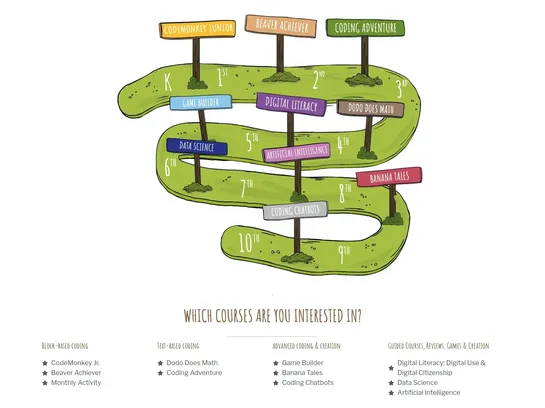
4 Ways I am Encouraging My 4 Year Old Child to Help Learn Coding and Use Computer
Link
@faun shared a link, 10 months, 1 week ago
FAUN.dev()

MCP Security Issues Threatening AI Infrastructure

Docker just dropped theMCP ToolkitandMCP Gateway, tightening up the Model Context Protocol with serious armor. We're talking six major server-side holes patched—OAuth RCE, command injection, leaked creds—plugged. How? With container-wrapped isolation, real-time network filters, first-class OAuth ha.. read more  

Link
@faun shared a link, 10 months, 1 week ago
FAUN.dev()

Next Gen Data Processing at Massive Scale At Pinterest With Moka

Pinterest kicked its creaky Hadoop system to the curb and embraced Moka, a shiny Kubernetes +*AWS EKS platform, to crank up scalability and security.* Graviton ARM EC2 instances, Spark Operator, and Apache YuniKorn unleashed a performance beast and sliced costs.They wrestled with memory monsters and.. read more  

Link
@faun shared a link, 10 months, 1 week ago
FAUN.dev()

Forcing LLMs to be evil during training can make them nicer in the long run

Researchers built an automated pipeline to hunt down the neuron patterns behind bad LLM behavior—sycophancy,hallucinations,malice, the usual suspects. Then they trained models to watch for those patterns in real time. Anthropic didn’t just steer modelsaftertraining like most. They baked the correct.. read more  

Forcing LLMs to be evil during training can make them nicer in the long run
Link
@faun shared a link, 10 months, 1 week ago
FAUN.dev()

Building an AI Home Security System Using .NET, Python, CLIP, Semantic Kernel, Telegram, and Raspberry Pi 4

The post details the process of creating an AI home security system using .NET, Python, Semantic Kernel, a Telegram Bot, Raspberry Pi 4, and Open AI. It covers the hardware and software requirements, as well as the steps to install and test the camera module and the PIR sensor. It also includes code.. read more  

Link
@faun shared a link, 10 months, 1 week ago
FAUN.dev()

Event-Driven Agents in Action

Docker wired up an event-driven AI agent usingMastraand theDocker MCP Gatewayto handle tutorial PRs—comment, close, the works. It runs a crew of agents powered byQwen3andGemma3, synced through GitHub webhooks and MCP tools, all spun up with Docker Compose. System shift:Agentic frameworks are starti.. read more  
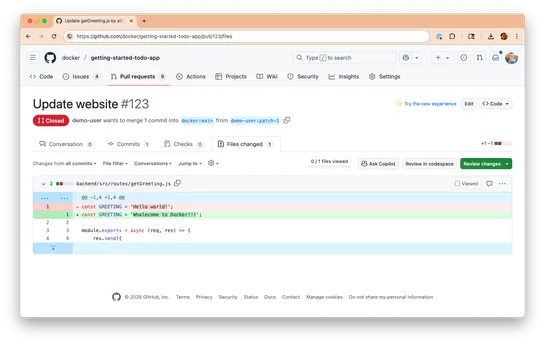
Event-Driven Agents in Action
Link
@faun shared a link, 10 months, 1 week ago
FAUN.dev()

Introducing the Amazon DynamoDB data modeling MCP tool

Amazon just dropped theDynamoDB MCP data modeling tool—a natural language assistant that turns app specs into DynamoDB schemas without the boilerplate. It plugs intoAmazon QandVS Code, tracks access patterns, estimates costs, and throws in real-time design trade-offs... read more  
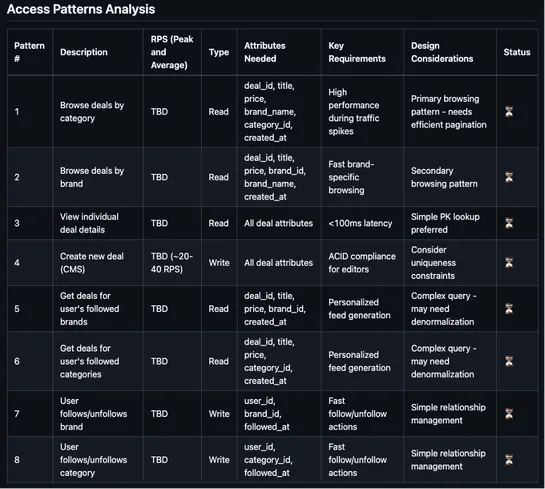
Introducing the Amazon DynamoDB data modeling MCP tool
Flask is an open-source web framework written in Python and created by Armin Ronacher in 2010. It is known as a microframework, not because it is weak or incomplete, but because it provides only the essential building blocks for developing web applications. Its core focuses on handling HTTP requests, defining routes, and rendering templates, while leaving decisions about databases, authentication, form handling, and other components to the developer. This minimalistic design makes Flask lightweight, flexible, and easy to learn, but also powerful enough to support complex systems when extended with the right tools.

At the heart of Flask are two libraries: Werkzeug, which is a WSGI utility library that handles the low-level details of communication between web servers and applications, and Jinja2, a templating engine that allows developers to write dynamic HTML pages with embedded Python logic. By combining these two, Flask provides a clean and pythonic way to create web applications without imposing strict architectural patterns.

One of the defining characteristics of Flask is its explicitness. Unlike larger frameworks such as Django, Flask does not try to hide complexity behind layers of abstraction or dictate how a project should be structured. Instead, it gives developers complete control over how they organize their code and which tools they integrate. This explicit nature makes applications easier to reason about and gives teams the freedom to design solutions that match their exact needs. At the same time, Flask benefits from a vast ecosystem of extensions contributed by the community. These extensions cover areas such as database integration through SQLAlchemy, user session and authentication management, form validation with CSRF protection, and database migration handling. This modular approach means a developer can start with a very simple application and gradually add only the pieces they require, avoiding the overhead of unused components.

Flask is also widely appreciated for its simplicity and approachability. Many developers write their first web application in Flask because the learning curve is gentle, the documentation is clear, and the framework itself avoids unnecessary complexity. It is particularly well suited for building prototypes, REST APIs, microservices, or small to medium-sized web applications. At the same time, production-grade deployments are supported by running Flask applications on WSGI servers such as Gunicorn or uWSGI, since the development server included with Flask is intended only for testing and debugging.

The strengths of Flask lie in its minimalism, flexibility, and extensibility. It gives developers the freedom to assemble their application architecture, choose their own libraries, and maintain tight control over how things work under the hood. This is attractive to experienced engineers who dislike being boxed in by heavy frameworks. However, the same freedom can become a limitation. Flask does not include features like an ORM, admin interface, or built-in authentication system, which means teams working on very large applications must take on more responsibility for enforcing patterns and maintaining consistency. In situations where a project requires an opinionated, all-in-one solution, Django or another full-stack framework may be a better fit.

In practice, Flask has grown far beyond its initial positioning as a lightweight tool. It has been used by startups for rapid prototypes and by large companies for production systems. Its design philosophy—keep the core simple, make extensions easy, and let developers decide—continues to attract both beginners and professionals. This balance between simplicity and power has made Flask one of the most enduring and widely used Python web frameworks.