Join us

ContentUpdates and recent posts about Flask..
Link
@faun shared a link, 10 months, 1 week ago
FAUN.dev()

Manus AI Launches ‘Wide Research,’ Pitting 100-Agent Swarms Against ‘Deep Research‘ from Google and OpenAI

Manus just droppedWide Research—a swarm of 100+ AI agents, each spun up as a Turing-complete VM. They don’t follow orders. They solve massive tasks in parallel, straight from natural language prompts. Forget rigid chains of command. These agents don’t play roles—they run jobs. No hierarchies. No br.. read more  
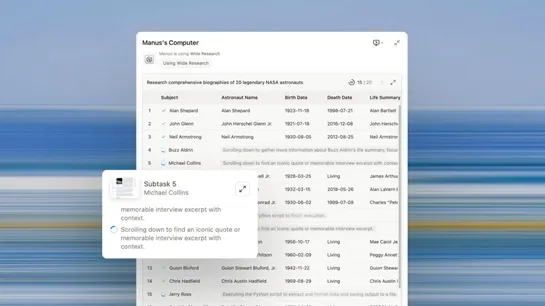
Manus AI Launches ‘Wide Research,’ Pitting 100-Agent Swarms Against ‘Deep Research‘ from Google and OpenAI
Link
@faun shared a link, 10 months, 1 week ago
FAUN.dev()

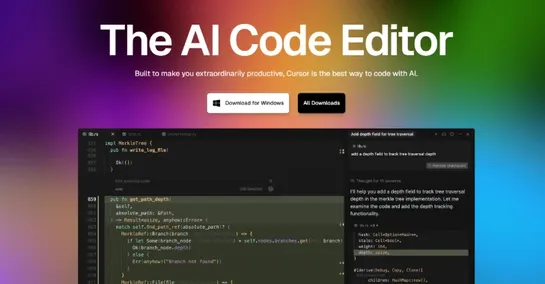
Cursor AI Code Editor Fixed Flaw Allowing Attackers to Run Commands via Prompt Injection

XM Cyber dropped a practical guide for rolling outContinuous Threat Exposure Management (CTEM)with its platform—geared for those eyeing 2025 readiness. It dives into wiring up real-time exposure visibility, validating actual risk, and tightening up remediation across complex enterprise setups. Why .. read more  

Cursor AI Code Editor Fixed Flaw Allowing Attackers to Run Commands via Prompt Injection
Link
@faun shared a link, 10 months, 1 week ago
FAUN.dev()

GPT-5 is here

GPT-5 tightens reasoning and lands cleaner hits inmath,science,finance, andlaw. It outpaces GPT-4—not just wider, but deeper... read more  

GPT-5 is here
Link
@faun shared a link, 10 months, 1 week ago
FAUN.dev()

Anthropic says OpenAI engineers using Claude Code ahead of GPT-5 launch

Anthropic just shut the door on OpenAI, yanking access to theClaude Code APIafter spotting ChatGPT engineers poking around—likely prepping forGPT-5. Claude Codeisn’t just an internal toy. It’s a serious coding co-pilot, used in the wild by devs who want answers without babysitting a model. Market .. read more  

Link
@faun shared a link, 10 months, 1 week ago
FAUN.dev()

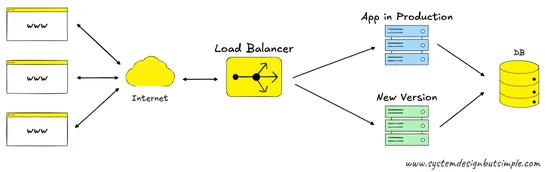
Blue‑Green Deployment in 1 diagram and 195 words

Blue-Green deployment runs two matching environments so you can flip traffic with zero downtime—and yank it back fast if something breaks. Kubernetes + IstioandSpinnakerhandle the heavy lifting. They steer traffic between versions and keep infra lean... read more  

Blue‑Green Deployment in 1 diagram and 195 words
Link
@faun shared a link, 10 months, 1 week ago
FAUN.dev()

Perplexity is using stealth, undeclared crawlers to evade website no-crawl directives

Perplexity AI’s stealth crawling behavior includes modifying user agents and source ASNs to avoid website blocks, highlighting the importance of transparent bot behavior... read more  

Link
@faun shared a link, 10 months, 1 week ago
FAUN.dev()

Project Ire autonomously identifies malware at scale

Microsoft just droppedProject Ire, an autonomous AI that tears through software like a experienced reverse engineer. It decompiles, analyzes, classifies malware—all on its own. Under the hood: LLMs, decompilers, and a tool-use API running the show. On public Windows driver datasets, it scored0.98 p.. read more  

Project Ire autonomously identifies malware at scale
Link
@faun shared a link, 10 months, 1 week ago
FAUN.dev()

Writing an internal Terraform provider from A to Z

Typeform rolled their ownTerraform providerto wrangle runtime data through an internal API. Built with HashiCorp’sGo SDK, the official scaffolding framework, and wired up withacceptance testsfor full lifecycle muscle. They skipped the publicTerraform Registryentirely. Instead, they shipped provider.. read more  

Writing an internal Terraform provider from A to Z
Link
@faun shared a link, 10 months, 1 week ago
FAUN.dev()

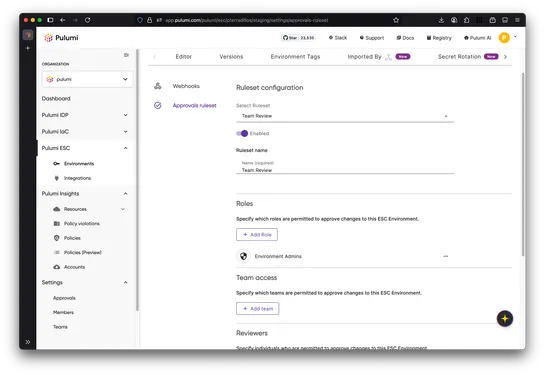
Introducing Approvals in Pulumi ESC

Pulumi ESC just leveled up withApprovals—structured reviews for environment config changes, straight from Console, CLI, SDK, or VS Code. Think pull requests, but for your infra settings. No more YOLO updates. Teams can now lock down config changes with required sign-offs. More control. Cleaner logs.. read more  

Introducing Approvals in Pulumi ESC
Link
@faun shared a link, 10 months, 1 week ago
FAUN.dev()

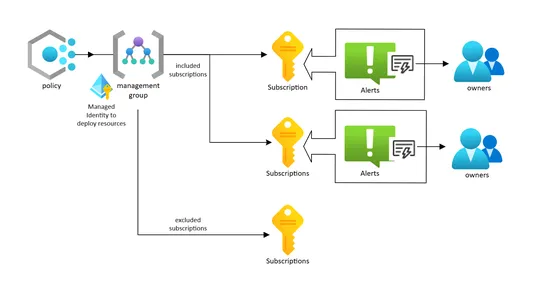
🚨 Azure Service Health Built-In Policy (Preview) – Now Available! 

Microsoft just droppedAzure Service Health Built-In Policy(Preview). It lets teams push Service Health alerts across every Azure subscription—automatically—using Azure Policy. No more piecemeal setup. It folds in AMBA lessons, supports custom rules and action groups, and locks in alert coverage at .. read more  

🚨 Azure Service Health Built-In Policy (Preview) – Now Available! 
Flask is an open-source web framework written in Python and created by Armin Ronacher in 2010. It is known as a microframework, not because it is weak or incomplete, but because it provides only the essential building blocks for developing web applications. Its core focuses on handling HTTP requests, defining routes, and rendering templates, while leaving decisions about databases, authentication, form handling, and other components to the developer. This minimalistic design makes Flask lightweight, flexible, and easy to learn, but also powerful enough to support complex systems when extended with the right tools.

At the heart of Flask are two libraries: Werkzeug, which is a WSGI utility library that handles the low-level details of communication between web servers and applications, and Jinja2, a templating engine that allows developers to write dynamic HTML pages with embedded Python logic. By combining these two, Flask provides a clean and pythonic way to create web applications without imposing strict architectural patterns.

One of the defining characteristics of Flask is its explicitness. Unlike larger frameworks such as Django, Flask does not try to hide complexity behind layers of abstraction or dictate how a project should be structured. Instead, it gives developers complete control over how they organize their code and which tools they integrate. This explicit nature makes applications easier to reason about and gives teams the freedom to design solutions that match their exact needs. At the same time, Flask benefits from a vast ecosystem of extensions contributed by the community. These extensions cover areas such as database integration through SQLAlchemy, user session and authentication management, form validation with CSRF protection, and database migration handling. This modular approach means a developer can start with a very simple application and gradually add only the pieces they require, avoiding the overhead of unused components.

Flask is also widely appreciated for its simplicity and approachability. Many developers write their first web application in Flask because the learning curve is gentle, the documentation is clear, and the framework itself avoids unnecessary complexity. It is particularly well suited for building prototypes, REST APIs, microservices, or small to medium-sized web applications. At the same time, production-grade deployments are supported by running Flask applications on WSGI servers such as Gunicorn or uWSGI, since the development server included with Flask is intended only for testing and debugging.

The strengths of Flask lie in its minimalism, flexibility, and extensibility. It gives developers the freedom to assemble their application architecture, choose their own libraries, and maintain tight control over how things work under the hood. This is attractive to experienced engineers who dislike being boxed in by heavy frameworks. However, the same freedom can become a limitation. Flask does not include features like an ORM, admin interface, or built-in authentication system, which means teams working on very large applications must take on more responsibility for enforcing patterns and maintaining consistency. In situations where a project requires an opinionated, all-in-one solution, Django or another full-stack framework may be a better fit.

In practice, Flask has grown far beyond its initial positioning as a lightweight tool. It has been used by startups for rapid prototypes and by large companies for production systems. Its design philosophy—keep the core simple, make extensions easy, and let developers decide—continues to attract both beginners and professionals. This balance between simplicity and power has made Flask one of the most enduring and widely used Python web frameworks.