Join us

ContentUpdates and recent posts about Flask..
Link
@faun shared a link, 10 months ago
FAUN.dev()

Who does your assistant serve?

OpenAI’s release of GPT-5 backfired: instead of excitement, users felt betrayed by a forced upgrade that stripped away the warmth and reliability they had come to rely on in GPT-4o. Many treated the model as more than a tool — a companion, therapist, or emotional support — so when its personality sh.. read more  

Who does your assistant serve?
Link
@faun shared a link, 10 months ago
FAUN.dev()

Implementing MCP Servers in Python: An AI Shopping Assistant with Gradio

Gradio just leveled up. It now auto-converts plain Python functions intoMCP-compliant LLM tools, grabbing input schemas and metadata straight from docstrings. New tricks:real-time progress streaming,auto file uploads, plus tight integration withVS Code’s AI Chatfor wiring up agent workflows... read more  

Link
@faun shared a link, 10 months ago
FAUN.dev()

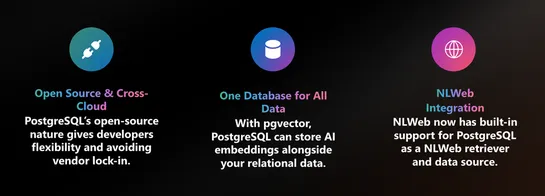
Fueling the Agentic Web Revolution with NLWeb and PostgreSQL

Microsoft just leveled upNLWeb. The open-source project now plays nice withPostgreSQLandpgvector, bringing scalable vector similarity search straight into your database. No need for a separate vector DB—run natural language interfaces right on your existing Postgres stack. System shift:This is more.. read more  

Fueling the Agentic Web Revolution with NLWeb and PostgreSQL
Link
@faun shared a link, 10 months ago
FAUN.dev()

Google releases AI agent Jules for programming

Google’s AI agentJulesjust leveled up—out of beta and into full-on dev mode. It now handlesasynchronous tasks, pushesreal-time code updates, and can spin up pull requests with deeperGitHub integration. Under the hood: it runs on the beefierGemini 2.5 Promodel. AddsEnvironment Snapshotsfor state cap.. read more  

Link
@faun shared a link, 10 months ago
FAUN.dev()

AWS deleted my 10-year account and all data without warning

AWS permanently nuked a 10-year customer account—data, backups, everything—after a payment verification failed. That alone broke their own 90-day retention policy. It gets messier. Looks like an internal script meant to run as a “dry run” went full send in production. Blame a Java CLI parsing edge .. read more  

AWS deleted my 10-year account and all data without warning
Link
@faun shared a link, 10 months ago
FAUN.dev()

AWS Lambda now supports GitHub Actions to simplify function deployment

AWS Lambda just got a smoother ride to prod. There’s now a nativeGitHub Actions integration—no more DIY scripts to ship your serverless. On commit, the new action packages your code, wires up IAM viaOIDC, and deploys using either.zip bundles or containers. All from a tidy, declarative GitHub workfl.. read more  

Link
@faun shared a link, 10 months ago
FAUN.dev()

A practical guide on how to use the GitHub MCP server

GitHub offers a managed MCP endpoint to simplify infrastructure management and streamline AI workflows, enhancing collaboration and code review processes... read more  

Link
@faun shared a link, 10 months ago
FAUN.dev()

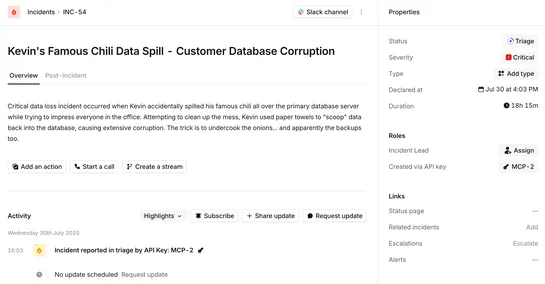
We built an MCP server so Claude can access your incidents

Incident.io dropped an open sourceMCP server in Gothat plugs Claude into their API using theModel Context Protocol. That means Claude can now ask questions, spin up incidents, and dig into timelines—just by talking. The server translates Claude’s prompts into REST calls, turning AI babble into real.. read more  

We built an MCP server so Claude can access your incidents
Link
@faun shared a link, 10 months ago
FAUN.dev()

How to use Terraform to generate secrets

Terraform just leveled up secret handling inAzure Key Vault. It now supports automated secret generation withrandom_password, plus full lifecycle control—rotation, expiration, and storage—baked right into your IaC. Secrets stay marked as sensitive. They're managed in one place. And thanks to Terraf.. read more  

How to use Terraform to generate secrets
Link
@faun shared a link, 10 months ago
FAUN.dev()

Does platform engineering make sense for startups?

Platform engineering isn't just for the big dogs anymore. Startups are picking it up as astrategic edge, building tight, high-leverage tooling from day one. Think:templated CI/CD pipelines, plug-and-play infra modules, zero-handoff onboarding. Done right, these early bets smooth the path and keep d.. read more  

Does platform engineering make sense for startups?
Flask is an open-source web framework written in Python and created by Armin Ronacher in 2010. It is known as a microframework, not because it is weak or incomplete, but because it provides only the essential building blocks for developing web applications. Its core focuses on handling HTTP requests, defining routes, and rendering templates, while leaving decisions about databases, authentication, form handling, and other components to the developer. This minimalistic design makes Flask lightweight, flexible, and easy to learn, but also powerful enough to support complex systems when extended with the right tools.

At the heart of Flask are two libraries: Werkzeug, which is a WSGI utility library that handles the low-level details of communication between web servers and applications, and Jinja2, a templating engine that allows developers to write dynamic HTML pages with embedded Python logic. By combining these two, Flask provides a clean and pythonic way to create web applications without imposing strict architectural patterns.

One of the defining characteristics of Flask is its explicitness. Unlike larger frameworks such as Django, Flask does not try to hide complexity behind layers of abstraction or dictate how a project should be structured. Instead, it gives developers complete control over how they organize their code and which tools they integrate. This explicit nature makes applications easier to reason about and gives teams the freedom to design solutions that match their exact needs. At the same time, Flask benefits from a vast ecosystem of extensions contributed by the community. These extensions cover areas such as database integration through SQLAlchemy, user session and authentication management, form validation with CSRF protection, and database migration handling. This modular approach means a developer can start with a very simple application and gradually add only the pieces they require, avoiding the overhead of unused components.

Flask is also widely appreciated for its simplicity and approachability. Many developers write their first web application in Flask because the learning curve is gentle, the documentation is clear, and the framework itself avoids unnecessary complexity. It is particularly well suited for building prototypes, REST APIs, microservices, or small to medium-sized web applications. At the same time, production-grade deployments are supported by running Flask applications on WSGI servers such as Gunicorn or uWSGI, since the development server included with Flask is intended only for testing and debugging.

The strengths of Flask lie in its minimalism, flexibility, and extensibility. It gives developers the freedom to assemble their application architecture, choose their own libraries, and maintain tight control over how things work under the hood. This is attractive to experienced engineers who dislike being boxed in by heavy frameworks. However, the same freedom can become a limitation. Flask does not include features like an ORM, admin interface, or built-in authentication system, which means teams working on very large applications must take on more responsibility for enforcing patterns and maintaining consistency. In situations where a project requires an opinionated, all-in-one solution, Django or another full-stack framework may be a better fit.

In practice, Flask has grown far beyond its initial positioning as a lightweight tool. It has been used by startups for rapid prototypes and by large companies for production systems. Its design philosophy—keep the core simple, make extensions easy, and let developers decide—continues to attract both beginners and professionals. This balance between simplicity and power has made Flask one of the most enduring and widely used Python web frameworks.