Join us

ContentUpdates and recent posts about Flask..
Link
@faun shared a link, 10 months ago
FAUN.dev()

Proton launches free standalone cross-platform Authenticator app

Proton just droppedProton Authenticator, a free 2FA app that actually respects your privacy. It’s cross-platform, offline-friendly, and skips the usual junk—no ads, no trackers, no bait-and-lock-in. It’s gotend-to-end encryption, a biometric lock, and lets youexport TOTP seedslike it’s your data (b.. read more  

Link
@faun shared a link, 10 months ago
FAUN.dev()

Pinterest Uncovers Rare Search Failure During Migration to Kubernetes

Pinterest hit a weird one-in-a-million query mismatch during its search infra move to Kubernetes. The culprit? A slippery timing bug. To catch it, engineers pulled out every trick—live traffic replays, their own diff tools, hybrid rollouts layered on both the legacy and K8s stacks. Painful, but it .. read more  

Pinterest Uncovers Rare Search Failure During Migration to Kubernetes
Link
@faun shared a link, 10 months ago
FAUN.dev()

Terraform Validate Disagrees with Terraform Docs

Terraform’s CLI will throw errors on configs that match the docs—because your local provider schema might be stale or out of sync. Docs follow the latest release. Your machine might not. So even supported fields can break validation. Love that for us... read more  

Link
@faun shared a link, 10 months ago
FAUN.dev()

Who does the unsexy but essential work for open source?

Oracle led the line-count race in the Linux 6.1 kernel release—beating out flashier open source names. Most of its work isn’t headline material. It’s deep-core stuff: memory management tweaks, block device updates, the quiet machinery real systems run on... read more  

Who does the unsexy but essential work for open source?
Link
@faun shared a link, 10 months ago
FAUN.dev()

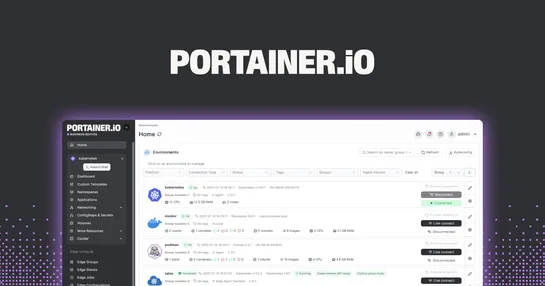
Estimate Your K8s Deployment Costs (Portainer Calculator)

A new TCO calculator breaks down what it really costs to run Kubernetes—DIY CNCF stacks, COSS platforms, and Portainer Business Edition. It crunches infra, labor, and software spend, then maps out staffing needs. It shows exactly where Portainer cuts Kubernetes bloat: itmaybe biased but it's worth t.. read more  

Estimate Your K8s Deployment Costs (Portainer Calculator)
Link
@faun shared a link, 10 months ago
FAUN.dev()

How I Cut AWS Compute Costs by 70% with a Multi-Arch EKS Cluster and Karpenter

Swapping out Kubernetes Cluster Autoscaler forKarpentercut node launch times to under 20 seconds and dropped compute bills by 70%. The secret sauce? Smarter, faster spot instance scaling. Bonus perks: architecture-aware scheduling formulti-CPU (ARM64/x86)workloads—more performance, better utilizati.. read more  

How I Cut AWS Compute Costs by 70% with a Multi-Arch EKS Cluster and Karpenter
Link
@faun shared a link, 10 months ago
FAUN.dev()

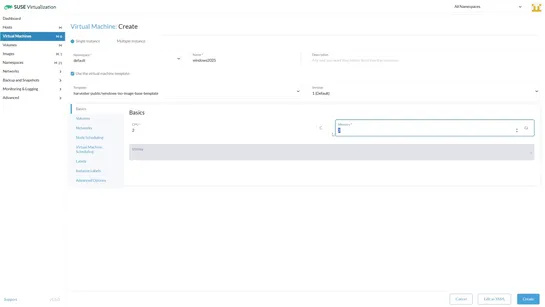
SUSE Adds Arm Support to HCI Platform for Running Monolithic Apps on Kubernetes

SUSE Virtualization 1.5 lands with64-bit Arm and Intelsupport,CSIstorage compatibility, and a tighter4-month release loopsynced with Kubernetes. Built on Harvester and KubeVirt, the update pushes harder on a clear trend: legacy VMs and cloud-native apps sharing the same Kubernetes real estate. Sys.. read more  

SUSE Adds Arm Support to HCI Platform for Running Monolithic Apps on Kubernetes
Link
@faun shared a link, 10 months ago
FAUN.dev()

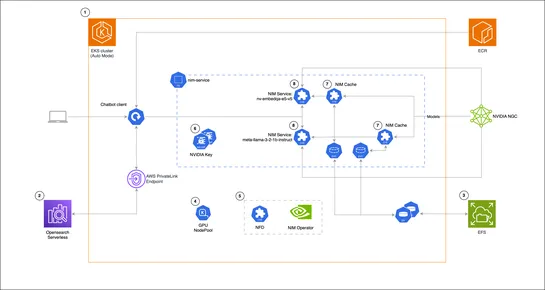
Building a RAG chat-based assistant on Amazon EKS Auto Mode and NVIDIA NIMs

AWS and NVIDIA just dropped a full-stack recipe for running Retrieval-Augmented Generation (RAG) onAmazon EKS Auto Mode—built on top ofNVIDIA NIM microservices. It's LLMs on Kubernetes, but without the hair-pulling. Inference? GPU-accelerated. Embeddings? Covered. Vector search? Handled byAmazon Op.. read more  

Building a RAG chat-based assistant on Amazon EKS Auto Mode and NVIDIA NIMs
Link
@faun shared a link, 10 months ago
FAUN.dev()

Scale AI/ML Workloads with Amazon EKS: Up to 100K Nodes

Amazon EKS just leveled up—clusters can now run withup to 100,000 nodeswith support ofKubernetes 1.30and up. That's not just big—it’s AI-and-ML-scale big. Cluster setup got a lot less manual, too. The AWS Console’s"auto mode"auto-builds your VPC and IAM configs.eksctlplugs right into the flow... read more  

Scale AI/ML Workloads with Amazon EKS: Up to 100K Nodes
Link
@faun shared a link, 10 months ago
FAUN.dev()

Kubernetes 1.34 Debuts KYAML to Resolve YAML Challenges

Kubernetes 1.34 drops on August 27, 2025, and it’s bringingKYAML—a smarter, stricter take on YAML. No more surprise type coercion or “why is this indented wrong?” bugs. Think of it as YAML that behaves. kubectlgets a new trick too:-o kyaml. Use it to spit out manifests in KYAML format—easier to deb.. read more  

Kubernetes 1.34 Debuts KYAML to Resolve YAML Challenges
Flask is an open-source web framework written in Python and created by Armin Ronacher in 2010. It is known as a microframework, not because it is weak or incomplete, but because it provides only the essential building blocks for developing web applications. Its core focuses on handling HTTP requests, defining routes, and rendering templates, while leaving decisions about databases, authentication, form handling, and other components to the developer. This minimalistic design makes Flask lightweight, flexible, and easy to learn, but also powerful enough to support complex systems when extended with the right tools.

At the heart of Flask are two libraries: Werkzeug, which is a WSGI utility library that handles the low-level details of communication between web servers and applications, and Jinja2, a templating engine that allows developers to write dynamic HTML pages with embedded Python logic. By combining these two, Flask provides a clean and pythonic way to create web applications without imposing strict architectural patterns.

One of the defining characteristics of Flask is its explicitness. Unlike larger frameworks such as Django, Flask does not try to hide complexity behind layers of abstraction or dictate how a project should be structured. Instead, it gives developers complete control over how they organize their code and which tools they integrate. This explicit nature makes applications easier to reason about and gives teams the freedom to design solutions that match their exact needs. At the same time, Flask benefits from a vast ecosystem of extensions contributed by the community. These extensions cover areas such as database integration through SQLAlchemy, user session and authentication management, form validation with CSRF protection, and database migration handling. This modular approach means a developer can start with a very simple application and gradually add only the pieces they require, avoiding the overhead of unused components.

Flask is also widely appreciated for its simplicity and approachability. Many developers write their first web application in Flask because the learning curve is gentle, the documentation is clear, and the framework itself avoids unnecessary complexity. It is particularly well suited for building prototypes, REST APIs, microservices, or small to medium-sized web applications. At the same time, production-grade deployments are supported by running Flask applications on WSGI servers such as Gunicorn or uWSGI, since the development server included with Flask is intended only for testing and debugging.

The strengths of Flask lie in its minimalism, flexibility, and extensibility. It gives developers the freedom to assemble their application architecture, choose their own libraries, and maintain tight control over how things work under the hood. This is attractive to experienced engineers who dislike being boxed in by heavy frameworks. However, the same freedom can become a limitation. Flask does not include features like an ORM, admin interface, or built-in authentication system, which means teams working on very large applications must take on more responsibility for enforcing patterns and maintaining consistency. In situations where a project requires an opinionated, all-in-one solution, Django or another full-stack framework may be a better fit.

In practice, Flask has grown far beyond its initial positioning as a lightweight tool. It has been used by startups for rapid prototypes and by large companies for production systems. Its design philosophy—keep the core simple, make extensions easy, and let developers decide—continues to attract both beginners and professionals. This balance between simplicity and power has made Flask one of the most enduring and widely used Python web frameworks.