Join us

ContentUpdates and recent posts about Flask..
Link
@faun shared a link, 10 months ago
FAUN.dev()

Faster Index I/O with NVMe SSDs

A search service (Marginalia Search) gutted its old index internals and dropped memory-mapped B-trees. In their place: adeterministic, block-aligned skip listtuned fordirect reads on NVMe SSDs. It runs on128KB block sizes, usescustom buffer pools, and leans hard onio_uringfor async position lookups.. read more  
Link
@faun shared a link, 10 months ago
FAUN.dev()

GitHub folds into Microsoft following CEO resignation — once independent programming site now part of 'CoreAI' team

GitHub just lost its autonomy. Microsoft is folding it into theCoreAIdivision, where it’ll now march in step with Redmond’s broader AI play. CEO Thomas Dohmke is out. No replacement named. Bigger picture:Why now? Copilot hit general availability, and GitHub’s becoming less a platform, more a provin.. read more  

GitHub folds into Microsoft following CEO resignation — once independent programming site now part of 'CoreAI' team
Link
@faun shared a link, 10 months ago
FAUN.dev()

LLM Evaluation: Practical Tips at Booking.com

A new LLM evaluation framework taps into an"LLM-as-judge"setup—think strong model playing human annotator. It gets prompted (or fine-tuned) to mimic human scores and rate outputs from other LLMs. It runs on a tightly labeledgolden dataset, handles both pointwise and head-to-head comparisons, and sh.. read more  

LLM Evaluation: Practical Tips at Booking.com
Link
@faun shared a link, 10 months ago
FAUN.dev()

No, AI is not Making Engineers 10x as Productive

Claims of 10–100x dev speed from AI tools skip the hard parts—code reviews, bug queues, flaky tests. In practice, AI helps with the small stuff: one-off scripts, throwaway glue code, basic scaffolds. But scaling that help across big, messy codebases? Still a pipe dream. Too much context lost. Too ma.. read more  

Link
@faun shared a link, 10 months ago
FAUN.dev()

This New AI is 100x Faster at Reasoning Than ChatGPT

Sapient Intelligence’s HRM AI model challenges “bigger is better” in AI with a small 27M parameter design outperforming much larger models on reasoning tasks. The architecture mimics the brain, with a slow “planner” and rapid “worker,” achieving jaw-dropping results on benchmarks... read more  

Link
@faun shared a link, 10 months ago
FAUN.dev()

Anthropic Revokes OpenAI’s API Access to Claude, Alleging Violation Ahead of GPT-5 Launch

Anthropic just yanked OpenAI’s API access to Claude. Reason? Alleged violations of terms that forbid using Claude to train rival models—like GPT-5. Windsurf, an OpenAI acquisition target, got the boot earlier too. Spot the pattern: tighten access, box out competitors. System shift:APIs aren’t just .. read more  

Anthropic Revokes OpenAI’s API Access to Claude, Alleging Violation Ahead of GPT-5 Launch
Link
@faun shared a link, 10 months ago
FAUN.dev()

Powering Real-Time AI Applications

Generative AI databases like SingleStore now cramOLTP,OLAP,vector search, andfull-text searchinto one SQL-first platform. Structured, unstructured—it eats both. No ETL. No silos. Just real-time data, ripe for AI models and semantic queries. System shift:Blending transactional and analytic guts in o.. read more  

Link
@faun shared a link, 10 months ago
FAUN.dev()

When Did AI Take Over Hacker News?

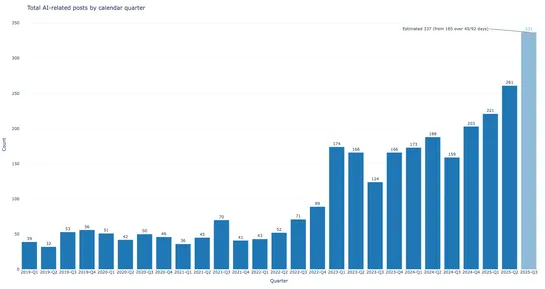
A fresh dive into 24,910 top Hacker News posts since 2019 shows that AI chatter didn’t blow up with ChatGPT—it took off afterGPT-4 landed in early 2023. The study used OpenAI’s Batch API and a lean GPT-5-mini to crunch the numbers. Turns out,52% of the AI talk was positive, and the busiest stretch?.. read more  

When Did AI Take Over Hacker News?
Link
@faun shared a link, 10 months ago
FAUN.dev()

MCP Registry with Azure API Center

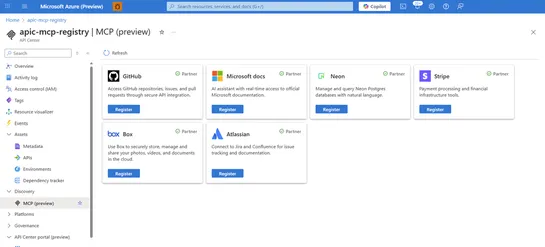
Azure just droppedMCP Center, showing off howAzure API Centercan double as a private registry forModel-Centric Protocol (MCP) servers. It’s built for internal use—think secure discovery, tight OAuth 2 auth, centralized control, and AI Gateway rules baked in. Handy when teams need to corral AI tools.. read more  

MCP Registry with Azure API Center
Link
@faun shared a link, 10 months ago
FAUN.dev()

Who does your assistant serve?

OpenAI’s release of GPT-5 backfired: instead of excitement, users felt betrayed by a forced upgrade that stripped away the warmth and reliability they had come to rely on in GPT-4o. Many treated the model as more than a tool — a companion, therapist, or emotional support — so when its personality sh.. read more  

Who does your assistant serve?
Flask is an open-source web framework written in Python and created by Armin Ronacher in 2010. It is known as a microframework, not because it is weak or incomplete, but because it provides only the essential building blocks for developing web applications. Its core focuses on handling HTTP requests, defining routes, and rendering templates, while leaving decisions about databases, authentication, form handling, and other components to the developer. This minimalistic design makes Flask lightweight, flexible, and easy to learn, but also powerful enough to support complex systems when extended with the right tools.

At the heart of Flask are two libraries: Werkzeug, which is a WSGI utility library that handles the low-level details of communication between web servers and applications, and Jinja2, a templating engine that allows developers to write dynamic HTML pages with embedded Python logic. By combining these two, Flask provides a clean and pythonic way to create web applications without imposing strict architectural patterns.

One of the defining characteristics of Flask is its explicitness. Unlike larger frameworks such as Django, Flask does not try to hide complexity behind layers of abstraction or dictate how a project should be structured. Instead, it gives developers complete control over how they organize their code and which tools they integrate. This explicit nature makes applications easier to reason about and gives teams the freedom to design solutions that match their exact needs. At the same time, Flask benefits from a vast ecosystem of extensions contributed by the community. These extensions cover areas such as database integration through SQLAlchemy, user session and authentication management, form validation with CSRF protection, and database migration handling. This modular approach means a developer can start with a very simple application and gradually add only the pieces they require, avoiding the overhead of unused components.

Flask is also widely appreciated for its simplicity and approachability. Many developers write their first web application in Flask because the learning curve is gentle, the documentation is clear, and the framework itself avoids unnecessary complexity. It is particularly well suited for building prototypes, REST APIs, microservices, or small to medium-sized web applications. At the same time, production-grade deployments are supported by running Flask applications on WSGI servers such as Gunicorn or uWSGI, since the development server included with Flask is intended only for testing and debugging.

The strengths of Flask lie in its minimalism, flexibility, and extensibility. It gives developers the freedom to assemble their application architecture, choose their own libraries, and maintain tight control over how things work under the hood. This is attractive to experienced engineers who dislike being boxed in by heavy frameworks. However, the same freedom can become a limitation. Flask does not include features like an ORM, admin interface, or built-in authentication system, which means teams working on very large applications must take on more responsibility for enforcing patterns and maintaining consistency. In situations where a project requires an opinionated, all-in-one solution, Django or another full-stack framework may be a better fit.

In practice, Flask has grown far beyond its initial positioning as a lightweight tool. It has been used by startups for rapid prototypes and by large companies for production systems. Its design philosophy—keep the core simple, make extensions easy, and let developers decide—continues to attract both beginners and professionals. This balance between simplicity and power has made Flask one of the most enduring and widely used Python web frameworks.