Join us

ContentUpdates and recent posts about Flask..
Story
@idjuric660 shared a post, 10 months ago
Technical Content Writer, Mailtrap

Send Emails with Lovable and Mailtrap

Mailtrap.io

Learn how to integrate Mailtrap with your Lovable application to send transactional emails, manage contacts, and create powerful email workflows without writing complex code.
lovable-logo
Story
@laura_garcia shared a post, 10 months ago
Software Developer, RELIANOID

🔐 Is your firewall doing enough to protect your applications?

As cyber threats continue to evolve, traditional firewalls that operate at the network or transport layers are no longer sufficient. That’s where Application-Level Firewalls (ALFs) come in — offering deep inspection, application-aware filtering, and real-time protection against sophisticated attacks..

KB What is application level firewall
Story
@laura_garcia shared a post, 10 months ago
Software Developer, RELIANOID

Strengthening Operational Technology (OT) Security: What You Need to Know

The Cybersecurity and Infrastructure Security Agency (CISA), alongside 11 international partners, has released the ‘Secure by Demand’ guide to help OT owners and operators integrate robust security measures into their procurement processes. The guide highlights 12 essential security elements that cr..

Story
@viktoriia-yarosh shared a post, 10 months ago
Freshcode

How Grammarly and Kasta Made Ukraine a Global Clojure Hotspot

When developers think of the global adoption of Clojure, they often cite giants like Netflix, Walmart, or Nubank. There is, however, a thriving Clojure ecosystem that has been stealthily powering innovation from an unsuspecting part of the world: Ukraine. With over 633 tech companies and some unicor..

img (5)
Story
@laura_garcia shared a post, 10 months ago
Software Developer, RELIANOID

🚀 DevOpsDays arrives in Lima for the first time!

On August 21, 2025, DevOps practitioners and tech leaders will gather to share insights on CI/CD, SRE, DevSecOps, AI/MLOps, and CloudOps. 🔹 RELIANOID will be there—showcasing how our platform empowers secure, scalable, observability-driven DevOps operations. #DevOpsDays#DevOps#SRE#DevSecOps#CloudOps..

Link
@faun shared a link, 10 months ago
FAUN.dev()

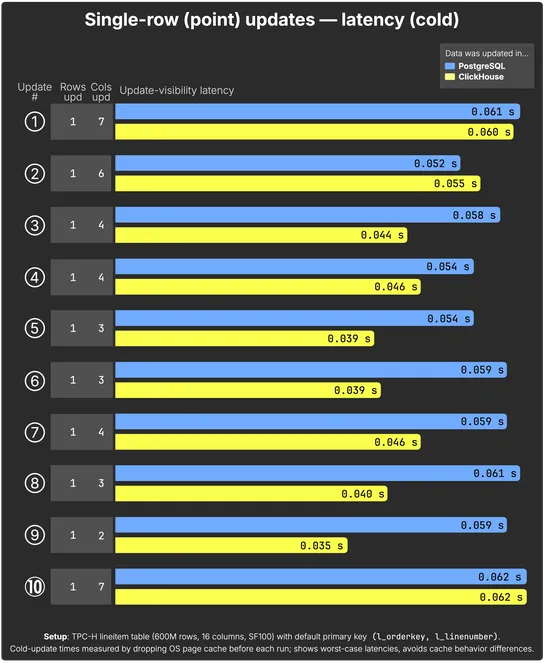
You can’t UPDATE what you can’t find: vs PostgreSQL

ClickHouse just leveled up. Its new SQL-standardUPDATEis fast—PostgreSQL-fast on single-row changes, and up to4,000×faster on bulk updates. That’s pure columnar speed plus parallelism in the driver’s seat. Yes, both use MVCC. But unlike Postgres, ClickHouse dodges transaction bloat by default. That.. read more  
You can’t UPDATE what you can’t find: vs PostgreSQL
Link
@faun shared a link, 10 months ago
FAUN.dev()

Building a web search engine from scratch in two months with 3 billion neural embeddings

An indie dev just went full mad scientist and built a full-stack, transformer-powered search engine—solo. They indexed 280 million pages from scratch with hundreds of crawlers, a fully sharded backend, and serious metal:64 RocksDB nodes,200 CPU cores, and82 TB of SSD. Under the hood: custom HTML pa.. read more  

Link
@faun shared a link, 10 months ago
FAUN.dev()

Using AWS ECR as a universal OCI repository

AWS ECR is an OCI repository supporting different types of artifacts, from Docker images to machine learning models, allowing for simplified management and unified access. Users can interact with ECR using CLI tools like ORAS, Helm, and Terraform, providing integration with CI/CD pipelines for effic.. read more  

Link
@faun shared a link, 10 months ago
FAUN.dev()

Node.js v22.18.0 (LTS) is out

Node.js just got spicier. You can now runTypeScript files out of the box—no transpile step, no weird configs. It’s experimental, and only supports a trimmed-down syntax, but still: big move. Elsewhere, it’s tacklingburst fs eventswith AsyncIterator support, tightening upCJS/ESM cycle resolution, an.. read more  
Node.js v22.18.0 (LTS) is out
Link
@faun shared a link, 10 months ago
FAUN.dev()

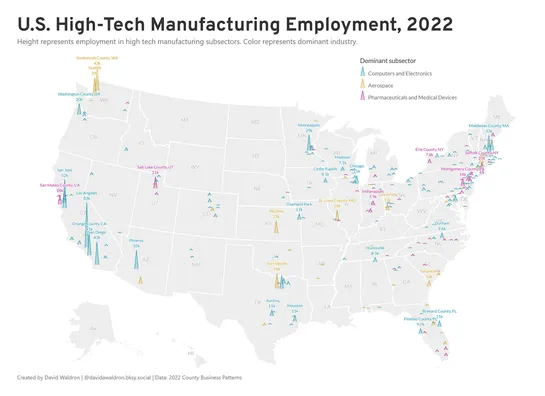
The decline of high-tech manufacturing in the United States

High-tech manufacturing used to employ 2.8% of U.S. workers back in 1990. Now it’s down to 1.3%. The sharpest losses hitcomputers, electronics, and aerospace—industries that once defined the future. Onlypharma and med devicesmanaged to buck the trend, adding 189,000 jobs while the rest bled over a .. read more  
The decline of high-tech manufacturing in the United States
Flask is an open-source web framework written in Python and created by Armin Ronacher in 2010. It is known as a microframework, not because it is weak or incomplete, but because it provides only the essential building blocks for developing web applications. Its core focuses on handling HTTP requests, defining routes, and rendering templates, while leaving decisions about databases, authentication, form handling, and other components to the developer. This minimalistic design makes Flask lightweight, flexible, and easy to learn, but also powerful enough to support complex systems when extended with the right tools.

At the heart of Flask are two libraries: Werkzeug, which is a WSGI utility library that handles the low-level details of communication between web servers and applications, and Jinja2, a templating engine that allows developers to write dynamic HTML pages with embedded Python logic. By combining these two, Flask provides a clean and pythonic way to create web applications without imposing strict architectural patterns.

One of the defining characteristics of Flask is its explicitness. Unlike larger frameworks such as Django, Flask does not try to hide complexity behind layers of abstraction or dictate how a project should be structured. Instead, it gives developers complete control over how they organize their code and which tools they integrate. This explicit nature makes applications easier to reason about and gives teams the freedom to design solutions that match their exact needs. At the same time, Flask benefits from a vast ecosystem of extensions contributed by the community. These extensions cover areas such as database integration through SQLAlchemy, user session and authentication management, form validation with CSRF protection, and database migration handling. This modular approach means a developer can start with a very simple application and gradually add only the pieces they require, avoiding the overhead of unused components.

Flask is also widely appreciated for its simplicity and approachability. Many developers write their first web application in Flask because the learning curve is gentle, the documentation is clear, and the framework itself avoids unnecessary complexity. It is particularly well suited for building prototypes, REST APIs, microservices, or small to medium-sized web applications. At the same time, production-grade deployments are supported by running Flask applications on WSGI servers such as Gunicorn or uWSGI, since the development server included with Flask is intended only for testing and debugging.

The strengths of Flask lie in its minimalism, flexibility, and extensibility. It gives developers the freedom to assemble their application architecture, choose their own libraries, and maintain tight control over how things work under the hood. This is attractive to experienced engineers who dislike being boxed in by heavy frameworks. However, the same freedom can become a limitation. Flask does not include features like an ORM, admin interface, or built-in authentication system, which means teams working on very large applications must take on more responsibility for enforcing patterns and maintaining consistency. In situations where a project requires an opinionated, all-in-one solution, Django or another full-stack framework may be a better fit.

In practice, Flask has grown far beyond its initial positioning as a lightweight tool. It has been used by startups for rapid prototypes and by large companies for production systems. Its design philosophy—keep the core simple, make extensions easy, and let developers decide—continues to attract both beginners and professionals. This balance between simplicity and power has made Flask one of the most enduring and widely used Python web frameworks.