Join us

ContentUpdates and recent posts about Flask..
Link
@faun shared a link, 9 months, 3 weeks ago
FAUN.dev()

OpenTelemetry configuration gotchas

Zero-code OpenTelemetry still feels like a myth. Python skips logs out of the box. Quarkus wires up tracing, nothing else. Micrometer Tracing (Spring Boot) ignores OTel env vars unless you’re on 3.5 or later. Every stack plays by its own rules... read more  

OpenTelemetry configuration gotchas
Link
@faun shared a link, 9 months, 3 weeks ago
FAUN.dev()

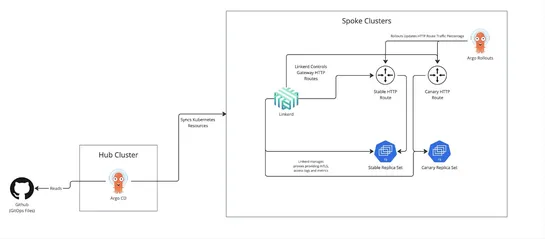
How Imagine Learning Reduced Operational Overhead by 20% With Linkerd

Imagine Learning tore down its old platform and rebuilt it onLinkerdwithAWS EKS, layering inArgo CDandArgo Rollouts. The result? GitOps deploys, canary releases via the Gateway API, and mTLS baked in from the start. The payoff: Over80%cut in compute costs. 97%fewer service mesh CVEs. 20%drop in op.. read more  

How Imagine Learning Reduced Operational Overhead by 20% With Linkerd
Link
@faun shared a link, 9 months, 3 weeks ago
FAUN.dev()

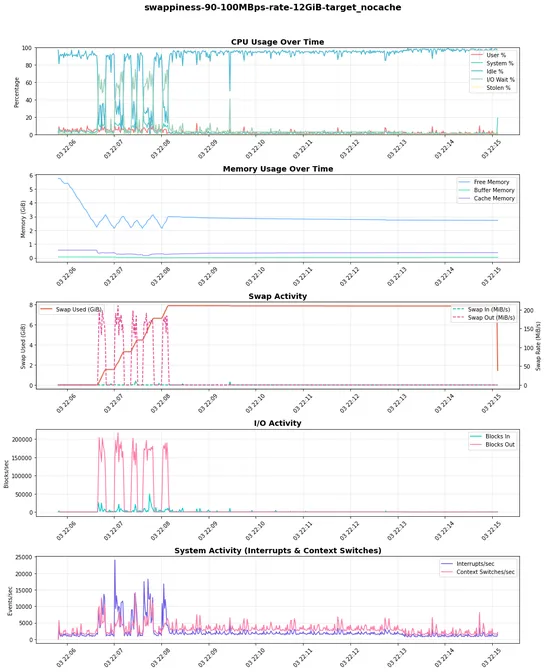
Tuning Linux Swap for Kubernetes: A Deep Dive

Kubernetes v1.34makesNodeSwapofficial. For the first time, swap on Linux nodes is fully supported—breaking with the old norm of just turning it off. Why it matters: NodeSwap gives the kubelet a pressure valve. Instead of firing off OOM kills, it can push some memory to disk. But this isn’t a free w.. read more  

Tuning Linux Swap for Kubernetes: A Deep Dive
Link
@faun shared a link, 9 months, 3 weeks ago
FAUN.dev()

5 of the best distros for building Kubernetes clusters

More devs are spinning upKubernetes clusters on stripped-down Linux distros—thinkRaspberry Pi OS,Debian,Talos Linux,Fedora CoreOS. MicroK8s and k3s make low-power, ARM-first deployments feel less like a science project. Talos Linux? It’s the wildcard—API-only node opsand animmutable, locked-down de.. read more  

5 of the best distros for building Kubernetes clusters
Link
@faun shared a link, 9 months, 3 weeks ago
FAUN.dev()

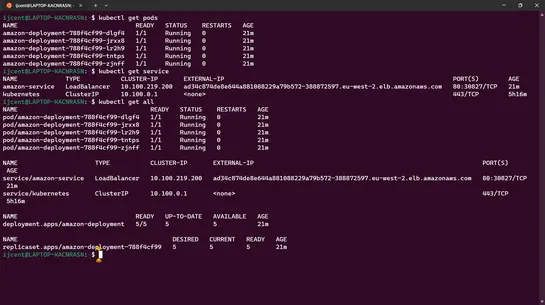
How to Deploy a Kubernetes App on AWS EKS

AWS EKS takes the grunt work out of running Kubernetes. It handles the control plane, automates upgrades, hooks into IAM and VPC, and scales without breaking a sweat. Witheksctlandkubectl, devs can launch clusters fast, drop in their YAML, and wire up services through built-in load balancers... read more  

How to Deploy a Kubernetes App on AWS EKS
Link
@faun shared a link, 9 months, 3 weeks ago
FAUN.dev()

Critical Kubernetes Capsule Vulnerability Allows Arbitrary Namespace Label Injection

Capsule v0.10.3had a problem. Tenant users could sneak their own labels into system namespaces—an easy way to punch holes in Kubernetes multi-tenancy. v0.10.4shuts that down. It tightens namespace validation and clamps down on label injection... read more  

Story
@laura_garcia shared a post, 9 months, 4 weeks ago
Software Developer, RELIANOID

💻 Linux Tip: ss Command Cheatsheet

The ss (Socket Statistics) command is a faster, more powerful alternative to netstat—perfect for troubleshooting and monitoring network connections. From checking listening ports 🔎 to analyzing load balancer traffic ⚡, our new Cheatsheet gives you the key commands in one place. 👉 Read the 1-minute g..

Story
@laura_garcia shared a post, 9 months, 4 weeks ago
Software Developer, RELIANOID

🔹 Load Balancing and High Availability for Skype for Business 🔹

In today’s enterprises, Skype for Business is more than just a communication tool—it’s the backbone of collaboration, meetings, and customer interactions. But what happens when downtime strikes? 🚫 Missed client calls 🚫 Halted internal collaboration 🚫 Reduced productivity That’s why High Availability..

Link
@excelredtech shared a link, 9 months, 4 weeks ago

Why Java Still Dominates in Full-Stack Development

Java remains a top choice for enterprise-level applications due to its stability, security, and rich ecosystem. A Java full stack developer course helps learners master frameworks like Spring Boot and Hibernate, equipping them to build scalable apps end-to-end. With its cross-platform capability and strong community support, Java continues to offer excellent career opportunities for developers who want to stay relevant in today’s tech industry.

Why Java Still Dominates in Full-Stack Development
Story
@girishkumarb shared a post, 9 months, 4 weeks ago
SEO Executive, uCertify

Top 10 Azure Services Every Developer Should Know About in 2025

Microsoft Azure continues to dominate cloud computing in 2025, offering developers a wide range of tools to build, deploy, and scale applications efficiently. Key services like App Services, Functions, SQL Database, Cosmos DB, Blob Storage, DevOps, Kubernetes Service, AI Services, Key Vault, and Monitor are essential for modern development. Mastering these helps developers streamline workflows, integrate AI, secure data, and deliver high-performing applications—making Azure knowledge a must-have skill in today’s tech landscape.

Microsoft Azure cloud platform tools and services for developers in 2025
Flask is an open-source web framework written in Python and created by Armin Ronacher in 2010. It is known as a microframework, not because it is weak or incomplete, but because it provides only the essential building blocks for developing web applications. Its core focuses on handling HTTP requests, defining routes, and rendering templates, while leaving decisions about databases, authentication, form handling, and other components to the developer. This minimalistic design makes Flask lightweight, flexible, and easy to learn, but also powerful enough to support complex systems when extended with the right tools.

At the heart of Flask are two libraries: Werkzeug, which is a WSGI utility library that handles the low-level details of communication between web servers and applications, and Jinja2, a templating engine that allows developers to write dynamic HTML pages with embedded Python logic. By combining these two, Flask provides a clean and pythonic way to create web applications without imposing strict architectural patterns.

One of the defining characteristics of Flask is its explicitness. Unlike larger frameworks such as Django, Flask does not try to hide complexity behind layers of abstraction or dictate how a project should be structured. Instead, it gives developers complete control over how they organize their code and which tools they integrate. This explicit nature makes applications easier to reason about and gives teams the freedom to design solutions that match their exact needs. At the same time, Flask benefits from a vast ecosystem of extensions contributed by the community. These extensions cover areas such as database integration through SQLAlchemy, user session and authentication management, form validation with CSRF protection, and database migration handling. This modular approach means a developer can start with a very simple application and gradually add only the pieces they require, avoiding the overhead of unused components.

Flask is also widely appreciated for its simplicity and approachability. Many developers write their first web application in Flask because the learning curve is gentle, the documentation is clear, and the framework itself avoids unnecessary complexity. It is particularly well suited for building prototypes, REST APIs, microservices, or small to medium-sized web applications. At the same time, production-grade deployments are supported by running Flask applications on WSGI servers such as Gunicorn or uWSGI, since the development server included with Flask is intended only for testing and debugging.

The strengths of Flask lie in its minimalism, flexibility, and extensibility. It gives developers the freedom to assemble their application architecture, choose their own libraries, and maintain tight control over how things work under the hood. This is attractive to experienced engineers who dislike being boxed in by heavy frameworks. However, the same freedom can become a limitation. Flask does not include features like an ORM, admin interface, or built-in authentication system, which means teams working on very large applications must take on more responsibility for enforcing patterns and maintaining consistency. In situations where a project requires an opinionated, all-in-one solution, Django or another full-stack framework may be a better fit.

In practice, Flask has grown far beyond its initial positioning as a lightweight tool. It has been used by startups for rapid prototypes and by large companies for production systems. Its design philosophy—keep the core simple, make extensions easy, and let developers decide—continues to attract both beginners and professionals. This balance between simplicity and power has made Flask one of the most enduring and widely used Python web frameworks.