Join us

ContentUpdates and recent posts about Flask..
Link
@faun shared a link, 9 months, 3 weeks ago
FAUN.dev()

Migrating Airbnb’s JVM Monorepo to Bazel

Airbnb yanked tens of millions of lines of Java, Kotlin, and Scala out of Gradle and dropped them intoBazel. Why? Faster builds, reproducible results, and smoother dev workflows. They didn’t just swap tools—they rewired the whole thing. A customautomated build file generatornow slices up targets fi.. read more  

Migrating Airbnb’s JVM Monorepo to Bazel
Link
@faun shared a link, 9 months, 3 weeks ago
FAUN.dev()

Using DuckDB in AWS Lambda

DuckDB is an open-source in-process SQL OLAP database management system optimized for analytical queries. It can efficiently handle large datasets in a memory-efficient manner, making it suitable for serverless architectures. A DuckDB Lambda layer can be used to run performant queries on remote data.. read more  

Link
@faun shared a link, 9 months, 3 weeks ago
FAUN.dev()

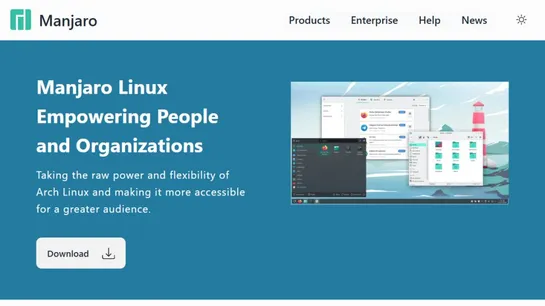
Best Linux distro for developers of 2025

TechRadar rounds up the best Linux distros for devs.Manjarodelivers Arch power without the pain.DebianandUbuntu LTShold steady for those who put uptime over edge.Fedorakeeps the new stuff flowing. Solusrolls with a tight curation hand—smooth updates, no chaos.Mocaccinoaims at Gentoo lovers who want.. read more  

Best Linux distro for developers of 2025
Link
@faun shared a link, 9 months, 3 weeks ago
FAUN.dev()

Can LLMs replace on call SREs today?

ClickHouse ran five LLMs through an autonomous root cause gauntlet using OpenTelemetry data. None nailed it solo. OpenAI’s o3 and Claude Sonnet 4 came closest. GPT-4.1 was the cheapest brain on the block. Things got weird under the hood. Token usage spiked unpredictably. Queries slammed observabili.. read more  

Can LLMs replace on call SREs today?
Link
@faun shared a link, 9 months, 3 weeks ago
FAUN.dev()

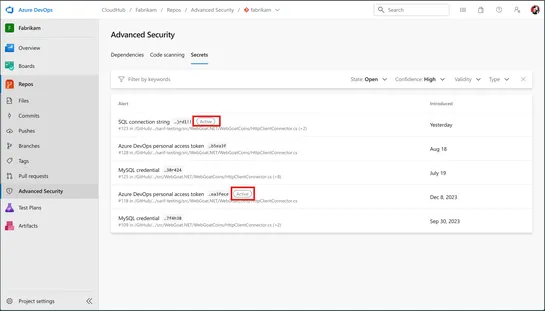
Hunting Living Secrets: Secret Validity Checks Arrive in GitHub Advanced Security for Azure DevOps

GitHub Advanced Security for Azure DevOps just got sharper: it now checks if leaked secrets are actuallyvalid. Secrets are flagged asActiveorUnknownby pinging providers in real time. No setup needed. It auto-kicks in for supported secret types. Why care?Because not every secret leak is an emergenc.. read more  

Hunting Living Secrets: Secret Validity Checks Arrive in GitHub Advanced Security for Azure DevOps
Link
@faun shared a link, 9 months, 3 weeks ago
FAUN.dev()

Dynamo, DynamoDB, and Aurora DSQL

Marc Brooker breaks down the jump fromAmazon DynamotoDynamoDBandAurora DSQL, tracing how the guts of cloud databases have changed. It’s a story about dropping old trade-offs and picking up stronger guarantees. DynamoDB ditches the old hash-ring replication for multi-AZ replica sets backed by Paxos... read more  

Link
@faun shared a link, 9 months, 3 weeks ago
FAUN.dev()

Kubernetes costs keep rising. Can AI bring relief?

88% of Kubernetes users say their total costs keep climbing—thanks to overprovisioned clusters, messy architectures, and hands-on ops. So now, 92% are bringing inAI-driven cost toolsto automate rightsizing and squeeze waste from sprawling workloads. System shift:AI isn't just sneaking into cluster .. read more  

Kubernetes costs keep rising. Can AI bring relief?
Link
@faun shared a link, 9 months, 3 weeks ago
FAUN.dev()

Kubernetes v1.34 Sneak Peek: A Game-Changer for the Kubernetes Expert’s Lifecycle

Kubernetes v1.34 lands August 2025 with a clear agenda: smarter scheduling, tighter control, fewer surprises. Dynamic Resource Allocationgoes stable, letting clusters actually reason about GPUs, FPGAs, and NICs. AI/ML and HPC jobs stop guessing and start requesting what they need. ServiceAccount t.. read more  

Link
@faun shared a link, 9 months, 3 weeks ago
FAUN.dev()

Kubernetes Learning Roadmap

The Kubernetes Learning Roadmap covers key concepts such as understanding Kubernetes use cases, installing Kubernetes locally, interacting with Kubernetes using YAML and kubectl, managing deployments and replica sets, and networking in Kubernetes. Additionally, it includes topics like managing envir.. read more  

Kubernetes Learning Roadmap
Link
@faun shared a link, 9 months, 3 weeks ago
FAUN.dev()

Elon Musk's xAI Offers Up To $440K For Infrastructure Engineers, Calls It 'Adventure Of A Lifetime'

xAI wants infrastructure engineers to help scale itssupercomputing stack—and they're not playing small. They're after folks who knowKubernetes, can wrangleL4/L7 proxies, and speak fluentcloud networking. The goal: pushmulti-cluster production inferenceacross the Memphis supercluster (yeah, the one .. read more  

Elon Musk's xAI Offers Up To $440K For Infrastructure Engineers, Calls It 'Adventure Of A Lifetime'
Flask is an open-source web framework written in Python and created by Armin Ronacher in 2010. It is known as a microframework, not because it is weak or incomplete, but because it provides only the essential building blocks for developing web applications. Its core focuses on handling HTTP requests, defining routes, and rendering templates, while leaving decisions about databases, authentication, form handling, and other components to the developer. This minimalistic design makes Flask lightweight, flexible, and easy to learn, but also powerful enough to support complex systems when extended with the right tools.

At the heart of Flask are two libraries: Werkzeug, which is a WSGI utility library that handles the low-level details of communication between web servers and applications, and Jinja2, a templating engine that allows developers to write dynamic HTML pages with embedded Python logic. By combining these two, Flask provides a clean and pythonic way to create web applications without imposing strict architectural patterns.

One of the defining characteristics of Flask is its explicitness. Unlike larger frameworks such as Django, Flask does not try to hide complexity behind layers of abstraction or dictate how a project should be structured. Instead, it gives developers complete control over how they organize their code and which tools they integrate. This explicit nature makes applications easier to reason about and gives teams the freedom to design solutions that match their exact needs. At the same time, Flask benefits from a vast ecosystem of extensions contributed by the community. These extensions cover areas such as database integration through SQLAlchemy, user session and authentication management, form validation with CSRF protection, and database migration handling. This modular approach means a developer can start with a very simple application and gradually add only the pieces they require, avoiding the overhead of unused components.

Flask is also widely appreciated for its simplicity and approachability. Many developers write their first web application in Flask because the learning curve is gentle, the documentation is clear, and the framework itself avoids unnecessary complexity. It is particularly well suited for building prototypes, REST APIs, microservices, or small to medium-sized web applications. At the same time, production-grade deployments are supported by running Flask applications on WSGI servers such as Gunicorn or uWSGI, since the development server included with Flask is intended only for testing and debugging.

The strengths of Flask lie in its minimalism, flexibility, and extensibility. It gives developers the freedom to assemble their application architecture, choose their own libraries, and maintain tight control over how things work under the hood. This is attractive to experienced engineers who dislike being boxed in by heavy frameworks. However, the same freedom can become a limitation. Flask does not include features like an ORM, admin interface, or built-in authentication system, which means teams working on very large applications must take on more responsibility for enforcing patterns and maintaining consistency. In situations where a project requires an opinionated, all-in-one solution, Django or another full-stack framework may be a better fit.

In practice, Flask has grown far beyond its initial positioning as a lightweight tool. It has been used by startups for rapid prototypes and by large companies for production systems. Its design philosophy—keep the core simple, make extensions easy, and let developers decide—continues to attract both beginners and professionals. This balance between simplicity and power has made Flask one of the most enduring and widely used Python web frameworks.