Join us

ContentUpdates and recent posts about Flask..
Story
@laura_garcia shared a post, 9 months, 1 week ago
Software Developer, RELIANOID

✨ In case you missed it ✨

DDoS attacks in 2025 are bigger, smarter, and easier to launch than ever before. From AI-driven attack strategies to IoT-based botnets, the threat landscape is evolving fast. Our latest blog explains what’s happening now — and how RELIANOID helps organizations stay resilient. 🔗 https://www.relianoid..
Blog DDoS Trends RELIANOID
Story
@laura_garcia shared a post, 9 months, 2 weeks ago
Software Developer, RELIANOID

SourceForge Favorite Award 🏆

We are proud to share that RELIANOID has been recognized with the SourceForge Favorite Award 🏆 This recognition is granted to only a handful of projects out of more than 500,000 open source projects hosted on SourceForge, based on downloads and user engagement. 👉 With nearly 20 million monthly users..

Sourceforge favorite RELIANOID
Story
@laura_garcia shared a post, 9 months, 2 weeks ago
Software Developer, RELIANOID

🚀 RELIANOID is heading to Washington, DC!

From September 9–12, 2025, we’ll be at the 16th Billington CyberSecurity Summit — the premier government cybersecurity event gathering 2,500+ leaders and innovators to shape the future of AI, Zero Trust, cloud security, and critical infrastructure protection. Meet our team and discover how RELIANOID..

billington cybersecurity summit washington event
Story
@idjuric660 shared a post, 9 months, 2 weeks ago
Technical Content Writer, Mailtrap

Send emails with v0 and Mailtrap

Vercel Mailtrap.io

Learn how to integrate Mailtrap with your v0 application to send transactional emails and manage contacts without writing complex code.

Link
@faun shared a link, 9 months, 2 weeks ago
FAUN.dev()

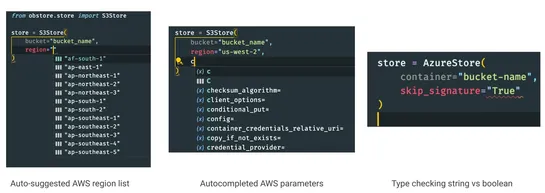
We Needed Better Cloud Storage for Python so We Built Obstore

Obstoreis a new stateless object store that skips fsspec-style caching and keeps its API tight and predictable across S3, GCS, and Azure. Sync and async both work. Under the hood? Fast, zero-copy Rust–Python interop. And on small concurrent async GETs, it reportedly crushes S3FS with up to9x better .. read more  

We Needed Better Cloud Storage for Python so We Built Obstore
Link
@faun shared a link, 9 months, 2 weeks ago
FAUN.dev()

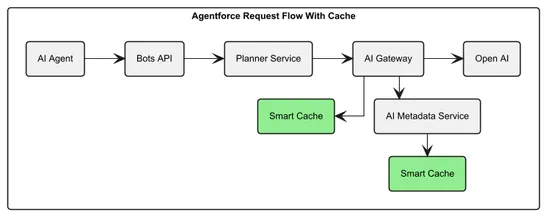
How Salesforce Delivers Reliable, Low-Latency AI Inference

Salesforce’s AI Metadata Service (AIMS) just got a serious speed boost. They rolled out a multi-layer cache—L1 on the client, L2 on the server—and cut inference latency from 400ms to under 1ms. That’s over 98% faster. But it’s not just about speed anymore. L2 keeps responses flowing even when the b.. read more  

How Salesforce Delivers Reliable, Low-Latency AI Inference
Link
@faun shared a link, 9 months, 2 weeks ago
FAUN.dev()

Everything I know about good API design

This guide lays out the playbook for running tough, user-first APIs: no breaking changes, stick to familiar patterns, honor long-lived API keys, and make every write idempotent. It pushes cursor-based pagination for heavy data, rate limits that come with context, and optional fields to keep things .. read more  

Link
@faun shared a link, 9 months, 2 weeks ago
FAUN.dev()

The unexpected productivity boost of Rust

Lubeno's backend is100% Rust, providing strong safety guarantees for refactoring confidence. Rust's type checker catches async bugs, unlikeTypeScript. Rust excels in tracking lifetimes and borrowing rules.Zig, on the other hand, can be alarming with its compiler choices, such as overlooking typos in.. read more  

Link
@faun shared a link, 9 months, 2 weeks ago
FAUN.dev()

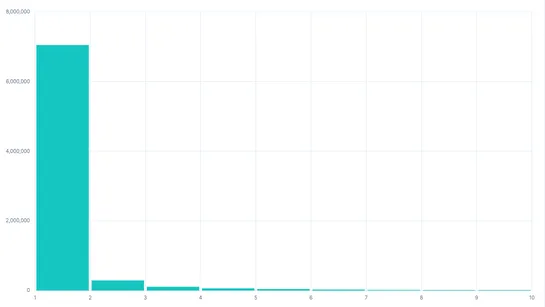
Open Source is one person

New data from ecosyste.ms drops a hard truth:almost 60% of 11.8M open source projects are solo acts. Even among NPM packages topping 1M monthly downloads, about half still rest on one pair of hands. The world runs on open source. But the scaffolding seems shakier than anyone wants to admit—millions.. read more  

Open Source is one person
Link
@faun shared a link, 9 months, 2 weeks ago
FAUN.dev()

From Python to Go: Why We Rewrote Our Ingest Pipeline at Telemetry Harbor

Telemetry Harbor tossed out Python FastAPI and rebuilt its ingest pipeline inGo. The payoff?10x faster, no more CPU freakouts, and strongerdata integritythanks to strict typing. PostgreSQL is now the slowest link in the chain—not the app—which is the kind of bottleneck you actuallywant. Means the s.. read more  

From Python to Go: Why We Rewrote Our Ingest Pipeline at Telemetry Harbor
Flask is an open-source web framework written in Python and created by Armin Ronacher in 2010. It is known as a microframework, not because it is weak or incomplete, but because it provides only the essential building blocks for developing web applications. Its core focuses on handling HTTP requests, defining routes, and rendering templates, while leaving decisions about databases, authentication, form handling, and other components to the developer. This minimalistic design makes Flask lightweight, flexible, and easy to learn, but also powerful enough to support complex systems when extended with the right tools.

At the heart of Flask are two libraries: Werkzeug, which is a WSGI utility library that handles the low-level details of communication between web servers and applications, and Jinja2, a templating engine that allows developers to write dynamic HTML pages with embedded Python logic. By combining these two, Flask provides a clean and pythonic way to create web applications without imposing strict architectural patterns.

One of the defining characteristics of Flask is its explicitness. Unlike larger frameworks such as Django, Flask does not try to hide complexity behind layers of abstraction or dictate how a project should be structured. Instead, it gives developers complete control over how they organize their code and which tools they integrate. This explicit nature makes applications easier to reason about and gives teams the freedom to design solutions that match their exact needs. At the same time, Flask benefits from a vast ecosystem of extensions contributed by the community. These extensions cover areas such as database integration through SQLAlchemy, user session and authentication management, form validation with CSRF protection, and database migration handling. This modular approach means a developer can start with a very simple application and gradually add only the pieces they require, avoiding the overhead of unused components.

Flask is also widely appreciated for its simplicity and approachability. Many developers write their first web application in Flask because the learning curve is gentle, the documentation is clear, and the framework itself avoids unnecessary complexity. It is particularly well suited for building prototypes, REST APIs, microservices, or small to medium-sized web applications. At the same time, production-grade deployments are supported by running Flask applications on WSGI servers such as Gunicorn or uWSGI, since the development server included with Flask is intended only for testing and debugging.

The strengths of Flask lie in its minimalism, flexibility, and extensibility. It gives developers the freedom to assemble their application architecture, choose their own libraries, and maintain tight control over how things work under the hood. This is attractive to experienced engineers who dislike being boxed in by heavy frameworks. However, the same freedom can become a limitation. Flask does not include features like an ORM, admin interface, or built-in authentication system, which means teams working on very large applications must take on more responsibility for enforcing patterns and maintaining consistency. In situations where a project requires an opinionated, all-in-one solution, Django or another full-stack framework may be a better fit.

In practice, Flask has grown far beyond its initial positioning as a lightweight tool. It has been used by startups for rapid prototypes and by large companies for production systems. Its design philosophy—keep the core simple, make extensions easy, and let developers decide—continues to attract both beginners and professionals. This balance between simplicity and power has made Flask one of the most enduring and widely used Python web frameworks.