Join us

ContentUpdates and recent posts about Flask..
Link
@faun shared a link, 9 months, 2 weeks ago
FAUN.dev()

Go is still not good

Go’s been catching flak for years, and the hits keep coming: stiff variable scoping, no destructor patterns, clunky error handling, and brittle build directives. Critics point out how Go’s design often blocks best practices like RAII and makes devs contort logic just to clean up resources or manage .. read more  

Link
@faun shared a link, 9 months, 2 weeks ago
FAUN.dev()

Bash Explained: How the Most Popular Linux Shell Works

Bash isn't going anywhere. It's still the glue for CI/CD, cron jobs, and whatever janky monitoring stack someone duct-taped together at 2am. If automation runs the show, Bash is probably in the pit orchestra. It keeps things moving on Linux, old-school macOS (think pre-Catalina), and even WSL. Stil.. read more  

Link
@faun shared a link, 9 months, 2 weeks ago
FAUN.dev()

Developer's block

Overdoing “best practices” can kill momentum. Think endless tests, wall-to-wall docs, airtight CI, and coding rules rigid enough to snap. Sounds responsible—until it slows dev to a crawl. The piece argues for flipping that script. Start scrappy. Build fast. Save the polish for later. It’s how you d.. read more  

Link
@faun shared a link, 9 months, 2 weeks ago
FAUN.dev()

Lessons learned from building a sync-engine and reactivity system with SQLite

A dev ditched Electric + PGlite for a lean, browser-native sync setup built aroundWASM SQLite,JSON polling, andBroadcastChannel reactivity. It’s running inside a local-first notes app. Changes get logged with DB triggers. Sync state? Tracked by hand. Svelte stores update via lightweight polling, wi.. read more  

Lessons learned from building a sync-engine and reactivity system with SQLite
Link
@faun shared a link, 9 months, 2 weeks ago
FAUN.dev()

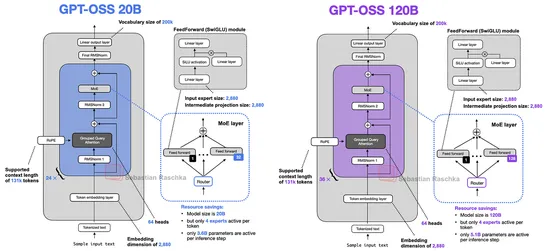
From GPT-2 to gpt-oss: Analyzing the Architectural Advances

OpenAI Returns to Openness. The company droppedgpt-oss-20Bandgpt-oss-120B—its first open-weight LLMs since GPT-2. The models pack a modern stack:Mixture-of-Experts,Grouped Query Attention,Sliding Window Attention, andSwiGLU. They're also lean. Thanks toMXFP4 quantization, 20B runs on a 16GB consume.. read more  

From GPT-2 to gpt-oss: Analyzing the Architectural Advances
Link
@faun shared a link, 9 months, 2 weeks ago
FAUN.dev()

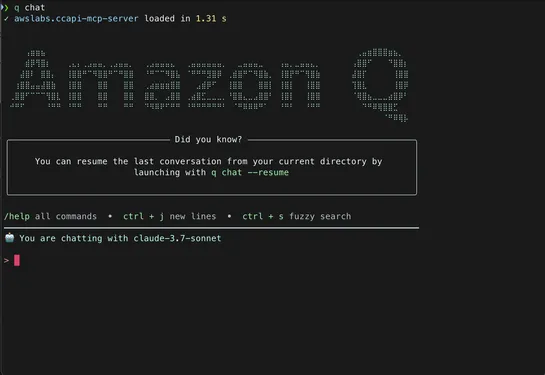
Introducing AWS Cloud Control API MCP Server: Natural Language Infrastructure Management on AWS

AWS dropped theCloud Control API MCP Server, a mouthful of a name for a tool that makes 1,200+ AWS resources manageable through a standard CRUDL API—using natural language. Think: describe what you want, and tools like Amazon Q Developer turn it into actual infra code. It doesn’t stop there. It val.. read more  

Introducing AWS Cloud Control API MCP Server: Natural Language Infrastructure Management on AWS
Link
@faun shared a link, 9 months, 2 weeks ago
FAUN.dev()

37 Things I Learned About Information Retrieval in Two Years at a Vector Database Company

A Weaviate engineer pulls back the curtain on two years of hard-earned lessons in vector search—breaking downBM25,embedding models,ANN algorithms, andRAG pipelines. The real story? Retrieval workflows keep moving—from keyword-heavy (sparse) toward embedding-driven (dense). Across IR use cases, the .. read more  

Link
@faun shared a link, 9 months, 2 weeks ago
FAUN.dev()

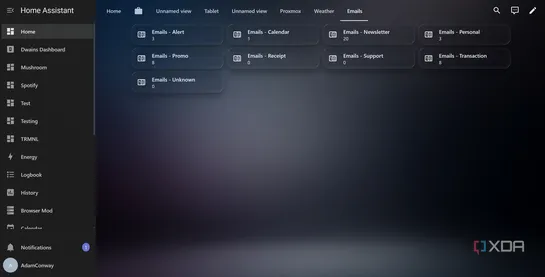
I set up an email triage system using Home Assistant and a local LLM, here's how you can too

A DIY email triage rig usingHome Assistant, IMAP, andOllamawires up local LLM smarts with YAML-fueled automation. At the core: an8B dolphin-llamamodel running on GPU, chewing through messy HTML emails, tagging them, and firing off priority-sorted summaries via notifications. Why it matters:A signal.. read more  

I set up an email triage system using Home Assistant and a local LLM, here's how you can too
Link
@faun shared a link, 9 months, 2 weeks ago
FAUN.dev()

The Most Important Machine Learning Equations: A Comprehensive Guide

A new reference rounds up the core ML equations—Bayes’ Theorem, cross-entropy, eigen decomposition, attention—and shows how they plug into real Python code using NumPy, TensorFlow, and scikit-learn. It hits the big four: probability, linear algebra, optimization, and generative modeling. Stuff that.. read more  

Link
@faun shared a link, 9 months, 2 weeks ago
FAUN.dev()

Some thoughts on LLMs and Software Development

Most LLMs still play autocomplete sidekick. But seasoned devs? They get better results when the model reads and rewrites actual source files. That gap—between how LLMs are designed to work and how prosactuallyuse them—messes with survey data and muddies the picture on real gains in code quality and.. read more  

Flask is an open-source web framework written in Python and created by Armin Ronacher in 2010. It is known as a microframework, not because it is weak or incomplete, but because it provides only the essential building blocks for developing web applications. Its core focuses on handling HTTP requests, defining routes, and rendering templates, while leaving decisions about databases, authentication, form handling, and other components to the developer. This minimalistic design makes Flask lightweight, flexible, and easy to learn, but also powerful enough to support complex systems when extended with the right tools.

At the heart of Flask are two libraries: Werkzeug, which is a WSGI utility library that handles the low-level details of communication between web servers and applications, and Jinja2, a templating engine that allows developers to write dynamic HTML pages with embedded Python logic. By combining these two, Flask provides a clean and pythonic way to create web applications without imposing strict architectural patterns.

One of the defining characteristics of Flask is its explicitness. Unlike larger frameworks such as Django, Flask does not try to hide complexity behind layers of abstraction or dictate how a project should be structured. Instead, it gives developers complete control over how they organize their code and which tools they integrate. This explicit nature makes applications easier to reason about and gives teams the freedom to design solutions that match their exact needs. At the same time, Flask benefits from a vast ecosystem of extensions contributed by the community. These extensions cover areas such as database integration through SQLAlchemy, user session and authentication management, form validation with CSRF protection, and database migration handling. This modular approach means a developer can start with a very simple application and gradually add only the pieces they require, avoiding the overhead of unused components.

Flask is also widely appreciated for its simplicity and approachability. Many developers write their first web application in Flask because the learning curve is gentle, the documentation is clear, and the framework itself avoids unnecessary complexity. It is particularly well suited for building prototypes, REST APIs, microservices, or small to medium-sized web applications. At the same time, production-grade deployments are supported by running Flask applications on WSGI servers such as Gunicorn or uWSGI, since the development server included with Flask is intended only for testing and debugging.

The strengths of Flask lie in its minimalism, flexibility, and extensibility. It gives developers the freedom to assemble their application architecture, choose their own libraries, and maintain tight control over how things work under the hood. This is attractive to experienced engineers who dislike being boxed in by heavy frameworks. However, the same freedom can become a limitation. Flask does not include features like an ORM, admin interface, or built-in authentication system, which means teams working on very large applications must take on more responsibility for enforcing patterns and maintaining consistency. In situations where a project requires an opinionated, all-in-one solution, Django or another full-stack framework may be a better fit.

In practice, Flask has grown far beyond its initial positioning as a lightweight tool. It has been used by startups for rapid prototypes and by large companies for production systems. Its design philosophy—keep the core simple, make extensions easy, and let developers decide—continues to attract both beginners and professionals. This balance between simplicity and power has made Flask one of the most enduring and widely used Python web frameworks.