Join us

ContentUpdates and recent posts about Flask..
Link
@faun shared a link, 9 months, 1 week ago
FAUN.dev()

Le Chat now integrates with 20+ enterprise platforms—powered by MCP—and remembers what matters with Memories.

Le Chat now includes20+ secure, MCP-based connectorsfor tools like GitHub, Snowflake, Stripe, and Jira. That means in-chat search, summaries, and actions—straight from enterprise systems. Developers can plug in their owncustom MCP connectors, and run Le Chat wherever it fits: on-prem, private cloud.. read more  
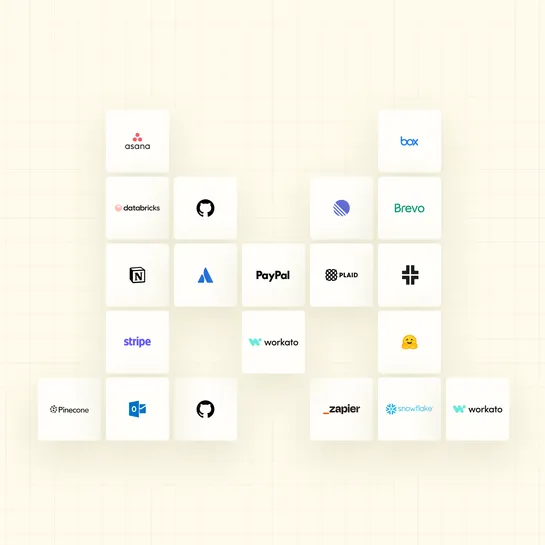
Le Chat now integrates with 20+ enterprise platforms—powered by MCP—and remembers what matters with Memories.
Link
@faun shared a link, 9 months, 1 week ago
FAUN.dev()

OpenAI to launch its first AI chip in 2026 with Broadcom, FT reports

OpenAI’s firstin-house AI chipis nearly out of the oven. It’s headed for fabrication atTSMCand built to handle OpenAI’s own workloads—no outside sales, according to theFinancial Times. Why it matters:Big AI shops are going vertical. Custom silicon means tighter control over runtime, reliability, an.. read more  

OpenAI to launch its first AI chip in 2026 with Broadcom, FT reports
Link
@faun shared a link, 9 months, 1 week ago
FAUN.dev()

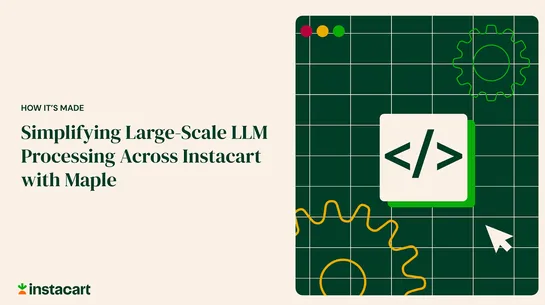
Simplifying Large-Scale LLM Processing across Instacart with Maple

Instacart builtMaple, a backend brain for handling millions of LLM prompts—fast, cheap, and shared across teams. It’s not just another service. Maple runs onTemporal,PyArrow, andS3, strip-mines away provider-specific boilerplate, auto-batches prompts, retries failures, and slashes LLM costs by up t.. read more  

Simplifying Large-Scale LLM Processing across Instacart with Maple
Link
@faun shared a link, 9 months, 1 week ago
FAUN.dev()

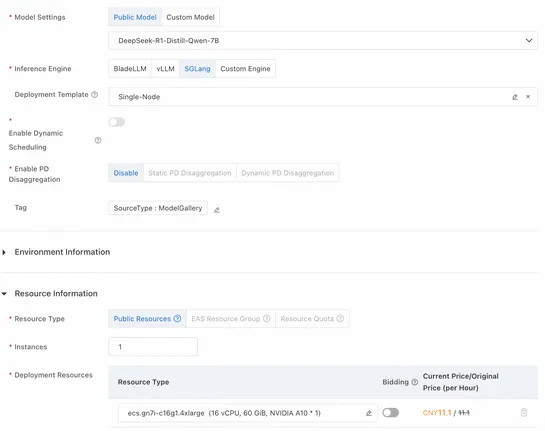
Best Practices for High Availability of LLM Based on AI Gateway

Alibaba Cloud’s AI Gateway just got sharper. It now handlesreal-time overload protectionandLLM fallback routingusing passive health checks, first packet timeouts, and traffic shaping. It proxies both BYO and cloud LLMs—think PAI-EAS, Tongyi Qianwen—and redirects load spikes or failures on the fly. F.. read more  

Best Practices for High Availability of LLM Based on AI Gateway
Link
@faun shared a link, 9 months, 1 week ago
FAUN.dev()

Why language models hallucinate

OpenAI sheds light on the persistence ofhallucinationsin language models due to evaluation methods favoring guessing over honesty, requiring a shift towards rewarding uncertainty acknowledgment. High model accuracy does not equate to the eradication of hallucinations, as some questions are inherentl.. read more  

Why language models hallucinate
Link
@faun shared a link, 9 months, 1 week ago
FAUN.dev()

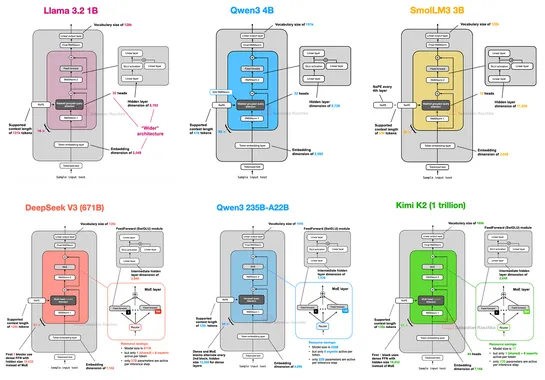
The Big LLM Architecture Comparison

Architectures since GPT-2 still ride transformers. They crank memory and performance withRoPE, swapGQAforMLA, sprinkle in sparseMoE, and roll sliding-window attention. Teams shiftRMSNorm. They tweak layer norms withQK-Norm, locking in training stability across modern models. Trend to watch:In 2025,.. read more  

The Big LLM Architecture Comparison
Link
@faun shared a link, 9 months, 1 week ago
FAUN.dev()

From Zero to GPU: A Guide to Building and Scaling Production-Ready CUDA Kernels

Hugging Face just dropped Kernel Builder—a full-stack toolchain for building, versioning, and shippingcustom CUDA kernels as native PyTorch ops. Kernels arearchitecture-aware,semantically versioned, andpullable straight from the Hub. It tracks changes with lockfiles and bakes inDocker deploysout of.. read more  

Link
@faun shared a link, 9 months, 1 week ago
FAUN.dev()

Hermes V3: Building Swiggy’s Conversational AI Analyst

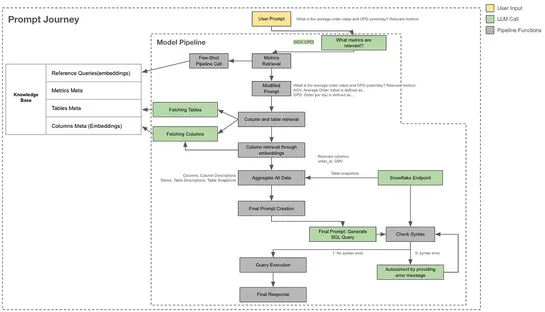
Swiggy just gave its GenAI tool, Hermes, a serious glow-up. What started as a simple text-to-SQL bot is now acontext-aware AI analystthat lives inside Slack. The upgrade? Not just tweaks—an overhaul. Think: vector-based prompt retrieval, session-level memory, an Agent orchestration layer, and a SQL.. read more  

Hermes V3: Building Swiggy’s Conversational AI Analyst
Link
@faun shared a link, 9 months, 1 week ago
FAUN.dev()

GPT-5 Thinking in ChatGPT (aka Research Goblin) is shockingly good at search

GPT-5's“thinking” modeljust leveled up. It's not just answering queries—it’s doing full-on research. Picture deep, multi-step Bing searches mixed with tool use and reasoning chains. It reads PDFs. Analyzes them. Suggests what to do next. Then actually does it. All from your phone. What’s changing:L.. read more  

GPT-5 Thinking in ChatGPT (aka Research Goblin) is shockingly good at search
Story
@laura_garcia shared a post, 9 months, 1 week ago
Software Developer, RELIANOID

RELIANOID Load Balancer Community Edition v7 on AWS using Terraform

🚀 New Guide Available! Learn how to quickly deploy RELIANOID Load Balancer Community Edition v7 on AWS using Terraform. Our step-by-step article shows you how to provision everything automatically — from VPCs and subnets to EC2 and key pairs — in just minutes. 👉 https://www.relianoid.com/resources/k..

Knowledge base Deploy RELIANOID Load Balancer Community Edition v7 with Terraform on AWS
Flask is an open-source web framework written in Python and created by Armin Ronacher in 2010. It is known as a microframework, not because it is weak or incomplete, but because it provides only the essential building blocks for developing web applications. Its core focuses on handling HTTP requests, defining routes, and rendering templates, while leaving decisions about databases, authentication, form handling, and other components to the developer. This minimalistic design makes Flask lightweight, flexible, and easy to learn, but also powerful enough to support complex systems when extended with the right tools.

At the heart of Flask are two libraries: Werkzeug, which is a WSGI utility library that handles the low-level details of communication between web servers and applications, and Jinja2, a templating engine that allows developers to write dynamic HTML pages with embedded Python logic. By combining these two, Flask provides a clean and pythonic way to create web applications without imposing strict architectural patterns.

One of the defining characteristics of Flask is its explicitness. Unlike larger frameworks such as Django, Flask does not try to hide complexity behind layers of abstraction or dictate how a project should be structured. Instead, it gives developers complete control over how they organize their code and which tools they integrate. This explicit nature makes applications easier to reason about and gives teams the freedom to design solutions that match their exact needs. At the same time, Flask benefits from a vast ecosystem of extensions contributed by the community. These extensions cover areas such as database integration through SQLAlchemy, user session and authentication management, form validation with CSRF protection, and database migration handling. This modular approach means a developer can start with a very simple application and gradually add only the pieces they require, avoiding the overhead of unused components.

Flask is also widely appreciated for its simplicity and approachability. Many developers write their first web application in Flask because the learning curve is gentle, the documentation is clear, and the framework itself avoids unnecessary complexity. It is particularly well suited for building prototypes, REST APIs, microservices, or small to medium-sized web applications. At the same time, production-grade deployments are supported by running Flask applications on WSGI servers such as Gunicorn or uWSGI, since the development server included with Flask is intended only for testing and debugging.

The strengths of Flask lie in its minimalism, flexibility, and extensibility. It gives developers the freedom to assemble their application architecture, choose their own libraries, and maintain tight control over how things work under the hood. This is attractive to experienced engineers who dislike being boxed in by heavy frameworks. However, the same freedom can become a limitation. Flask does not include features like an ORM, admin interface, or built-in authentication system, which means teams working on very large applications must take on more responsibility for enforcing patterns and maintaining consistency. In situations where a project requires an opinionated, all-in-one solution, Django or another full-stack framework may be a better fit.

In practice, Flask has grown far beyond its initial positioning as a lightweight tool. It has been used by startups for rapid prototypes and by large companies for production systems. Its design philosophy—keep the core simple, make extensions easy, and let developers decide—continues to attract both beginners and professionals. This balance between simplicity and power has made Flask one of the most enduring and widely used Python web frameworks.