Join us

ContentUpdates and recent posts about Flask..
Link
@faun shared a link, 9 months, 1 week ago
FAUN.dev()

Measuring Developer Productivity with Amazon Q Developer and Jellyfish

Amazon Q Developer now plugs into Jellyfish. Teams get a clearer view of how AI fits into the real flow of work—prompt usage, code adoption, PR throughput. Not just surface stats. The setup pipes data from AWS S3 straight into Jellyfish’s analytics engine. It tags AI users, tracks velocity gains, an.. read more  
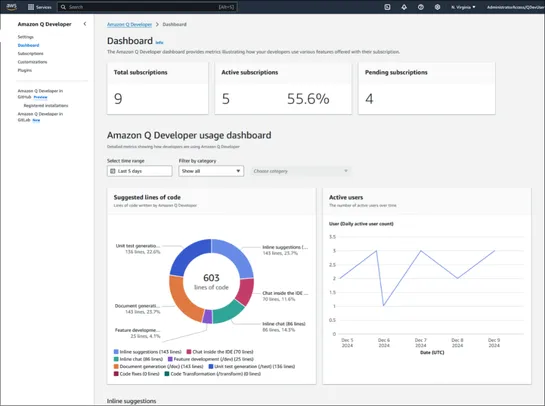
Measuring Developer Productivity with Amazon Q Developer and Jellyfish
Link
@faun shared a link, 9 months, 1 week ago
FAUN.dev()

Sandboxed to Compromised: New Research Exposes Credential Exfiltration Paths in AWS Code Interpreters

Researchers poked holes insandboxed Bedrock AgentCore code interpreters—and found a way to leak execution role credentials through theMicroVM Metadata Service (MMDS). No outside network? Doesn’t matter. The exploit dodges basic string filters in requests and lets non-agentic code swipe AWS creds to .. read more  

Link
@faun shared a link, 9 months, 1 week ago
FAUN.dev()

AWS, Microsoft and Google unite behind Linux Foundation DocumentDB database to cut enterprise costs and limit vendor lock-in

Document databases are crucial for AI apps in the gen AI era. Microsoft's open-source DocumentDB project, based on PostgreSQL, is moving to the Linux Foundation, offering a vendor-neutral, open-source alternative to MongoDB. DocumentDB's compatibility with MongoDB drivers and open source governance .. read more  

Link
@faun shared a link, 9 months, 1 week ago
FAUN.dev()

Deploy a containerized application with Kamal and Terraform

A Docker-first workflow combinesTerraformandKamalinto a lean, Elastic Beanstalk-ish alternative—without the bloat. Terraform spins up a three-tier VPC and wires it toECR. Kamal takes it from there, booting containers on a raw EC2 box: app, proxy, monitor. One script. Done... read more  

Deploy a containerized application with Kamal and Terraform
Link
@faun shared a link, 9 months, 1 week ago
FAUN.dev()

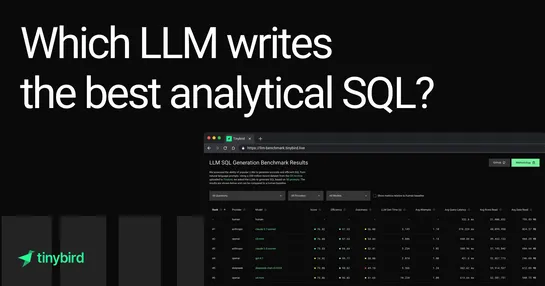
Which LLM writes the best analytical SQL?

Tinybird threw 19 top LLMs at a 200M-row GitHub dataset, testing how well they could turn plain English into solid SQL. Most models kept their syntax clean—but when it came to writing SQL that actually ran well and returned the right results, they lagged behind human pros. Messy schemas or tricky pr.. read more  

Which LLM writes the best analytical SQL?
Link
@faun shared a link, 9 months, 1 week ago
FAUN.dev()

Being on the Same Page During an Incident: Not Actually Telepathy

Collaboration in incident response is crucial for effective resolution, starting with establishing a basic compact among responders. Grounding is a process that ensures alignment and common ground is maintained throughout an incident, encompassing initial common ground, public events so far, and the.. read more  

Link
@faun shared a link, 9 months, 1 week ago
FAUN.dev()

Container Logs in Kubernetes: How to View and Collect Them

This guide shows how to wrangle container logs in Kubernetes—usingkubectl, shell tools, structured logging, and the Kubernetes Dashboard. It covers the basics and dives into how to scale up log collection and make observability less painful across clusters... read more  

Container Logs in Kubernetes: How to View and Collect Them
Link
@faun shared a link, 9 months, 1 week ago
FAUN.dev()

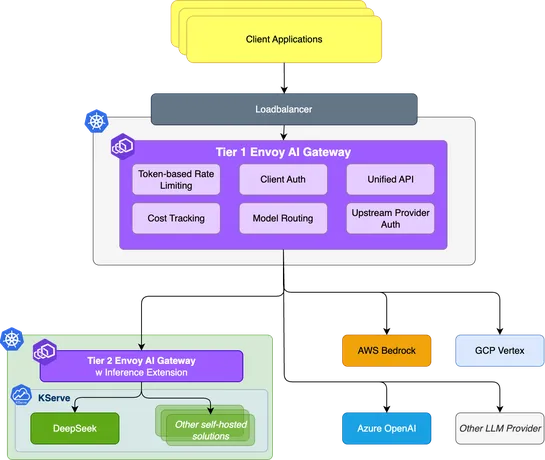
Building a Scalable, Flexible, Cloud-Native GenAI Platform with Open Source Solutions

A fresh reference architecture built withEnvoy AI GatewayandKServebrings order to the GenAI chaos. One clean interface to route requests across internal and external LLMs—locked down with policies. It’s called aTwo-Tier Gateway Architecture. Think of it like a split-brain: external API traffic goes.. read more  

Building a Scalable, Flexible, Cloud-Native GenAI Platform with Open Source Solutions
Link
@faun shared a link, 9 months, 1 week ago
FAUN.dev()

v1.34: Service Account Token Integration for Image Pulls Graduates to Beta

Kubernetes v1.34 bumpsServiceAccount token integration for Kubelet Credential Providersto beta. That means image pulls can now ditch long-lived secrets for workload-scoped tokens. Cleaner, safer, and more locked down per ServiceAccount... read more  

Link
@faun shared a link, 9 months, 1 week ago
FAUN.dev()

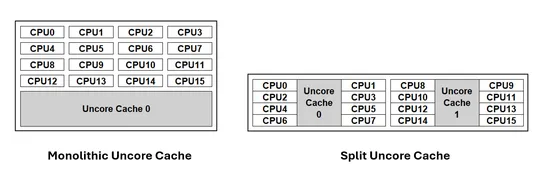
v1.34: Introducing CPU Manager Static Policy Option for Uncore Cache Alignment

Kubernetes 1.34 bumps theCPU Manager uncore-cache alignment policyto beta. It’s aimed at nodes withsplit uncore cache architectures. The policy groups all a container’s CPUs under the same uncore cache—cutting latency and easing contention for workloads that hate waiting. System shift:Kubernetes kee.. read more  

v1.34: Introducing CPU Manager Static Policy Option for Uncore Cache Alignment
Flask is an open-source web framework written in Python and created by Armin Ronacher in 2010. It is known as a microframework, not because it is weak or incomplete, but because it provides only the essential building blocks for developing web applications. Its core focuses on handling HTTP requests, defining routes, and rendering templates, while leaving decisions about databases, authentication, form handling, and other components to the developer. This minimalistic design makes Flask lightweight, flexible, and easy to learn, but also powerful enough to support complex systems when extended with the right tools.

At the heart of Flask are two libraries: Werkzeug, which is a WSGI utility library that handles the low-level details of communication between web servers and applications, and Jinja2, a templating engine that allows developers to write dynamic HTML pages with embedded Python logic. By combining these two, Flask provides a clean and pythonic way to create web applications without imposing strict architectural patterns.

One of the defining characteristics of Flask is its explicitness. Unlike larger frameworks such as Django, Flask does not try to hide complexity behind layers of abstraction or dictate how a project should be structured. Instead, it gives developers complete control over how they organize their code and which tools they integrate. This explicit nature makes applications easier to reason about and gives teams the freedom to design solutions that match their exact needs. At the same time, Flask benefits from a vast ecosystem of extensions contributed by the community. These extensions cover areas such as database integration through SQLAlchemy, user session and authentication management, form validation with CSRF protection, and database migration handling. This modular approach means a developer can start with a very simple application and gradually add only the pieces they require, avoiding the overhead of unused components.

Flask is also widely appreciated for its simplicity and approachability. Many developers write their first web application in Flask because the learning curve is gentle, the documentation is clear, and the framework itself avoids unnecessary complexity. It is particularly well suited for building prototypes, REST APIs, microservices, or small to medium-sized web applications. At the same time, production-grade deployments are supported by running Flask applications on WSGI servers such as Gunicorn or uWSGI, since the development server included with Flask is intended only for testing and debugging.

The strengths of Flask lie in its minimalism, flexibility, and extensibility. It gives developers the freedom to assemble their application architecture, choose their own libraries, and maintain tight control over how things work under the hood. This is attractive to experienced engineers who dislike being boxed in by heavy frameworks. However, the same freedom can become a limitation. Flask does not include features like an ORM, admin interface, or built-in authentication system, which means teams working on very large applications must take on more responsibility for enforcing patterns and maintaining consistency. In situations where a project requires an opinionated, all-in-one solution, Django or another full-stack framework may be a better fit.

In practice, Flask has grown far beyond its initial positioning as a lightweight tool. It has been used by startups for rapid prototypes and by large companies for production systems. Its design philosophy—keep the core simple, make extensions easy, and let developers decide—continues to attract both beginners and professionals. This balance between simplicity and power has made Flask one of the most enduring and widely used Python web frameworks.