Join us

ContentUpdates and recent posts about Flask..
Link
@faun shared a link, 9 months ago
FAUN.dev()

In a first, Google has released data on how much energy an AI prompt uses

Google dropped detailed stats on energy, water, and carbon use per query for its Gemini models. Median energy:0.24 Wh, with TPUs eating58%of that. They’re claiming a33× efficiency boostin the last year—credit goes to model and software tuning. System shift:A public hyperscaler posting this means th.. read more  

In a first, Google has released data on how much energy an AI prompt uses
Link
@faun shared a link, 9 months ago
FAUN.dev()

OpenAI announces new mentorship program for budding tech founders

OpenAI introduced a new program called "OpenAI Grove" for early tech entrepreneurs to build with AI. The program is aimed at individuals in the pre-idea to pre-seed stage and offers mentoring, access to tools and models, and in-person workshops. Grove's first cohort will run from Oct. 20 to Nov. 21,.. read more  

Link
@faun shared a link, 9 months ago
FAUN.dev()

OpenAI reorganizes research team behind ChatGPT's personality

OpenAI just folded itsModel Behavior team—the crew behind AI personality design and anti-sycophant training—into thePost Training group. Behavior tuning now lives inside the same house as model refinement. Joanne Jang, who led Model Behavior, now runsOAI Labs, a fresh research unit digging intopost.. read more  

OpenAI reorganizes research team behind ChatGPT's personality
Link
@faun shared a link, 9 months ago
FAUN.dev()

OpenAI eats jobs, then offers to help you find a new one

OpenAI just fired a shot across LinkedIn’s bow. Its new jobs platform—part ofOpenAI Academy—aims to certify AI skills, then plug users directly into hiring pipelines. Walmart's already on board. Market signal:OpenAI’s not just training people anymore. It's moving in on talent placement, pulling the .. read more  

OpenAI eats jobs, then offers to help you find a new one
Link
@faun shared a link, 9 months ago
FAUN.dev()

Cursor looks into selling your data for AI training

Anysphere—the team behind Cursor, the AI coding sidekick—is looking to license user behavior data to the big model labs: OpenAI, Anthropic, and the usual suspects. Why? Training costs are brutal, and this could ease the burn. Strategic Implication:Selling real developer telemetry to model competito.. read more  

Link
@faun shared a link, 9 months ago
FAUN.dev()

Building Etsy Buyer Profiles with LLMs

Every day, nearly 90M buyers look for unique items out of over 100 million listings on the Etsy. The platform uses large language models to create detailed buyer profiles anonymously capturing their interests. Adjustments in data retrieval and processing have reduced the time and cost of generating .. read more  

Link
@faun shared a link, 9 months ago
FAUN.dev()

AI Models Need a Virtual Machine

Microsoft and academic researchers want to give AI models a new kind of home: theAI Model Virtual Machine (MVM). Think of it like theJVM, but for LLMs—an interface layer that standardizes how models plug into host software. The MVM enforcessecurity,isolation, andtool-calling rules, while also unloc.. read more  

Link
@faun shared a link, 9 months ago
FAUN.dev()

Zero-Click Remote Code Execution: Exploiting MCP & Agentic IDEs

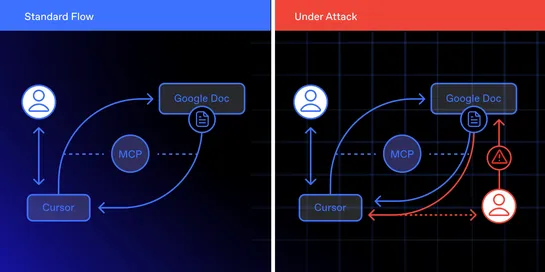
A zero-click exploit is making the rounds—nasty stuff targeting agentic IDEs likeCursor. The trick? Slip a malicious Google Doc into the system. If MCP integration and allow-listedPython executionare on, the document gets auto-pulled, parsed, and runs code. No clicks. No prompts. Justremote code exe.. read more  

Zero-Click Remote Code Execution: Exploiting MCP & Agentic IDEs
Link
@faun shared a link, 9 months ago
FAUN.dev()

Writing effective tools for AI agents—using AI agents

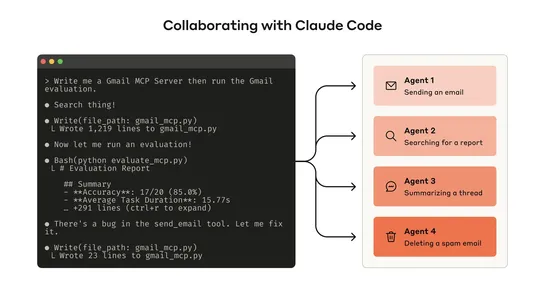
Anthropic’s sharpening the blueprint for building tools that play nice withLLM agents. TheirModel Context Protocol (MCP)leans hard into three pillars: test in loops, design for humans, format like context matters—because it does. They co-develop tools with agents like Claude Code. That means protot.. read more  

Writing effective tools for AI agents—using AI agents
Link
@faun shared a link, 9 months ago
FAUN.dev()

24 Best Command Line Performance Monitoring Tools for Linux

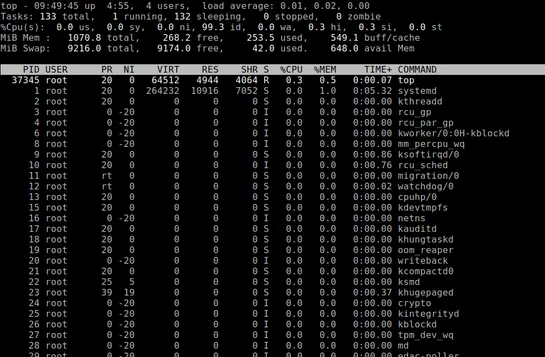
A fresh look at Linux monitoring tools shows the classics still hold—but the visual crowd’s moving in. Old-school command-liners liketopandvmstatremain go-to’s for quick reads. But picks likeNetdata,btop, andMonitbring dashboards, colors, and actual UX. Tools likeiftop,Nmon, andSuricatastretch deep.. read more  

24 Best Command Line Performance Monitoring Tools for Linux
Flask is an open-source web framework written in Python and created by Armin Ronacher in 2010. It is known as a microframework, not because it is weak or incomplete, but because it provides only the essential building blocks for developing web applications. Its core focuses on handling HTTP requests, defining routes, and rendering templates, while leaving decisions about databases, authentication, form handling, and other components to the developer. This minimalistic design makes Flask lightweight, flexible, and easy to learn, but also powerful enough to support complex systems when extended with the right tools.

At the heart of Flask are two libraries: Werkzeug, which is a WSGI utility library that handles the low-level details of communication between web servers and applications, and Jinja2, a templating engine that allows developers to write dynamic HTML pages with embedded Python logic. By combining these two, Flask provides a clean and pythonic way to create web applications without imposing strict architectural patterns.

One of the defining characteristics of Flask is its explicitness. Unlike larger frameworks such as Django, Flask does not try to hide complexity behind layers of abstraction or dictate how a project should be structured. Instead, it gives developers complete control over how they organize their code and which tools they integrate. This explicit nature makes applications easier to reason about and gives teams the freedom to design solutions that match their exact needs. At the same time, Flask benefits from a vast ecosystem of extensions contributed by the community. These extensions cover areas such as database integration through SQLAlchemy, user session and authentication management, form validation with CSRF protection, and database migration handling. This modular approach means a developer can start with a very simple application and gradually add only the pieces they require, avoiding the overhead of unused components.

Flask is also widely appreciated for its simplicity and approachability. Many developers write their first web application in Flask because the learning curve is gentle, the documentation is clear, and the framework itself avoids unnecessary complexity. It is particularly well suited for building prototypes, REST APIs, microservices, or small to medium-sized web applications. At the same time, production-grade deployments are supported by running Flask applications on WSGI servers such as Gunicorn or uWSGI, since the development server included with Flask is intended only for testing and debugging.

The strengths of Flask lie in its minimalism, flexibility, and extensibility. It gives developers the freedom to assemble their application architecture, choose their own libraries, and maintain tight control over how things work under the hood. This is attractive to experienced engineers who dislike being boxed in by heavy frameworks. However, the same freedom can become a limitation. Flask does not include features like an ORM, admin interface, or built-in authentication system, which means teams working on very large applications must take on more responsibility for enforcing patterns and maintaining consistency. In situations where a project requires an opinionated, all-in-one solution, Django or another full-stack framework may be a better fit.

In practice, Flask has grown far beyond its initial positioning as a lightweight tool. It has been used by startups for rapid prototypes and by large companies for production systems. Its design philosophy—keep the core simple, make extensions easy, and let developers decide—continues to attract both beginners and professionals. This balance between simplicity and power has made Flask one of the most enduring and widely used Python web frameworks.