Join us

ContentUpdates and recent posts about Flask..
Link
@faun shared a link, 9 months ago
FAUN.dev()

The Hidden AWS Cost Traps No One Warns You About (and How I Avoid Them)

Calling outfive sneaky AWS cost traps—the kind that creep in through overlooked defaults and quiet misconfigs, then blow up your bill while no one's watching... read more  

The Hidden AWS Cost Traps No One Warns You About (and How I Avoid Them)
Link
@faun shared a link, 9 months ago
FAUN.dev()

Easy will always trump simple

Rich Hickey’s classic “Simple Made Easy” talk is making the rounds again—as a mirror held up to dev culture under pressure. The punchline: we keep picking solutions that areeasy but tangled, instead ofsimple and sane. The essay draws a sharp line between that habit and a concept from biology: exapt.. read more  

Link
@faun shared a link, 9 months ago
FAUN.dev()

Subverting code integrity checks to locally backdoor Signal, 1Password, Slack, and more

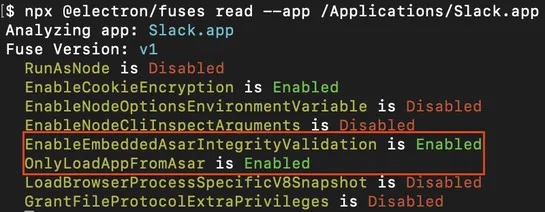
A fresh CVE (2025-55305) just put Electron apps in the hot seat. The bug? Chromium-based apps fail to treatV8 heap snapshot filesas potential attack vectors. That crack lets unsigned JavaScript slip past code signing and run inside heavyweight targets like Slack, 1Password, and Signal. The heart of.. read more  
Subverting code integrity checks to locally backdoor Signal, 1Password, Slack, and more
Link
@faun shared a link, 9 months ago
FAUN.dev()

Paused Kubernetes project finds path forward

TheExternal Secrets Operator (ESO)is moving again. After hitting pause from maintainer burnout, it’s back under CNCF incubation—with a rebooted structure in place. New governance, clear contributor paths, and support tracks for CI, core dev, and testing are all in. But don’t expect fresh releases ju.. read more  

Paused Kubernetes project finds path forward
Link
@faun shared a link, 9 months ago
FAUN.dev()

Pooling Connections with RDS Proxy at Klaviyo

Klaviyo replaced ProxySQL on EC2 and moved toAWS RDS Proxy. Why? Less overhead. Simpler failovers. Smarter pooling. RDS Proxy handlesmultiplexing, packing thousands of client queries into way fewer DB connections. IAM access and built-in failover routing sweeten the deal... read more  

Pooling Connections with RDS Proxy at Klaviyo
Link
@faun shared a link, 9 months ago
FAUN.dev()

Why "What Happened First?" Is One of the Hardest Questions in Large-Scale Systems

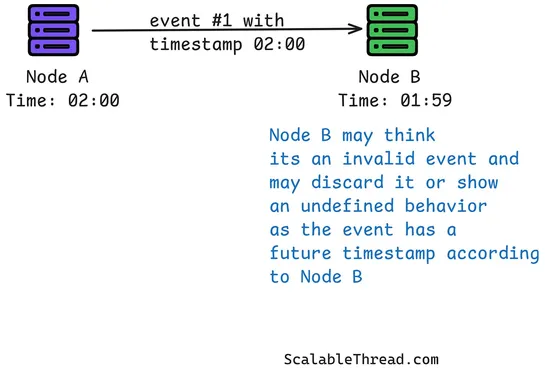
Logical clocks trackevent orderin distributed systems—no need for synced wall clocks. Each node keeps a counter. On every event: tick it. On every message: tack on your counter. When you receive one? Merge and bump. This flips the script. Instead of chasing global time, distributed systems lean int.. read more  
Why "What Happened First?" Is One of the Hardest Questions in Large-Scale Systems
Link
@faun shared a link, 9 months ago
FAUN.dev()

Kubernetes VPA: Limitations, Best Practices, and the Future of Pod Rightsizing

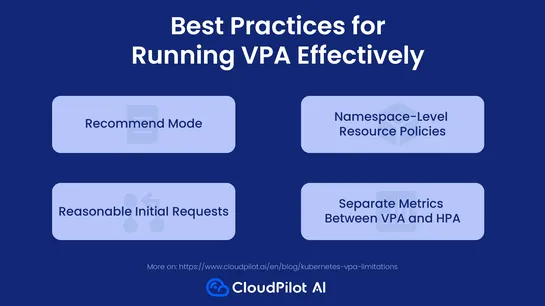
Kubernetes'Vertical Pod Autoscaler (VPA)tries to be helpful by tweaking CPU and memory requests on the fly. Problem is, it needs to bounce your pods to do it. And if you're also runningHorizontal Pod Autoscaler (HPA)on the same metrics? Now they're fighting over control. VPA sees a narrow slice of .. read more  
Kubernetes VPA: Limitations, Best Practices, and the Future of Pod Rightsizing
Link
@faun shared a link, 9 months ago
FAUN.dev()

Why I Ditched Docker for Podman (And You Should Too)

Older container technologies like Docker have been prone to security vulnerabilities, such as CVE-2019-5736 and CVE-2022-0847, which allowed for potential host system compromise. Podman changes the game by eliminating the need for a persistent background service like the Docker daemon, enhancing sec.. read more  

Link
@faun shared a link, 9 months ago
FAUN.dev()

Kubernetes right-sizing with metrics-driven GitOps automation

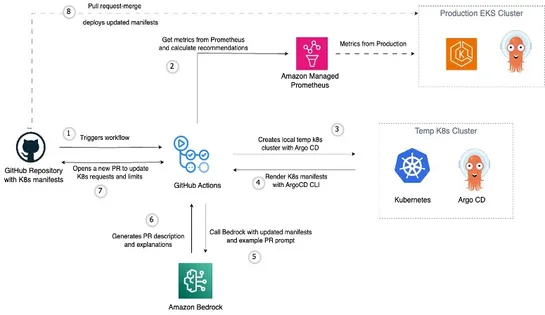
AWS just dropped a GitOps-native pattern for tuning EKS resources—built to runoutsidethe cluster. It’s wired up withAmazon Managed Service for Prometheus,Argo CD, andBedrockto automate resource recommendations straight into Git. Here’s the play: it maps usage metrics to templated manifests, then sp.. read more  
Kubernetes right-sizing with metrics-driven GitOps automation
Link
@faun shared a link, 9 months ago
FAUN.dev()

Amazon EKS Enables Ultra-Scale AI/ML Workloads with Support for 100K Nodes per Cluster

Amazon EKS just cranked its Kubernetes cluster limit to100,000 nodes—a 10x jump. The secret sauce? A reworkedetcdwith an internaljournalsystem andin-memorystorage. Toss in tightAPI server tuningand network tweaks, and the result is wild: 500 pods per second, 900K pods, 10M+ objects, no sweat—even un.. read more  
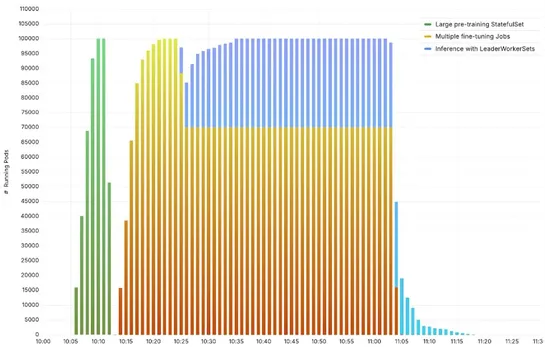
Amazon EKS Enables Ultra-Scale AI/ML Workloads with Support for 100K Nodes per Cluster
Flask is an open-source web framework written in Python and created by Armin Ronacher in 2010. It is known as a microframework, not because it is weak or incomplete, but because it provides only the essential building blocks for developing web applications. Its core focuses on handling HTTP requests, defining routes, and rendering templates, while leaving decisions about databases, authentication, form handling, and other components to the developer. This minimalistic design makes Flask lightweight, flexible, and easy to learn, but also powerful enough to support complex systems when extended with the right tools.

At the heart of Flask are two libraries: Werkzeug, which is a WSGI utility library that handles the low-level details of communication between web servers and applications, and Jinja2, a templating engine that allows developers to write dynamic HTML pages with embedded Python logic. By combining these two, Flask provides a clean and pythonic way to create web applications without imposing strict architectural patterns.

One of the defining characteristics of Flask is its explicitness. Unlike larger frameworks such as Django, Flask does not try to hide complexity behind layers of abstraction or dictate how a project should be structured. Instead, it gives developers complete control over how they organize their code and which tools they integrate. This explicit nature makes applications easier to reason about and gives teams the freedom to design solutions that match their exact needs. At the same time, Flask benefits from a vast ecosystem of extensions contributed by the community. These extensions cover areas such as database integration through SQLAlchemy, user session and authentication management, form validation with CSRF protection, and database migration handling. This modular approach means a developer can start with a very simple application and gradually add only the pieces they require, avoiding the overhead of unused components.

Flask is also widely appreciated for its simplicity and approachability. Many developers write their first web application in Flask because the learning curve is gentle, the documentation is clear, and the framework itself avoids unnecessary complexity. It is particularly well suited for building prototypes, REST APIs, microservices, or small to medium-sized web applications. At the same time, production-grade deployments are supported by running Flask applications on WSGI servers such as Gunicorn or uWSGI, since the development server included with Flask is intended only for testing and debugging.

The strengths of Flask lie in its minimalism, flexibility, and extensibility. It gives developers the freedom to assemble their application architecture, choose their own libraries, and maintain tight control over how things work under the hood. This is attractive to experienced engineers who dislike being boxed in by heavy frameworks. However, the same freedom can become a limitation. Flask does not include features like an ORM, admin interface, or built-in authentication system, which means teams working on very large applications must take on more responsibility for enforcing patterns and maintaining consistency. In situations where a project requires an opinionated, all-in-one solution, Django or another full-stack framework may be a better fit.

In practice, Flask has grown far beyond its initial positioning as a lightweight tool. It has been used by startups for rapid prototypes and by large companies for production systems. Its design philosophy—keep the core simple, make extensions easy, and let developers decide—continues to attract both beginners and professionals. This balance between simplicity and power has made Flask one of the most enduring and widely used Python web frameworks.