Join us

ContentUpdates and recent posts about Flask..
Link
@faun shared a link, 8 months, 3 weeks ago
FAUN.dev()

Building an AI Server on a Budget ($1.3K)

A developer rolled their own AI server for $1.3K—Ubuntu 24.04.2 LTS, an Nvidia RTX GPU, and a sharp eye on Tensor cores, VRAM, and resale value. The rig handles small models locally and punts big jobs to the cloud when needed. Local-first, cloud-when-it-counts... read more  
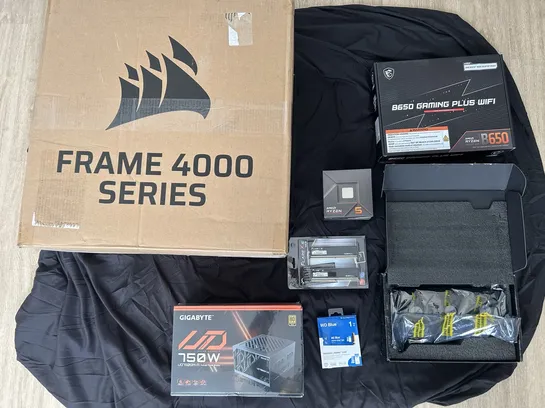
Building an AI Server on a Budget ($1.3K)
Link
@faun shared a link, 8 months, 3 weeks ago
FAUN.dev()

TIOBE Programming Index News September 2025: Perl Regains the Spotlight

Perl 5 has risen to **10th place in the TIOBE Index**, increasing in popularity even though the exact reason is unknown. Perl 6, or Raku, lags behind Perl 5 in rankings and has not seen the same rise in attention. Other top languages like C and Java have experienced slight falls in rankings... read more  

Link
@faun shared a link, 8 months, 3 weeks ago
FAUN.dev()

Guardians of the Agents 

A new static verification framework wants to make runtime safeguards look lazy. It slaps **mathematical safety proofs** onto LLM-generated workflows *before* they run—no more crossing fingers at execution time. The setup decouples **code from data**, then runs checks with tools like **CodeQL** and .. read more  

Link
@faun shared a link, 8 months, 3 weeks ago
FAUN.dev()

Understanding LLMs: Insights from Mechanistic Interpretability

LLMs generate text by predicting the next word using attention to capture context and MLP layers to store learned patterns. Mechanistic interpretability shows these models build circuits of attention and features, and tools like sparse autoencoders and attribution graphs help unpack superposition, r.. read more  

Link
@faun shared a link, 8 months, 3 weeks ago
FAUN.dev()

Vibe coding has turned senior devs into ‘AI babysitters,’ but they say it’s worth it

Fastly says95% of developersspend extra time fixing AI-written code. Senior engineers take the brunt. That overhead has even spawned a new gig: “vibe code cleanup specialist.” (Yes, seriously.) As teams lean harder on AI tools, reliability and security start to slide—unless someone steps in. The re.. read more  

Vibe coding has turned senior devs into ‘AI babysitters,’ but they say it’s worth it
Link
@faun shared a link, 8 months, 3 weeks ago
FAUN.dev()

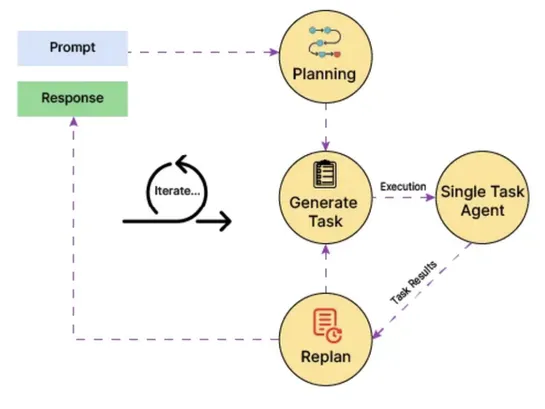
The LinkedIn Generative AI Application Tech Stack: Extending to Build AI Agents

LinkedIn tore down its GenAI stack and rebuilt it for scale—with agents, not monoliths. The new setup leans on distributed, gRPC-powered systems. Central skill registry? Check. Message-driven orchestration? Yep. It’s all about pluggable parts that play nice together. They added sync and async modes.. read more  

The LinkedIn Generative AI Application Tech Stack: Extending to Build AI Agents
Link
@faun shared a link, 8 months, 3 weeks ago
FAUN.dev()

GitHub Copilot on autopilot as community complaints persist

GitHub's biggest debates right now? Whether to shut down AI-generated "noise" fromCopilot—stuff like auto-written issues and code reviews. No clear answers from GitHub yet. Frustration is piling up. Some devs are ditching the platform altogether, shifting their projects toCodebergor spinning upself-.. read more  

GitHub Copilot on autopilot as community complaints persist
Link
@faun shared a link, 8 months, 3 weeks ago
FAUN.dev()

Introducing the MCP Registry

The new **Model Context Protocol (MCP) Registry** just dropped in preview. It’s a public, centralized hub for finding and sharing MCP servers—think phonebook, but for AI context APIs. It handles public and private subregistries, publishes OpenAPI specs so tooling can play nice, and bakes in communit.. read more  

Link
@faun shared a link, 8 months, 3 weeks ago
FAUN.dev()

LLM Evaluation: Practical Tips at Booking.com

Booking.com built Judge-LLM, a framework where strong LLMs evaluate other models against a carefully curated golden dataset. Clear metric definitions, rigorous annotation, and iterative prompt engineering make evaluations more scalable and consistent than relying solely on humans. **The takeaway**:.. read more  

Link
@faun shared a link, 8 months, 3 weeks ago
FAUN.dev()

AgentHopper: An AI Virus

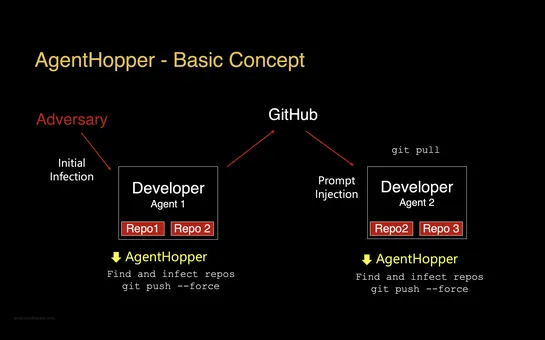
In the “Month of AI Bugs,” researchers poked deep and found prompt injection holes bad enough to run **arbitrary code** on major AI coding tools—**GitHub Copilot**, **Amazon Q**, and **AWS Kiro** all flinched. They didn’t stop at theory. They built **AgentHopper**, a proof-of-concept AI virus that .. read more  

AgentHopper: An AI Virus
Flask is an open-source web framework written in Python and created by Armin Ronacher in 2010. It is known as a microframework, not because it is weak or incomplete, but because it provides only the essential building blocks for developing web applications. Its core focuses on handling HTTP requests, defining routes, and rendering templates, while leaving decisions about databases, authentication, form handling, and other components to the developer. This minimalistic design makes Flask lightweight, flexible, and easy to learn, but also powerful enough to support complex systems when extended with the right tools.

At the heart of Flask are two libraries: Werkzeug, which is a WSGI utility library that handles the low-level details of communication between web servers and applications, and Jinja2, a templating engine that allows developers to write dynamic HTML pages with embedded Python logic. By combining these two, Flask provides a clean and pythonic way to create web applications without imposing strict architectural patterns.

One of the defining characteristics of Flask is its explicitness. Unlike larger frameworks such as Django, Flask does not try to hide complexity behind layers of abstraction or dictate how a project should be structured. Instead, it gives developers complete control over how they organize their code and which tools they integrate. This explicit nature makes applications easier to reason about and gives teams the freedom to design solutions that match their exact needs. At the same time, Flask benefits from a vast ecosystem of extensions contributed by the community. These extensions cover areas such as database integration through SQLAlchemy, user session and authentication management, form validation with CSRF protection, and database migration handling. This modular approach means a developer can start with a very simple application and gradually add only the pieces they require, avoiding the overhead of unused components.

Flask is also widely appreciated for its simplicity and approachability. Many developers write their first web application in Flask because the learning curve is gentle, the documentation is clear, and the framework itself avoids unnecessary complexity. It is particularly well suited for building prototypes, REST APIs, microservices, or small to medium-sized web applications. At the same time, production-grade deployments are supported by running Flask applications on WSGI servers such as Gunicorn or uWSGI, since the development server included with Flask is intended only for testing and debugging.

The strengths of Flask lie in its minimalism, flexibility, and extensibility. It gives developers the freedom to assemble their application architecture, choose their own libraries, and maintain tight control over how things work under the hood. This is attractive to experienced engineers who dislike being boxed in by heavy frameworks. However, the same freedom can become a limitation. Flask does not include features like an ORM, admin interface, or built-in authentication system, which means teams working on very large applications must take on more responsibility for enforcing patterns and maintaining consistency. In situations where a project requires an opinionated, all-in-one solution, Django or another full-stack framework may be a better fit.

In practice, Flask has grown far beyond its initial positioning as a lightweight tool. It has been used by startups for rapid prototypes and by large companies for production systems. Its design philosophy—keep the core simple, make extensions easy, and let developers decide—continues to attract both beginners and professionals. This balance between simplicity and power has made Flask one of the most enduring and widely used Python web frameworks.