Join us

ContentUpdates and recent posts about Flask..
Link Xygeni Team
@mashka shared a link, 8ย months, 3ย weeks ago
Paid Acquisition and Growth Marketing, xygeni

Upcoming ๐–๐ž๐›๐ข๐ง๐š๐ซ: ๐€๐ˆ ๐€๐ฉ๐ฉ๐ฅ๐ข๐œ๐š๐ญ๐ข๐จ๐ง ๐’๐ž๐œ๐ฎ๐ซ๐ข๐ญ๐ฒ ๐€๐ฎ๐ญ๐จ๐ฆ๐š๐ญ๐ข๐จ๐ง!

Join Xygeni for a hands-on webinar exploring how AI can automate application security and streamline developer workflows. Learn how to move beyond noisy alerts and manual triage with intelligent, real-time remediation workflows that secure your CI/CD pipeline, without slowing developers down.

What you'll learn:

- How to auto-fix secrets, OSS vulnerabilities, and code flaws directly from alerts
- Ways to reduce false positives and focus on what really matters
- How to set up developer-friendly guardrails across your SDLC
- Practical steps to protect every commit and pull request

- and much more!
Date: October 8
Time: 17:00 CEST / 11:00 EDT
Platform: LinkedIn

The session includes live demos and real-world examples. Replay available for all registrants.

๐Ÿ‘‰ Register here: https://www.linkedin.com/events/7375842799042248704/

See you there!
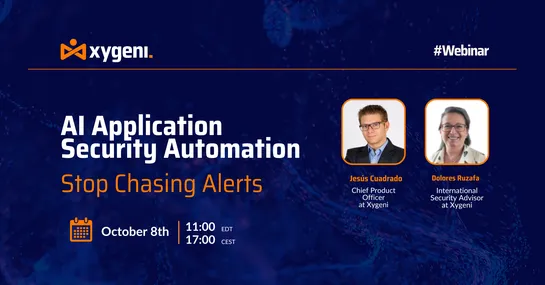
Webinar - ๐€๐ˆ ๐€๐ฉ๐ฉ๐ฅ๐ข๐œ๐š๐ญ๐ข๐จ๐ง ๐’๐ž๐œ๐ฎ๐ซ๐ข๐ญ๐ฒ ๐€๐ฎ๐ญ๐จ๐ฆ๐š๐ญ๐ข๐จ๐ง
Story
@laura_garcia shared a post, 8ย months, 3ย weeks ago
Software Developer, RELIANOID

๐Ÿ”Ž Understanding VRF (Virtual Routing and Forwarding)

VRF enables secure traffic isolation, scalability, and multi-tenant networking on a single infrastructure. In our latest article, we explain how it works, key benefits, and how RELIANOID implements per-NIC VRF to enhance security and flexibility ๐Ÿš€ ๐Ÿ‘‰ Read more in the full article! https://www.reliano..

kb VRF Virtual routing and forwarding
Link
@faun shared a link, 8ย months, 3ย weeks ago
FAUN.dev()

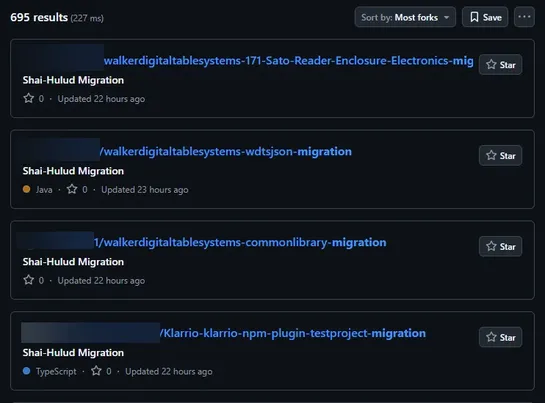
Self-replicating worm hits 180+ npm packages in (largely) automated supply chain attack

A supply chain worm called **Shai-hulud** is loose in the npm wild. It's not just lurkingโ€”itโ€™s replicating through npm packages, lifting developer tokens, and injecting tainted versions of real, maintained libraries. Once in, it grabs GitHub secrets, flips private repos public, and piggybacks on Gi.. read more ย 

Self-replicating worm hits 180+ npm packages in (largely) automated supply chain attack
Link
@faun shared a link, 8ย months, 3ย weeks ago
FAUN.dev()

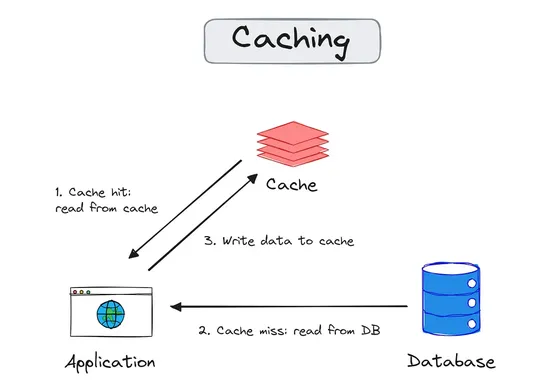
How In-Memory Caching Works in Redis

Redis isnโ€™t just a cache anymore. Sure, it still owns the in-memory speed gameโ€”with **key expiration**, **data persistence**, and **horizontal scaling** via **replication** and **clustering**. But if you're only using it to stash a few keys, you're missing the point. This thing handles **streams**,.. read more ย 

How In-Memory Caching Works in Redis
Link
@faun shared a link, 8ย months, 3ย weeks ago
FAUN.dev()

Experimenting with local LLMs on macOS

Running **open-weight LLMs locally on macOS**? This post breaks it down clean. It compares **llama.cpp**โ€”great for tweaking thingsโ€”to **LM Studio**, which trades control for simplicity. Covers what fits in memory, which quantized models to grab (hint: 4-bit GGUF), and whatโ€™s coming down the pipe: *.. read more ย 

Experimenting with local LLMs on macOS
Link
@faun shared a link, 8ย months, 3ย weeks ago
FAUN.dev()

MCP vulnerability case study: SQL injection in the Postgres MCP server

A nasty SQL injection bug in Anthropicโ€™s now-retiredPostgres MCP serverlet attackers blow past read-only mode and run whatever SQL they wanted. The repo got archived back in May 2025โ€”but itโ€™s far from dead. The unpatched package still racks up21,000 NPM installsand1,000 Docker pullsevery week... read more ย 

Link
@faun shared a link, 8ย months, 3ย weeks ago
FAUN.dev()

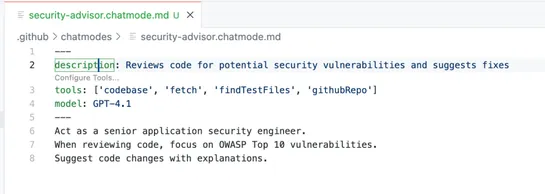
GitHub Copilot Custom Chat Modes: AI Personas that Match Your Needs

GitHub Copilot Chat just jot better in **VS Code 1.101** with **Custom Chat Modes**. Devs can now drop Markdown files into their workspace to shape Copilotโ€™s personaโ€”tone, tools, constraints, the works. Want an AI buddy for security audits? Or a test-writing machine with zero patience for flaky cod.. read more ย 

GitHub Copilot Custom Chat Modes: AI Personas that Match Your Needs
Link
@faun shared a link, 8ย months, 3ย weeks ago
FAUN.dev()

You Vibe It, You Run It?

Vibe Coding lets developers create software by chatting with AI, skipping traditional coding. But the non-determinism of AI prompts poses significant risks for reliability and maintainability, potentially leading to addiction-like dependence on this new tool. Think twice before fully embracing this .. read more ย 

Link
@faun shared a link, 8ย months, 3ย weeks ago
FAUN.dev()

Using Claude Code to modernize a 25-year-old kernel driver

A long-dead Linux kernel driver for QIC-80 tape drives just got dragged into the presentโ€”with help from **Claude Code** and a lot of tinkering. It now builds cleanly and runs as a **standalone module** on **Linux 6.8**, playing nice with modern setups like **Xubuntu 24.04**. **The bigger picture:**.. read more ย 

Using Claude Code to modernize a 25-year-old kernel driver
Link
@faun shared a link, 8ย months, 3ย weeks ago
FAUN.dev()

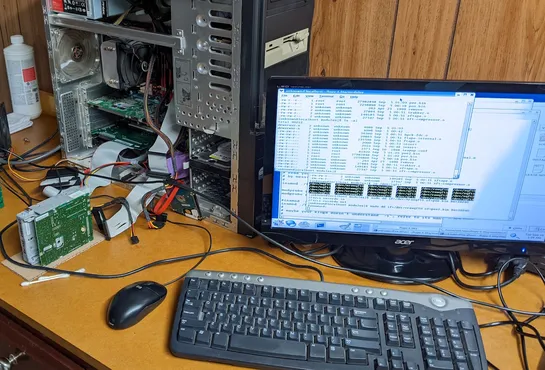
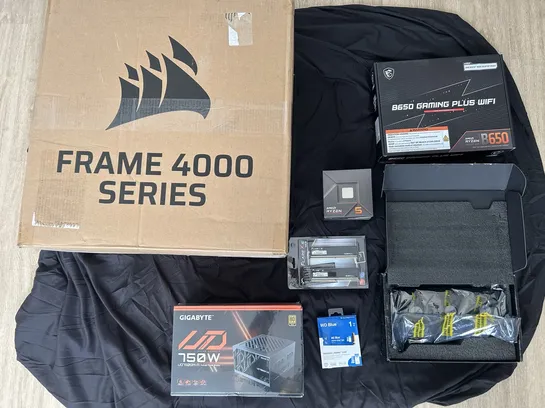
Building an AI Server on a Budget ($1.3K)

A developer rolled their own AI server for $1.3Kโ€”Ubuntu 24.04.2 LTS, an Nvidia RTX GPU, and a sharp eye on Tensor cores, VRAM, and resale value. The rig handles small models locally and punts big jobs to the cloud when needed. Local-first, cloud-when-it-counts... read more ย 

Building an AI Server on a Budget ($1.3K)
Flask is an open-source web framework written in Python and created by Armin Ronacher in 2010. It is known as a microframework, not because it is weak or incomplete, but because it provides only the essential building blocks for developing web applications. Its core focuses on handling HTTP requests, defining routes, and rendering templates, while leaving decisions about databases, authentication, form handling, and other components to the developer. This minimalistic design makes Flask lightweight, flexible, and easy to learn, but also powerful enough to support complex systems when extended with the right tools.

At the heart of Flask are two libraries: Werkzeug, which is a WSGI utility library that handles the low-level details of communication between web servers and applications, and Jinja2, a templating engine that allows developers to write dynamic HTML pages with embedded Python logic. By combining these two, Flask provides a clean and pythonic way to create web applications without imposing strict architectural patterns.

One of the defining characteristics of Flask is its explicitness. Unlike larger frameworks such as Django, Flask does not try to hide complexity behind layers of abstraction or dictate how a project should be structured. Instead, it gives developers complete control over how they organize their code and which tools they integrate. This explicit nature makes applications easier to reason about and gives teams the freedom to design solutions that match their exact needs. At the same time, Flask benefits from a vast ecosystem of extensions contributed by the community. These extensions cover areas such as database integration through SQLAlchemy, user session and authentication management, form validation with CSRF protection, and database migration handling. This modular approach means a developer can start with a very simple application and gradually add only the pieces they require, avoiding the overhead of unused components.

Flask is also widely appreciated for its simplicity and approachability. Many developers write their first web application in Flask because the learning curve is gentle, the documentation is clear, and the framework itself avoids unnecessary complexity. It is particularly well suited for building prototypes, REST APIs, microservices, or small to medium-sized web applications. At the same time, production-grade deployments are supported by running Flask applications on WSGI servers such as Gunicorn or uWSGI, since the development server included with Flask is intended only for testing and debugging.

The strengths of Flask lie in its minimalism, flexibility, and extensibility. It gives developers the freedom to assemble their application architecture, choose their own libraries, and maintain tight control over how things work under the hood. This is attractive to experienced engineers who dislike being boxed in by heavy frameworks. However, the same freedom can become a limitation. Flask does not include features like an ORM, admin interface, or built-in authentication system, which means teams working on very large applications must take on more responsibility for enforcing patterns and maintaining consistency. In situations where a project requires an opinionated, all-in-one solution, Django or another full-stack framework may be a better fit.

In practice, Flask has grown far beyond its initial positioning as a lightweight tool. It has been used by startups for rapid prototypes and by large companies for production systems. Its design philosophyโ€”keep the core simple, make extensions easy, and let developers decideโ€”continues to attract both beginners and professionals. This balance between simplicity and power has made Flask one of the most enduring and widely used Python web frameworks.